The Charnel House of Celebrity: Nigeria Discovers Its Hospitals Are Deathtraps Only After a Bestseller Writes It Down

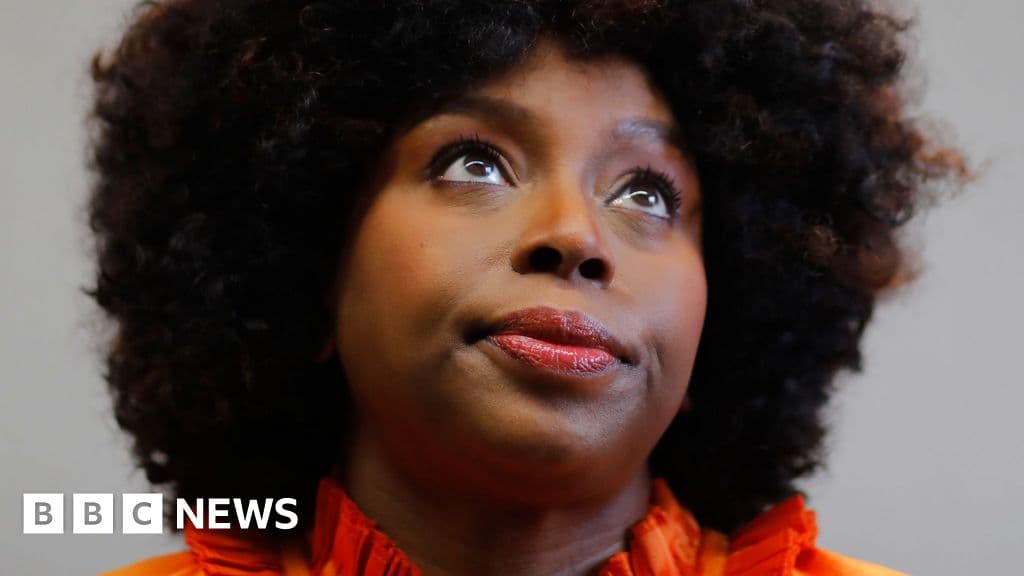
It has long been a hallowed tradition among the Nigerian ruling class—and the literary elite who breathe the same rarefied air—to treat the domestic healthcare system as a quaint, albeit dangerous, museum of 19th-century pathology. When a throat tickles in Abuja, one boards a private jet to London. When blood pressure spikes in Lagos, a flight to Dubai is the standard prescription. But reality, that stubborn and unrefined intruder, occasionally forgets to check the VIP guest list. The tragic death of Chimamanda Ngozi Adichie’s young son has forced a moment of national ‘reflection,’ which in the local dialect of bureaucracy translates to ‘panicked damage control while pretending to have a conscience.’
Adichie, the high priestess of intellectual nuance and a woman whose prose is usually the only thing the Nigerian government exports besides crude oil, has leveled an accusation of medical negligence. The hospital, in a display of defensive reflexes that would make a cornered rat blush, has predictably denied everything. This is the dance of the moribund: a child is lost to a system that functions more like a lottery of survival than a medical infrastructure, and the immediate reaction isn't to fix the plumbing, but to calibrate the PR response. It is the ultimate Nigerian tragedy—a reality so broken that it only becomes ‘real’ when a person with a global platform is forced to inhabit it.
The Nigerian health sector has been a decaying corpse for decades, yet the government’s sudden ‘commitment to action’ following this specific tragedy is perhaps the most nauseating part of the saga. It reveals the grotesque hierarchy of grief that governs the state. Thousands of nameless children expire in these clinics every year, their deaths dismissed as the inevitable friction of living in a developing nation. Their parents do not have Pulitzers or Netflix deals, so their despair is silent, un-memoed, and entirely useless to the political class. But when the victim is the scion of a literary icon, the machinery of performative empathy begins to groan into gear. Suddenly, ministers who haven't stepped foot in a public ward since the last millennium are issuing statements of profound concern. It is enough to make one nostalgic for honest indifference.
The hospital’s denial is a masterpiece of the genre. To admit negligence would be to admit that the entire structure of Nigerian private medicine is often just a glossy veneer over the same incompetence that plagues the public sector. They offer the usual platitudes, shielding themselves behind the fortress of 'clinical protocols' that clearly failed the only test that matters: keeping a human being alive. But in a country where accountability is considered an exotic Western import, we shouldn't expect a sudden outbreak of honesty. The medical board will investigate itself, find that it is doing a marvelous job under difficult circumstances, and then return to the lucrative business of charging premium prices for substandard outcomes.
Let’s be clear: the Nigerian government’s promise to ‘act’ on health sector failings is as reliable as a solar panel in a coal mine. They are addicted to the very system that allows them to ignore the rot. As long as the people in charge can fly to Germany for a physical, there is zero incentive to ensure the hospital down the street has basic supplies. Adichie’s son is a victim of a systemic arrogance that transcends simple 'negligence.' It is a calculated abandonment. The politicians will use this moment to hold summits, form committees, and perhaps even name a half-finished wing of a clinic after the tragedy, but the fundamental architecture of failure will remain untouched.
There is a profound, acid irony in the fact that it takes the absolute devastation of a woman who writes about the ‘danger of a single story’ to highlight the singular, repetitive story of Nigerian institutional collapse. We are trapped in a narrative loop where outrage is the only currency, and it is rapidly devaluing. The Left will use this to decry the ‘inequality’ of the system while doing absolutely nothing to challenge the power structures they inhabit. The Right will offer 'thoughts and prayers' while continuing to siphon the health budget into offshore accounts. Everyone wins except the people who actually need a doctor.
In the end, this isn't just about a hospital in Lagos or a grieving mother. It’s about a nation that has decided that the lives of its citizens are entirely expendable until they become a public relations liability. Buck Valor is not moved by your task forces or your press releases. We know how this ends: the headlines will fade, the literary world will move on to the next gala, and the Nigerian health sector will continue its slow, steady descent into the abyss, waiting for the next celebrity tragedy to briefly illuminate the darkness. It’s not a healthcare crisis; it’s a moral bankruptcy that no amount of foreign aid or eloquent prose can ever hope to liquidate.
This story is an interpreted work of social commentary based on real events. Source: BBC News