The Great Jailer Swap: Syria’s Al-Hol Camp Welcomes Its Latest Set of Authoritarian Concierges

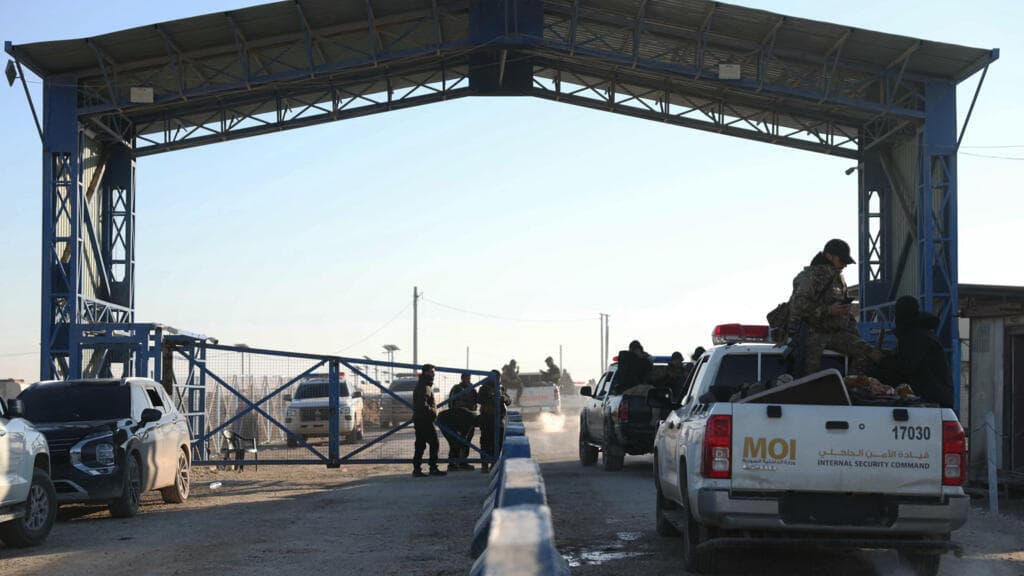
In the latest installment of the long-running Middle Eastern reality series 'Who Wants to Hold the Poisoned Chalice?', the Syrian Arab Army has officially marched into the Al-Hol detention camp. It is a marvelous bit of geopolitical theater, really. The kind of cynical farce that would make Machiavelli throw up his lunch in sheer admiration of the audacity. For years, the international community has treated Al-Hol like a hazardous waste site, a desert purgatory filled with the wives and children of Islamic State fighters that no civilized nation actually wanted to deal with. Now, the keys to the kingdom of dust and radicalization have been handed over from the Kurds to the Syrian regime, proving once again that in this region, 'stability' is just a polite word for a different flavor of misery.
The Kurdish forces, those perennial darlings of Western liberal interventionist fantasies, have finally folded their hand. After years of acting as the world’s unpaid janitors—guarding a population of tens of thousands that their erstwhile allies in Washington and Brussels were too cowardly to repatriate—the Kurds have realized that loyalty in the 21st century is a depreciating asset. Faced with the reality of having to defend their own cities from imminent collapse, they opted for a 'strategic withdrawal,' which is military-speak for 'we are leaving this dumpster fire for someone else to put out.' One can almost hear the collective sigh of relief from the Kurdish command as they handed over the duty rosters to the Syrian Arab Army, effectively saying, 'Good luck with the radicalized toddlers and the ideological firebrands; we’re going to go try and not get annihilated elsewhere.'
Enter the Syrian Army—those paragons of humanitarian restraint and subtle governance. The arrival of Bashar al-Assad’s forces at the gates of Al-Hol is a moment steeped in the kind of irony that usually requires a degree in dark comedy to appreciate. The very regime that has spent the last decade being characterized as a butcher by the West is now the official landlord of a camp containing the remnants of the group that the West spent trillions of dollars trying to eradicate. It is a seamless transition from one jailer to another, a rebranding of incarceration where the only thing that changes is the patch on the soldier’s shoulder and the specific dialect of the man shouting at you through a fence. To the residents of Al-Hol, this is less of a liberation and more of a corporate merger between two firms that specialize in hopelessness.
The 'ceasefire deal' that precipitated this handoff is perhaps the most performative element of the entire saga. In the halls of power, these agreements are treated as diplomatic breakthroughs, signed with expensive pens and celebrated with sterile press releases. In reality, it is a marriage of convenience between parties that despise each other, birthed from the shared realization that they are both too exhausted to keep the pretense of total victory alive. The Syrian regime gets to reclaim territory and posture as the legitimate protector of the state’s borders, while the Kurds get to live another day, albeit with their dreams of a self-governing utopia shoved further into the bottom drawer of history. It is a transactional peace, devoid of ethics, fueled by the cold calculus of survival.
Meanwhile, the 'international community' watches from the sidelines with the vacuous stare of a bystander at a car wreck. For years, European capitals and American think tanks have issued stern warnings about the 'ticking time bomb' of Al-Hol, yet they did absolutely nothing to defuse it. They preferred the camp to remain a distant, dusty problem, conveniently located in a place they could ignore whenever the news cycle shifted to something more palatable. Now that the Syrian army—the very force they have spent years sanctioning—is in control of that bomb, the sudden surge of anxiety in Western capitals is palpable. It is the sound of chickens coming home to roost, except the chickens are wearing IS insignias and the coop is now guarded by a man the West has spent a decade trying to depose.
Ultimately, the takeover of Al-Hol by the Syrian army changes nothing about the fundamental rot at the heart of the situation. It is merely a reshuffling of the deck chairs on a ship made of sand. The detainees remain in a legal and moral vacuum, the radicalization continues to simmer in the heat, and the soldiers at the gates are still just men with guns tasked with making sure the world doesn't have to look at its own failures. Whether the guard speaks for a Kurdish militia or a Syrian general is a distinction without a difference to those inside. It is a cycle of incompetence and cruelty that ensures that today’s prisoners are tomorrow’s problems, and that the only thing anyone is truly capable of doing is passing the torch of failure to the next person in line.
This story is an interpreted work of social commentary based on real events. Source: France 24