The Syrian Spectacle: Trading Rubble for Rhetoric in the Parisian Salon
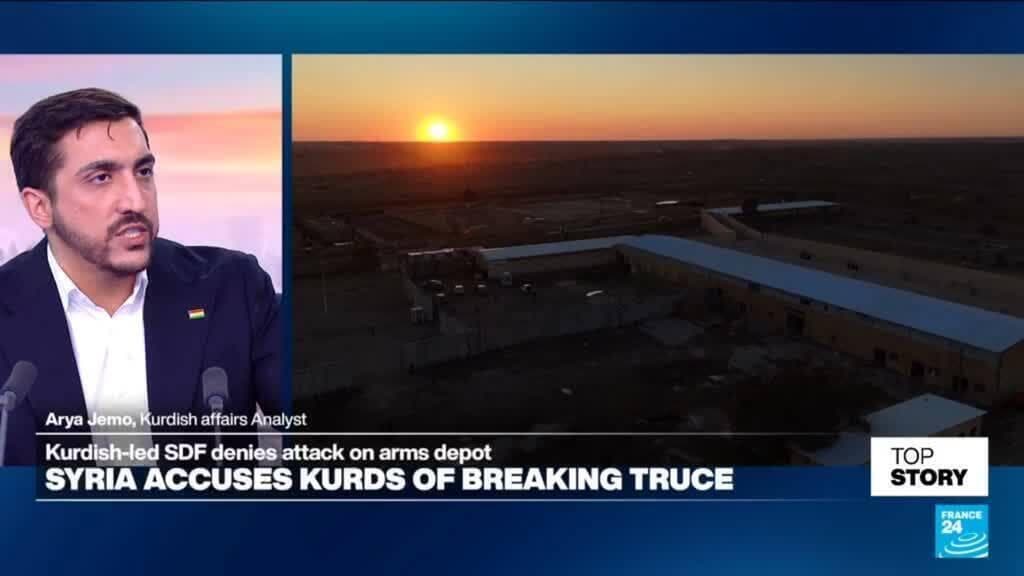
There is something deliciously grotesque about the way we consume geopolitical catastrophe from the comfort of a climate-controlled studio in Paris. François Picard, that quintessential avatar of Western concern, recently hosted Kurdish humanitarian activist Arya Jemo to discuss the ongoing disintegration of Syria—a country that has become less a nation and more a perpetual-motion machine for human misery. The segment, titled with the sort of earnest naivety that only a well-funded public broadcaster can manage, suggests that 'economic recovery without freedom is meaningless.' It is the kind of sentiment that looks marvelous on a tote bag but feels increasingly like a cruel joke to a population that would likely settle for a loaf of bread that isn't seasoned with mortar dust.
As I watched the exchange, I was struck by the professionalization of empathy. Jemo, speaking with the weary dignity of those who have seen their homes turned into a multi-player sandbox for regional despots, addressed themes of political betrayal and international disengagement. To speak of 'betrayal' in the context of Syrian Kurds is like speaking of 'wetness' in the context of the Atlantic—it is the defining characteristic of the environment. One must almost admire the stubborn commitment to the concept of international solidarity, even as the global community has demonstrated the attention span of a goldfish with a smartphone. The 'international disengagement' Picard laments is not a glitch in the system; it is the system’s natural resting state. Once the immediate threat of a caliphate-induced headache for Western capitals subsided, Syria was relegated to the back pages, somewhere between a fluff piece on artisanal goat cheese and the weather report for the Dordogne.
The core of the account frames the Syrian struggle as a 'clash of competing visions'—democratic pluralism versus extremist domination. It’s a lovely, symmetrical binary that fits perfectly into a thirty-minute broadcast window. However, to the exasperated intellectual, this framing ignores the terrifying reality that 'vision' is exactly what is missing. What we have instead is a series of reactionary spasms. On one side, we have extremist domination, which uses faith as a blunt instrument to keep the lights off and the women veiled. On the other, we have a 'democratic pluralism' that exists primarily in the eloquent testimonies of activists speaking to sympathetic journalists in European capitals. Between them lies the actual Syria: a landscape of skeletal buildings and hollowed-out institutions where the only thing 'pluralistic' is the variety of foreign munitions found in the wreckage.
Jemo’s insistence that economic recovery is hollow without freedom is a noble philosophical stance, yet it ignores the grim alchemy of modern statecraft. In the real world—the one outside the France 24 studio—the choice is rarely between 'freedom' and 'bread.' Usually, the choice is between different flavors of authoritarianism, one of which might occasionally allow you to keep your electricity on for four consecutive hours. The tragedy of the Syrian situation is that the 'meaningless' recovery is currently being brokered by those who view freedom as a dangerous hallucinogen. By framing the struggle as a battle over 'democratic pluralism,' we allow ourselves the comforting illusion that there is a 'good' side to support, rather than a collection of exhausted survivors caught between the indifference of the West and the rapacity of the East.
Furthermore, the discourse on 'regional stability and global security' is a masterclass in bureaucratic wordplay. We speak of stability as if it were a lost set of keys we might find under the sofa if we just look hard enough. In truth, the stability of the region has been traded away in the name of short-term geopolitical convenience time and time again. Every 'shifting sociopolitical dynamic' Picard mentions is just another way of saying that the people with the guns have changed their minds about who they are shooting at this week.
As the interview concludes, one is left with the familiar aftertaste of Western impotence. We have watched the tragedy, we have analyzed the motives, and we have categorized the betrayal. We have turned a decade of slaughter into a digestible narrative of 'resistance and resilience.' It is the ultimate triumph of the modern intellectual: to witness the collapse of a civilization and ask if the recovery might be a bit more 'inclusive.' If this is the best the global security apparatus can offer—a choice between the void and a beautifully worded press release—then perhaps the 'meaningless' nature of the recovery is the only honest thing left about the entire sordid affair. We talk of visions while the world watches a demolition, satisfied that at least the commentary was conducted with such exquisite, Parisian poise.
This story is an interpreted work of social commentary based on real events. Source: France 24