The Arctic Appraisal: When Manifest Destiny Meets the Art of the Deal at Davos

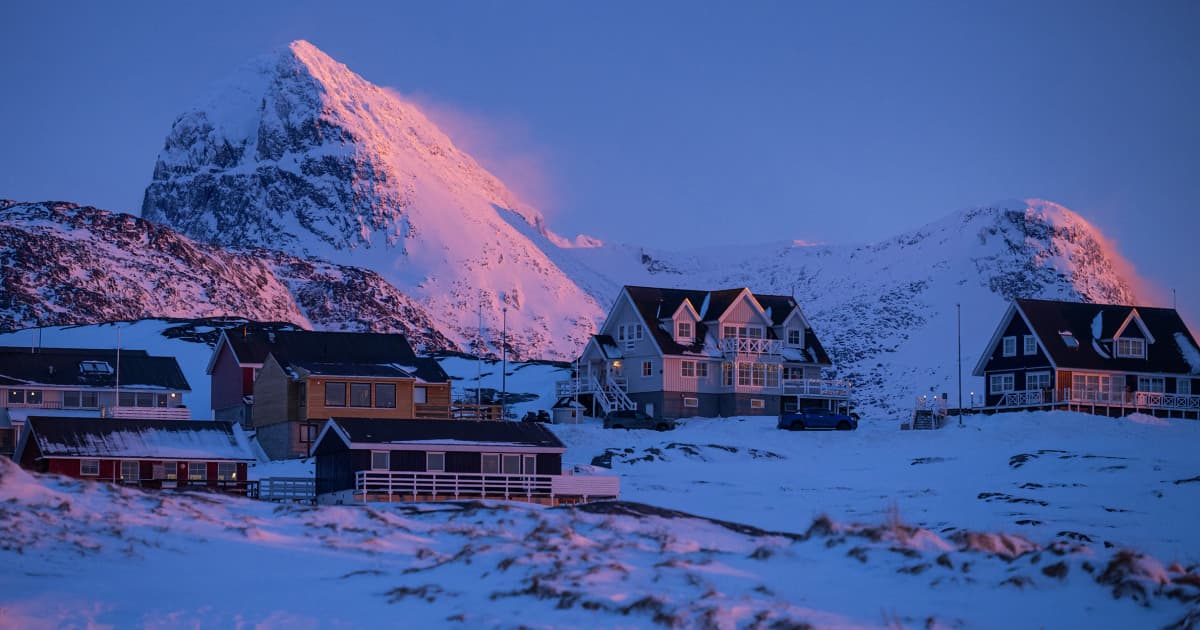
There is a grim, almost poetic symmetry in President Donald Trump arriving at the World Economic Forum in Davos—a gathering characterized by performative altruism and the collective hyperventilation of the global elite—to treat the geopolitical map like a distressed asset in a bankruptcy auction. While the captains of industry sip champagne and pretend to care about the carbon footprint of their private jets, the American President arrived with a singular, refreshingly crude objective: to finalize the acquisition of the world’s largest island, or at the very least, to secure the leasehold on its existential security. The news that Trump sought a deal to hand the United States more control over Greenland’s security and the broader Arctic region is not merely a diplomatic anecdote; it is the ultimate expression of a world where sovereignty has been reduced to a line item on a ledger.
It requires a special kind of hubris to look at an autonomous territory of the Kingdom of Denmark—a nation with a social contract far more advanced than the crumbling infrastructure of the American experiment—and see nothing more than a strategic parking lot for nuclear submarines. Yet, this is the banal reality of the current administration's foreign policy. The report that administration officials were actively negotiating for "control" over security in the Arctic reveals the transactional rot at the heart of modern American diplomacy. To the sophisticated European observer, this is not strategy; it is a landlord inspecting a property he intends to gentrify. The absurdity lies not in the strategic interest—every major power from Beijing to Moscow is eyeing the melting Arctic trade routes with wolfish hunger—but in the sheer lack of finesse with which Washington pursues its ambitions.
One must appreciate the irony of this playing out in Davos. Here we have a forum dedicated to "Stakeholder Capitalism" and global cooperation, serving as the backdrop for a bout of 19th-century imperialism dressed up in a brash, ill-fitting suit. The American proposition is simple: protection is a service, and sovereignty is negotiable. By seeking to expand its security footprint over Greenland, the U.S. is essentially telling Denmark that they are merely the custodians of a strategic asset they cannot afford to maintain. It is a protection racket mandated by geography. The "deal" discussed by congressional and former officials implies a fundamental misunderstanding of European sensibilities. To the European mind, land is history, culture, and blood. To the current occupant of the White House, land is merely square footage that hasn't been properly branded yet.
The focus on the Arctic is, of course, the quiet part said out loud. As climate change—a phenomenon the President famously dismisses when it suits his deregulation agenda—melts the ice caps, it opens up new shipping lanes and resource deposits. The cynicism is breathtaking: deny the science while scrambling to monetize its catastrophic results. The rush for Greenland’s security control is a preemptive strike against Chinese and Russian encroachment, certainly. But it is also a desperate flailing of an empire that knows its hegemony is thawing as fast as the glaciers. By attempting to lock down Greenland, Washington admits that it can no longer rely on soft power or alliances. It must rely on possession. It is the geopolitics of the insecure hoarder.
Furthermore, this initiative highlights the complete erosion of diplomatic nuance. In the past, such security arrangements were handled through NATO, through quiet bilateral agreements, through the subtle weaving of mutual interests. Now, it is a transaction. "We provide the security; we want the control." It strips away the pretense of alliance and lays bare the client-state relationship the U.S. desires with its partners. It is a profound insult to Copenhagen, naturally, but one delivered with the confident grin of a man who believes he is doing you a favor by buying your house before the bank forecloses. The Danes, with their quaint attachment to democratic self-determination, are treated as obstructionist zoning boards standing in the way of a glorious development project.
Ultimately, this episode at Davos serves as a tragicomic reminder of where we stand. We are trapped in a theater of the absurd where the most powerful man in the world views international relations through the prism of a real estate closing. The desire to control Greenland’s security is not about safety; it is about the projection of ownership in an era where the U.S. feels its grip slipping. It is Manifest Destiny on ice, a farce played out against the backdrop of Swiss mountains, proving once again that in the eyes of the American administration, the world is not a community of nations, but a portfolio of potential acquisitions waiting for the right offer.
This story is an interpreted work of social commentary based on real events. Source: NBC News