New Zealand Declares War on Mud, and the Mud Is Currently Winning

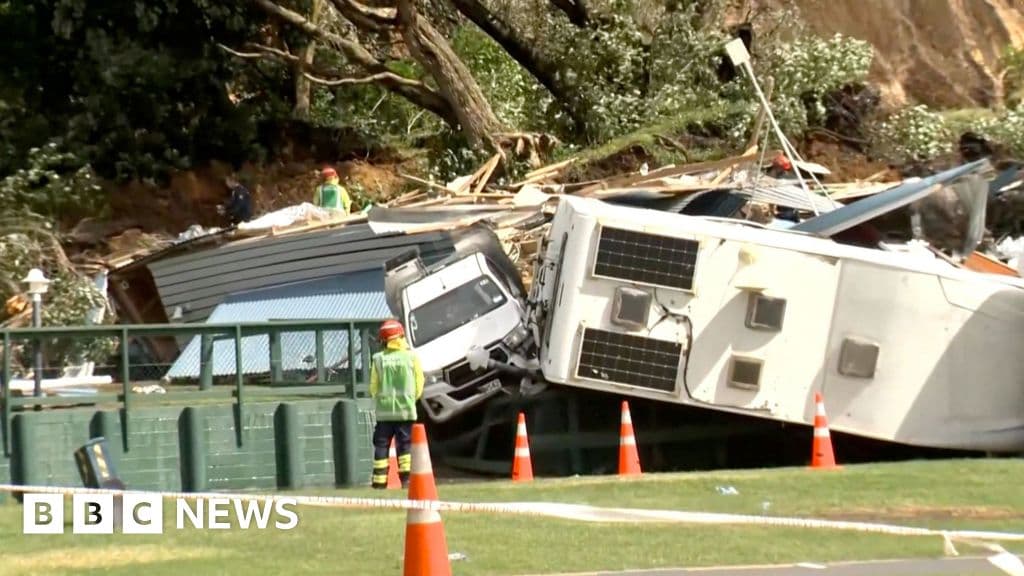
New Zealand has always been the backup plan for the world’s anxious billionaires. It is the place where the super-rich buy doomsday bunkers, convinced that when the rest of the world burns, they will be safe in a green, sheep-filled paradise at the bottom of the map. But as it turns out, the end of the world does not care about your real estate investments. It does not care about borders, and it certainly does not care about the fantasy of a safe haven. This week, the illusion of control washed away, quite literally, down the side of a hill on the North Island.
Heavy rains have absolutely hammered the country. The ground, tired of holding everything up, simply gave way. The results are tragic and messy. Two people are dead. Several more are missing. Homes have been smashed into matchsticks. It is a grim reminder that nature is not a backdrop for a fantasy movie; it is a living, breathing, violent thing that occasionally decides to shake us off like fleas.
But the most telling part of this disaster is not the mud itself. It is how the people in charge talk about it. A government minister looked at the devastation—the flooded roads, the destroyed homes, the piles of sludge—and compared it to a "war zone."
Let us pause and look at that phrase. A war zone. Politicians love this language. They love it because it makes them sound like generals. It makes them sound heroic. If you are in a war, you are fighting a brave battle against an evil enemy. You can rally the troops. You can give speeches about courage and sacrifice. But this is not a war. This is weather. And that is the problem with modern leadership. They do not know how to handle reality, so they try to dress it up as an action movie.
In a war, there is an enemy you can shoot at. There is a strategy you can use to win. But who is the enemy here? The clouds? Gravity? You cannot sign a peace treaty with a landslide. You cannot surrender to a flood. Nature does not want your land or your resources; it just follows the laws of physics. Water flows downhill. If your house is in the way, the water does not care. It wins every single time. Calling it a "war zone" is a way for leaders to avoid admitting the boring, ugly truth: we built things in the wrong places, and now we are paying the price.
This kind of talk is a comfort blanket for the incompetent. It suggests that the disaster was an attack, something unexpected and malicious. But rain in New Zealand is not a surprise. It is an island in the middle of a massive ocean. It rains there. That is what it does. The ground gets wet. If you cut down all the trees that hold the soil together and build heavy houses on top of the dirt, the dirt will eventually move. This is not an ambush by a foreign army. It is just cause and effect.
It is fascinating to watch the shock on the faces of officials. They act as if the planet has betrayed them. We have spent the last hundred years paving over the world, redirecting rivers, and pretending that we are the masters of the earth. We build cities in deserts and wonder why we run out of water. We build homes on cliffs and wonder why they fall into the sea. And when the inevitable happens, we scream "War!" as if we are the victims of a crime.
The tragedy of the two people who died is real. The fear of those missing is real. But the response from the top is pure theater. Instead of admitting that perhaps our infrastructure is weak, or that our planning laws are stupid, they use dramatic words to distract us. If it is a war, then the failure isn't their fault—it's just the "fog of war." It is a convenient excuse. It lets them shrug their shoulders while standing in the mud.
The reality is much more depressing than a war. A war implies there is a chance of victory. There is no victory here. There is only cleanup. There is only the slow, expensive process of digging cars out of the sludge and wondering why we thought we could tame the sky. The billionaires in their bunkers might want to take note. You can hide from people, and you can hide from taxes, but you cannot hide from the ground beneath your feet when it decides to leave.
This story is an interpreted work of social commentary based on real events. Source: BBC News