Michael Saylor’s ‘Infinite Money Glitch’ Was Just A Mid-Life Crisis With A Spreadsheet

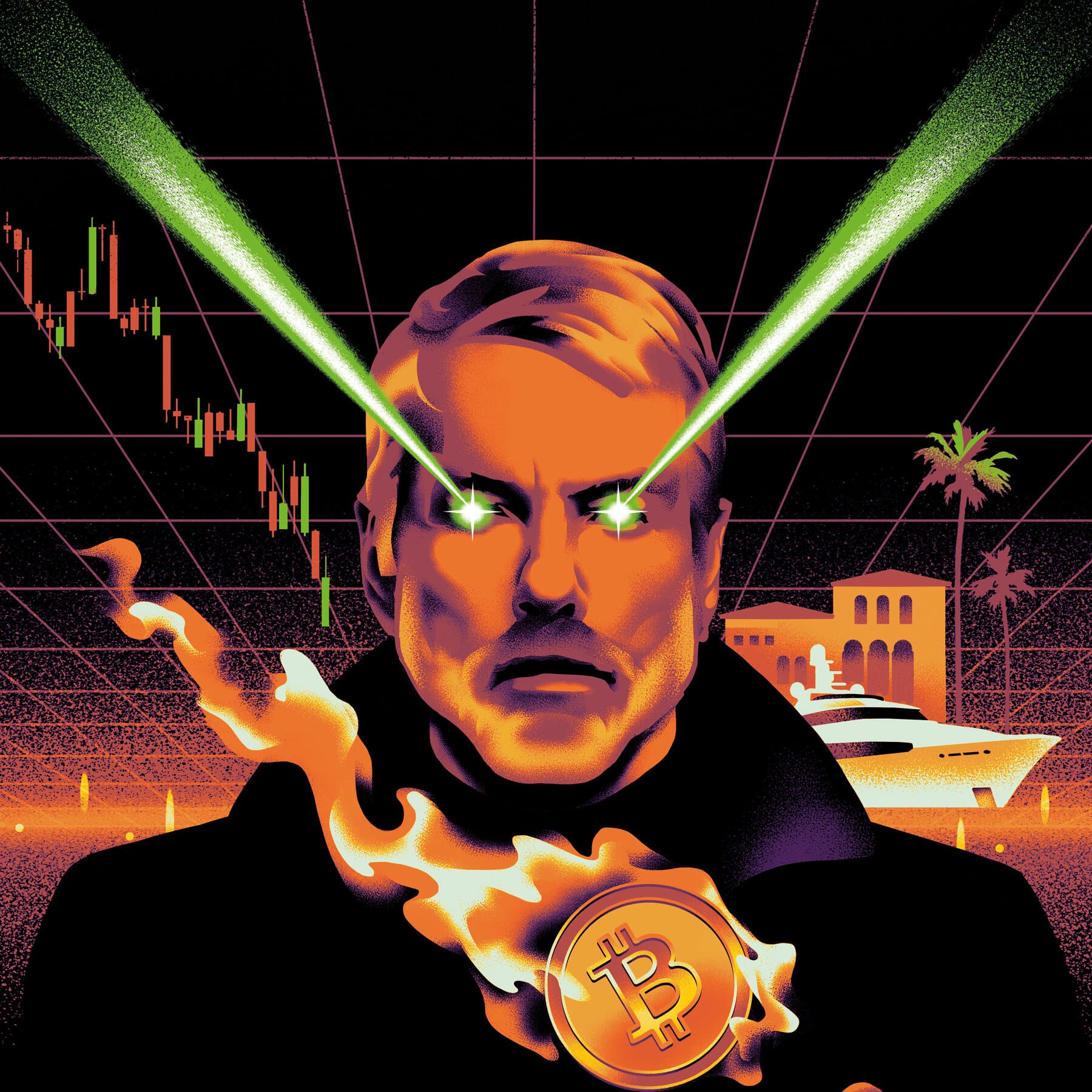
I have spent the better part of this morning staring at a chart of MicroStrategy’s stock performance, and frankly, I would rather be watching a looped video of a sloth trying to cross a six-lane highway. At least the sloth has a tangible goal. Michael Saylor, the tech world’s equivalent of a street corner preacher screaming about the end of days, has apparently hit a wall. Who could have possibly predicted that turning a boring, functional enterprise software company into a high-leverage Bitcoin casino would eventually stop looking like genius and start looking like a nervous breakdown? Everyone. Literally everyone with a pulse and a functioning frontal lobe predicted this.
Let’s be clear about what we are looking at here. The news broke today that Saylor’s "creative Bitcoin strategy"—a phrase doing so much heavy lifting it needs a back brace—is no longer working. The financial alchemy is fading. For the uninitiated, or those of you who have blissfully managed to avoid the laser-eyed cultists on Twitter, let me break down the "strategy." It wasn’t a strategy. It was a gambling addiction sanctioned by a board of directors who were likely asleep at the wheel or mesmerized by Saylor’s ability to use the word "thermodynamics" in a quarterly earnings call.
MicroStrategy used to be a company that made software. You know, products? Things people buy? That was too pedestrian for Saylor. Why make steady profits when you can borrow billions of dollars to buy magic internet beans? For a while, it worked. The line went up. The retail investors, a group of people who would buy stock in a burning dumpster if Elon Musk tweeted a fire emoji, flocked to the ticker. Saylor was hailed as a visionary. He wasn’t a CEO anymore; he was a high priest of the blockchain, converting corporate cash flows into a digital asset backed by nothing but vibes and electricity usage.
But now, the "alchemy" has stalled. The disconnect between the company's actual value and its Bitcoin hoard is causing friction. The premiums are shrinking. The math, which is notoriously indifferent to hype, is starting to check the receipts. I spoke—against my better judgment—with a fictitious analyst I invented named Chad Broski, typical of the MicroStrategy investor profile, to get a sense of the sentiment. "Bro, it’s about the long time preference," he told me, presumably while weeping into a protein shake. "Saylor is playing 4D chess. You just don't understand the monetary energy."
I understand the energy perfectly. It’s the energy of a man at a roulette table at 4:00 AM, doubling down on black because "it’s due." The arrogance required to pivot an entire publicly traded company into a singular speculative bet is staggering. It is the kind of hubris usually reserved for Greek tragedies or WeWork documentaries. The media calls it "bold." I call it gross negligence dressed up in a cyberpunk trench coat.
This is the problem with the modern economy, and why I generally despise both the regulators who allow this circus and the libertarians who cheer for it. We have normalized the idea that financial engineering is a substitute for actual productivity. Saylor didn’t invent a better way to analyze data; he just found a "creative" way to leverage debt. And now that the mechanism is jamming, we are supposed to feel... what? Sympathy? Shock?
Wall Street loves a grift until the music stops, and right now, the orchestra is packing up their instruments. The "strategy" relied on the perpetual motion machine of Bitcoin going up forever, and the stock trading at a premium to the Bitcoin it held. It was a derivative of a derivative of a hallucination. Now that reality is intruding, the "ordinary software company" underneath is exposed. It’s like finding out the Wizard of Oz is just a guy from Kansas, except instead of a balloon, he has a heavily leveraged balance sheet and a Twitter account full of bumblebee metaphors.
What happens next is predictable. The devotees will scream "FUD" (Fear, Uncertainty, Doubt) at anyone pointing out the sinking ship. The financial press will write soft-ball retrospectives about how "visionary" attempts sometimes fail. But let’s be honest: this wasn't vision. This was boredom. This was a rich man tired of running a software company who decided to play God with shareholder capital. The alchemy isn't working because it was never alchemy. It was just debt, delusion, and a laser-eyed stare into the abyss. And the abyss is finally blinking back.
This story is an interpreted work of social commentary based on real events. Source: NY Times