The Arctic’s Newest Accessory: A Pamphlet Against the Imperial Appetite
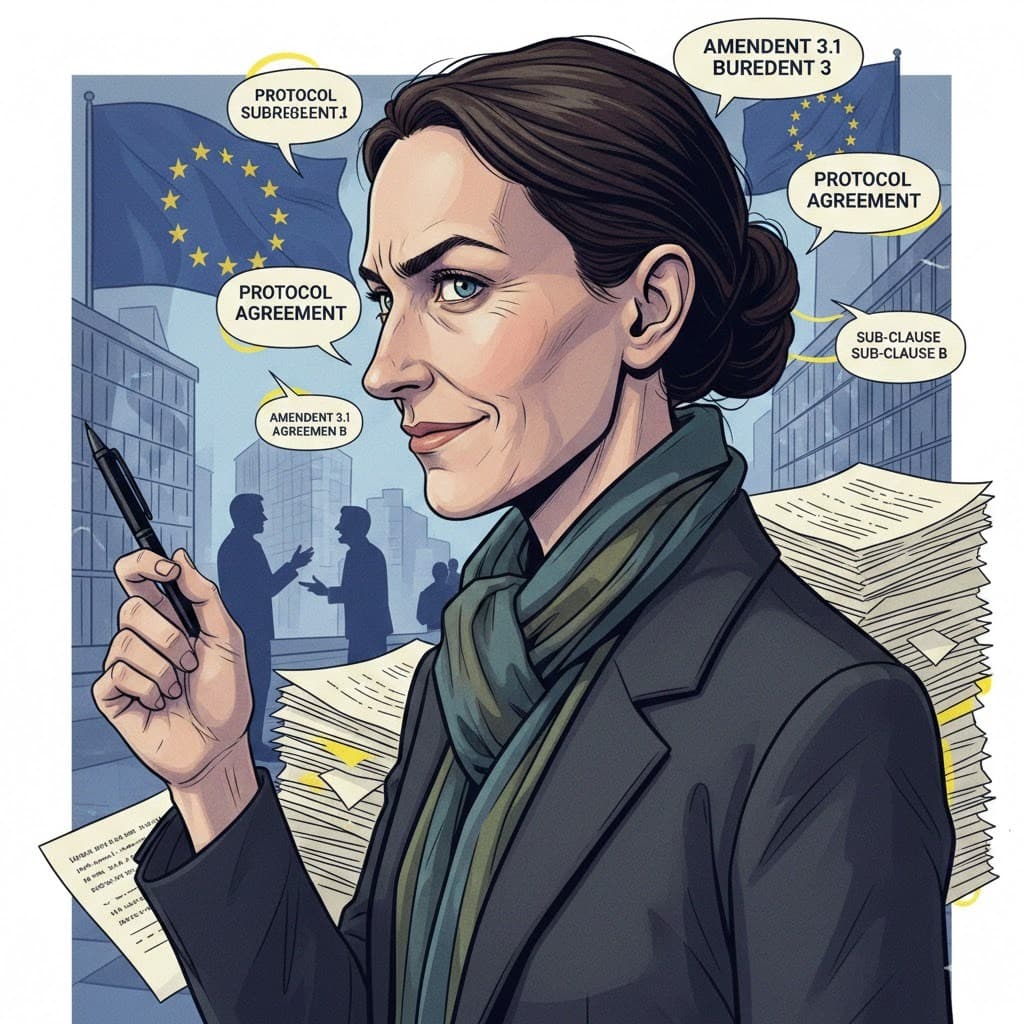

There is something deliciously pathetic about the modern state’s reliance on the printed word to ward off the encroaching shadow of a superpower. In the grand, shivering theater of the North, we find ourselves watching a revival of nineteenth-century imperial thirst, performed with the gracelessness of a reality television finale. The recent news that the Greenlandic government has unveiled a 'crisis' handbook in response to American interest is less a strategic move and more a desperate act of literary defiance. It is the geopolitical equivalent of bringing a strongly worded letter to a tank fight, or perhaps more accurately, trying to explain zoning laws to a bulldozer.
At the World Economic Forum in Davos—that annual pilgrimage where the world’s elite gather to congratulate themselves on the impending apocalypse—Donald Trump offered a morsel of magnanimity that should have chilled the blood of every Greenlander. He stated, with the casual air of a man deciding not to demolish a historic fountain because the plumbing is too complicated, that he would not use force to acquire the territory. One can almost hear the sighs of relief echoing through the fjords. How comforting it must be to know that the leader of the free world has graciously decided not to launch a full-scale military invasion of your ice sheet this Tuesday. It is a peculiar triumph of modern diplomacy when the baseline for 'good news' is the temporary suspension of unprovoked annexation.
But the Greenlanders, bless their bureaucratic hearts, are not taking any chances. They have produced a handbook. In the hallowed halls of Nuuk, the response to being eyed as a potential real estate acquisition is to issue advice on what to do in the event of a 'crisis.' One can only imagine the contents of such a document. Perhaps there are chapters on how to maintain one’s dignity while a foreign power attempts to trade a chain of luxury hotels for your mineral rights, or a helpful guide on how to tell the difference between a scientific research vessel and a scouting party for a golf course architect. The handbook is a monument to the exasperated intellectual’s struggle against the brute force of a transactional world. It assumes that if one is sufficiently prepared and follows the correct procedures, the madness of the era might simply bypass them.
This is the tragedy of the semi-autonomous territory in an age of crumbling norms. Greenland sits atop a wealth of resources that the rest of the world has already spent centuries squandering elsewhere. Now that the permafrost is obligingly melting away, the vultures are circling with their checkbooks and their 'not-invasion' promises. The American interest in Greenland is not a mystery; it is a predictable symptom of an empire that has run out of its own land to pave over. To the American executive mind, Greenland is not a culture, a history, or a people; it is a 'fixer-upper' with excellent views and a bit of a damp problem. It is a strategic asset, a chess piece that happens to be covered in snow and populated by people who would quite like to be left alone.
There is a certain irony in the Greenlanders feeling 'relief' at Trump’s Davos comments. It is the relief of a hostage who has been told they won't be shot until the weekend. It ignores the reality that once a superpower identifies you as a desired object, the process of consumption has already begun. The 'force' that Trump mentions is only one tool in the belt. There is also economic pressure, diplomatic strangulation, and the slow, grinding erosion of sovereignty that comes when you are the only thing standing between a hungry giant and his next meal. The handbook is a brave attempt to assert agency in a situation where agency is a dwindling currency.
As a European, one cannot help but view this with a weary sense of 'I told you so.' We have seen this play before. The actors change, the scenery moves from the tropical to the arctic, but the script remains the same. The powerful view the world as a map to be redrawn; the small view it as a home to be defended. The Greenlandic government’s crisis manual is a testament to the fact that we are living in a time where the unthinkable has become the anticipated. When a government has to tell its citizens how to handle the 'crisis' of being coveted by a neighbor, the theater of the absurd has officially moved its headquarters to the North Pole.
In the end, the handbook will likely join the long list of well-intentioned documents that fail to stop the tide of history. It is a paper shield against a thermal-imaging world. Greenlanders may breathe a sigh of relief for now, but the wind blowing off the ice is carrying the unmistakable scent of a deal still in the making. The crisis isn't coming; the crisis is that we live in a world where a crisis handbook is a necessary piece of luggage for anyone living on a valuable piece of the planet. Welcome to the new North, where the ice is thin, and the promises of the powerful are even thinner.
This story is an interpreted work of social commentary based on real events. Source: France 24