The Accidental Iconography of the Bored Spectator: Neil Leifer and the Sanctification of Brain Damage

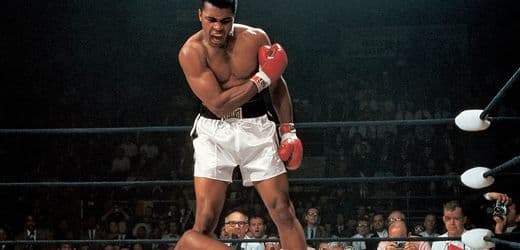
There is a peculiar, almost pathological obsession within the human animal to document its own decline and call it 'art.' We find ourselves once again subjected to the nostalgic ruminations of Neil Leifer, a man whose primary contribution to the 20th century was being the most technically proficient witness to a series of expensive assaults. Leifer, the 'legendary' sports photographer, recently revisited his career highlights, specifically that one photograph of Muhammad Ali standing over a prone Sonny Liston—a shot that has been reproduced so many times it has lost all meaning, much like the political manifestos of the modern era.
What is truly staggering is the sheer, unadulterated neurosis of the creative process. Leifer recounts his immediate thought after capturing the most famous image in sports history: 'Shit, what will they think in the lab?' This is the quintessence of the professional observer’s detachment. A human being—Liston—had just been dropped like a sack of expired flour in a Lewiston, Maine boxing ring, a victim of what some still call a 'phantom punch,' and Leifer’s primary existential dread wasn't the health of the athlete or the moral decay of a society that pays to see men give each other neurological disorders. No, his fear was that the chemical bath at the film processing lab might find his strobe lighting insufficient. It is the peak of artisanal narcissism. We are expected to find this charming—the 'dedicated craftsman' at work—when in reality, it is a terrifying look into how we prioritize the aesthetic of the moment over the reality of the carnage.
Leifer speaks of the 'magic' of Muhammad Ali as if he were discussing a divine entity rather than a man who was, quite frankly, the world’s most successful PR firm in a pair of trunks. The Left loves to canonize Ali as the ultimate rebel, the man who spoke truth to power, while conveniently ignoring that he was also a product of a media cycle that needed a charismatic hero to sell newspapers and television sets. The Right, meanwhile, celebrates his 'will to win' while ignoring the fact that the very system they cherish eventually discarded him when he was no longer a profitable spectacle. Ali wasn’t 'magic'; he was a master of the camera who understood that if you perform a rebellion with enough panache, the very establishment you are supposedly fighting will turn you into a commemorative plate. Leifer didn't capture 'magic'; he captured a very well-lit marketing campaign for the concept of the Alpha Male.
The photographer laments the 'shocking openness' of celebrities from that era, contrasting it with the hyper-curated, PR-walled silos of today’s stars. This is where Leifer’s nostalgia becomes truly otiose. He misses the days when he could follow a celebrity into their private life because, in his mind, he was finding the 'truth.' Let’s be clear: there is no truth in a photograph of a celebrity. There is only the version of themselves they want the public to consume. The 'openness' Leifer misses was simply a less sophisticated form of branding. Today’s influencers have merely cut out the middleman. They don’t need a Leifer to frame their 'intimacy' when they can apply a 'Valeria' filter to their own lunch. Humanity hasn't evolved; we’ve just made our vanity more efficient and less reliant on professional technicians.
Furthermore, the technicality of 'The Shot' itself is treated with a reverence usually reserved for the Sistine Chapel. We are told about the strobes, the Rolleiflex, and the perfect timing. We are asked to worship at the altar of the shutter speed. It is a visual representation of our primal urge to see someone fail, rendered in high contrast to make the brutality look expensive. The image is iconic because it satisfies the lizard brain’s desire for dominance while allowing the intellectual brain to pretend it’s appreciating 'composition.' It is a lie we tell ourselves so we don't have to admit we enjoy the sight of a fallen man.
Leifer’s career is a monument to the fact that in a society of spectacles, the person who holds the camera is king. We live in a world where a man who clicked a button at the right millisecond is treated as a sage of the human condition. We are a species that worships the witness of the circus. As we look at these grain-heavy relics of the 1960s, we aren't mourning a lost era of sportsmanship or 'openness.' We are mourning the time when our distractions were slightly more focused. Now, we are drowning in a cacophony of digital noise, billions of idiots with iPhones taking blurry photos of their brunch, none of them worrying what the 'lab' will think because the 'lab' is now a server farm in Oregon. The tragedy isn't that we lost the 'magic' of Ali or the 'eye' of Leifer; the tragedy is that we still think any of this matters while the world burns around the edges of the frame.
This story is an interpreted work of social commentary based on real events. Source: Der Spiegel