The Foundation of Our Misery: Italy Unearths a Vitruvian Reminder That We’ve Spent Two Millennia Getting Progress Wrong

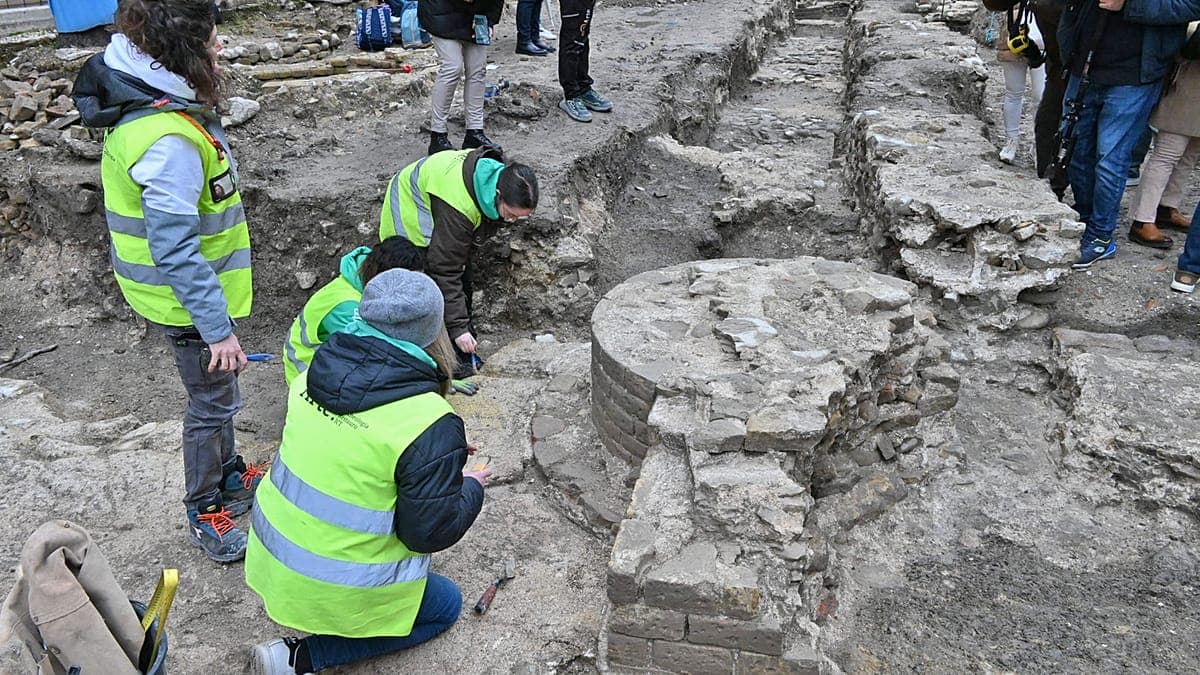
Archaeologists in Fano, Italy, have finally struck the jackpot of historical pedantry, unearthing what they claim is the ‘Tutankhamun’s tomb’ of architecture: the sole surviving basilica definitively attributed to Marcus Vitruvius Pollio. For the uninitiated—meaning anyone with a social life or a job that doesn't involve dusting off limestone with a toothbrush—Vitruvius was the original architecture influencer. He wrote the book on how things should look, literally. His 'De Architectura' became the blueprint for the Western world’s obsession with proportion, strength, and beauty. And now, after centuries of searching, we’ve found the actual physical evidence of his ego in the Marche region. It’s a moment of profound significance for people who find the texture of ancient mortar more erotic than human contact.
The hyperbole surrounding this find is, as expected, nauseating. Comparing a pile of ruined columns to the gold-stuffed burial chamber of a boy king is the kind of linguistic inflation that makes the Weimar Republic look like a beacon of fiscal restraint. But it serves a purpose. It allows the academic elite to pat themselves on the back for 'rediscovering' the roots of our civilization, while ignoring the fact that the civilization in question is currently a crumbling facade of strip malls and soul-crushing glass boxes. We are told this basilica represents the pinnacle of 'Firmitas, Utilitas, and Venustas'—strength, utility, and beauty. It’s a cruel irony to dig this up in an era where our buildings have the structural integrity of a wet cardboard box, the utility of a labyrinth, and the beauty of a brutalist car park.
Vitruvius, the man who gave us the proportions for the Vitruvian Man—that four-legged sketch every college freshman puts on their wall to signal 'intellect'—would likely be horrified if he could see how we’ve interpreted his legacy. He believed architecture should reflect the harmony of the universe. Looking at the modern skyline, one can only conclude that the universe is a cluttered, chaotic mess of cheap materials and cost-cutting measures. The archaeologists are swooning over the fact that they’ve found the only building Vitruvius ever claimed to have built. It’s the ultimate provenance, the holy grail of 'I told you so' for architectural historians. But what does it actually give us? It gives us another site for tourists in fanny packs to shuffle through, another set of ruins for a bankrupt government to monetize, and another reason for Italians to pretend that their glorious past somehow compensates for a present defined by bureaucratic paralysis and economic stagnation.
The political response will be predictably bifurcated and equally moronic. On the Right, expect a surge of nationalistic chest-thumping. They will point to these stones as proof of an inherent cultural superiority, a 'golden age' to which we must return, ignoring that the Romans were just as prone to corruption, bad plumbing, and terminal vanity as we are. They’ll use Vitruvius as a mascot for a version of 'Western Civilization' that exists only in their fever dreams and badly rendered YouTube documentaries. On the Left, the performative hand-wringing will begin shortly. There will be debates about the 'exclusivity' of classical proportions, critiques of the 'patriarchal' nature of Vitruvian geometry, and perhaps a protest or two about the environmental impact of excavating old rocks. Both sides will miss the point entirely: the basilica is a tomb not just for Vitruvius’s reputation, but for the very idea that humanity is capable of building anything that lasts longer than a lease agreement.
Let’s be honest about what we’re looking at here. This isn’t a rebirth of classical wisdom; it’s a post-mortem. We are a species of scavengers, picking through the garbage of our ancestors because we’ve run out of original ideas. We find a few slabs of marble in Fano and act as if we’ve found the secret to life, when in reality, we’ve just found another reminder of how far we’ve fallen. Vitruvius wrote about harmony and the divine proportion because he lived in a world that still believed in the possibility of order. We live in a world that believes in the possibility of a viral video. The discovery of this basilica won't inspire a new Renaissance. It won't lead to better urban planning or a return to aesthetic standards. It will be photographed, cataloged, tucked behind a velvet rope, and eventually forgotten by everyone except the few tenured professors who can use it to justify their research grants.
In the end, the Vitruvius basilica is just another pile of debris in a world that is rapidly becoming one giant archaeological site. We dig up the past because the future is a terrifying void of our own making. We obsess over the 'sole building' of a dead architect because the living ones are too busy designing 'mixed-use developments' that look like they were generated by a glitching AI. So, let the archaeologists have their moment of ecstasy. Let the politicians draft their press releases. But let’s not pretend that finding Vitruvius’s basement is going to save us from our own monumental stupidity. It’s just more stone for the graveyard.
This story is an interpreted work of social commentary based on real events. Source: EuroNews