Meta’s Legal Lobotomy: Zuckerberg Wants to Delete Mental Health and Harvard from Reality

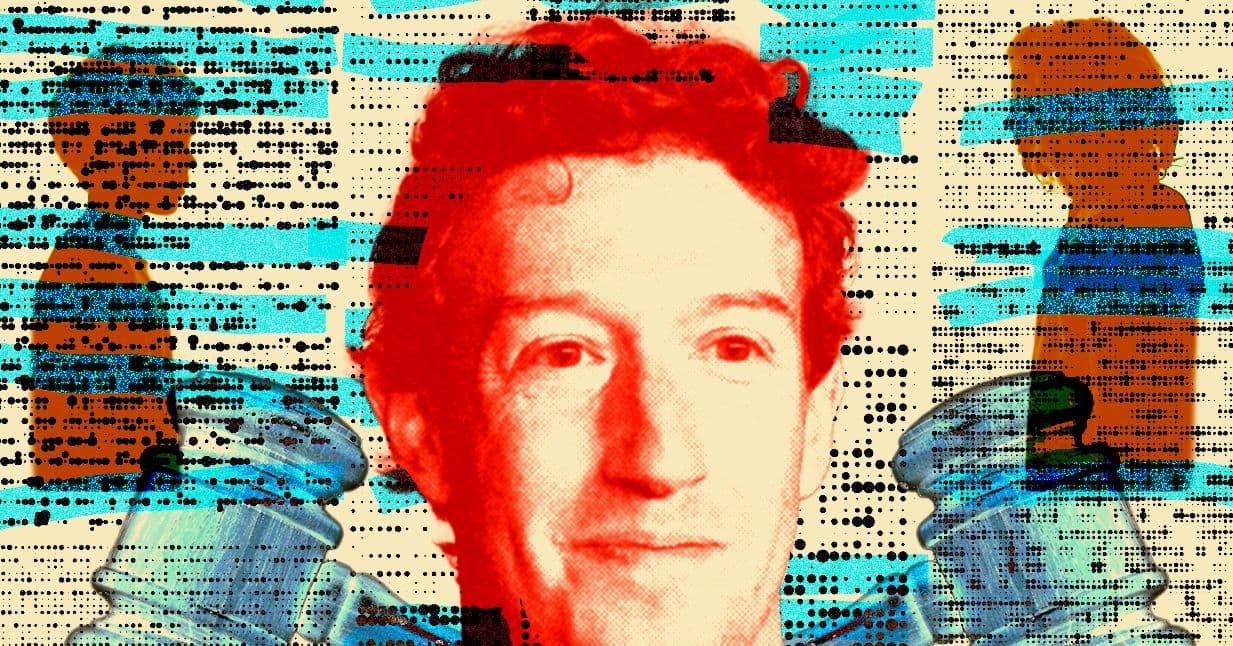
Mark Zuckerberg, a man whose public persona has the textural complexity of a boiled egg, is currently engaged in a legal exercise of such breathtaking hubris that it almost—almost—makes one admire the sheer gall of the Silicon Valley elite. In the high-desert legal theater of New Mexico, Meta’s legal legion is attempting a feat of intellectual gymnastics: they want to talk about child safety without mentioning the pesky, inconvenient concept of 'mental health.' It’s the kind of logic usually reserved for toddlers who believe that if they close their eyes, the universe ceases to exist. But when you have a market cap larger than the GDP of several medium-sized nations, you can afford to pay people to argue that reality is merely a suggestion.
The suit, brought by New Mexico’s Attorney General Raúl Torrez, alleges that Meta’s platforms are essentially digital playgrounds where the slides are coated in glass shards and the swings lead directly into a furnace of predatory behavior. In response, Meta’s defense team is pulling out the heavy hitters of obfuscation. They are seeking to bar any evidence regarding the mental health impacts of their platforms. This is like a car manufacturer arguing that the concept of 'deceleration trauma' is a prejudicial buzzword during a trial about faulty brakes. Meta claims that these discussions are inflammatory and would unfairly bias the jury. One wonders what they think a trial about child safety is supposed to be about—perhaps a dry discussion on server latency and the aesthetic merits of the 'like' button?
But the true pièce de résistance of this legal vanity project is Meta’s desperate scramble to redact Zuckerberg’s Harvard past. Yes, the origin story that has been immortalized in film and thousands of sycophantic business school case studies is now suddenly 'irrelevant.' Meta argues that mentions of Zuckerberg’s time at Harvard, and specifically the birth of Facebook, would only serve to poison the well. Of course it would. Reminding a jury that the global behemoth currently devouring the attention spans of three billion people began as a digital burn-book for rating the attractiveness of female undergraduates tends to undercut the 'we care about the community' branding. It’s hard to play the benevolent architect of human connection when your foundation was built on the adolescent spite of a coding prodigy who couldn’t get a date.
The irony, thick enough to choke a horse, is that while Meta tries to scrub the record, the state of New Mexico is engaging in its own brand of performative righteousness. Attorney General Torrez is positioning himself as the vanguard of child protection, a role that politicians find infinitely more rewarding than, say, fixing the crumbling education systems or the systemic poverty that actually fuels the vulnerabilities these platforms exploit. It is a collision of two equally nauseating forces: the amoral corporate machine that views children as 'lifetime value' metrics, and the political machine that views them as convenient props for a press release. They both need this trial to be a spectacle, though for diametrically opposed reasons.
To Meta, the idea that their algorithms might be linked to depression, anxiety, or body dysmorphia is just 'anecdotal noise' that shouldn't clutter a courtroom. They want a sanitized trial, a vacuum where the only things that exist are terms of service agreements and corporate compliance reports. They are essentially asking the court to grant them a 'delete' button for history. If they can scrub the 'mental health' keywords and the Harvard pedigree, what’s left? A faceless entity that simply facilitates 'engagement.' It’s a masterful attempt at turning a horror story into a technical manual. Zuckerberg doesn't want to be the guy who broke the youth; he wants to be the guy who simply provided the pipes, never mind that the pipes are leaking toxic sludge.
The broader tragedy here is not just the legal maneuvering, but what it says about our current era. We live in a time where the architects of our digital misery are allowed to argue that the consequences of their architecture are inadmissible. Zuckerberg wants us to forget he was the boy-king of Cambridge who stumbled upon a way to monetize human insecurity. He wants us to believe he is the elder statesman of the 'Metaverse,' a virtual utopia that—let’s be honest—nobody actually wants to inhabit. By trying to bar these mentions, Meta is admitting that their reality cannot withstand the scrutiny of their own history. Ultimately, the New Mexico trial will likely result in a settlement that amounts to a rounding error for Meta, and a series of 'reforms' that will be outdated before the ink is dry. The state will claim victory, Zuckerberg will keep his Harvard memories in a locked vault, and the children of the world will continue to scroll their way into a dopamine-depleted oblivion. We are watching a legal battle between a company that has no soul and a government that has no clue.
This story is an interpreted work of social commentary based on real events. Source: Wired