The Taxidermy of Consent: John Lee and the Great Patriotic Echo Chamber
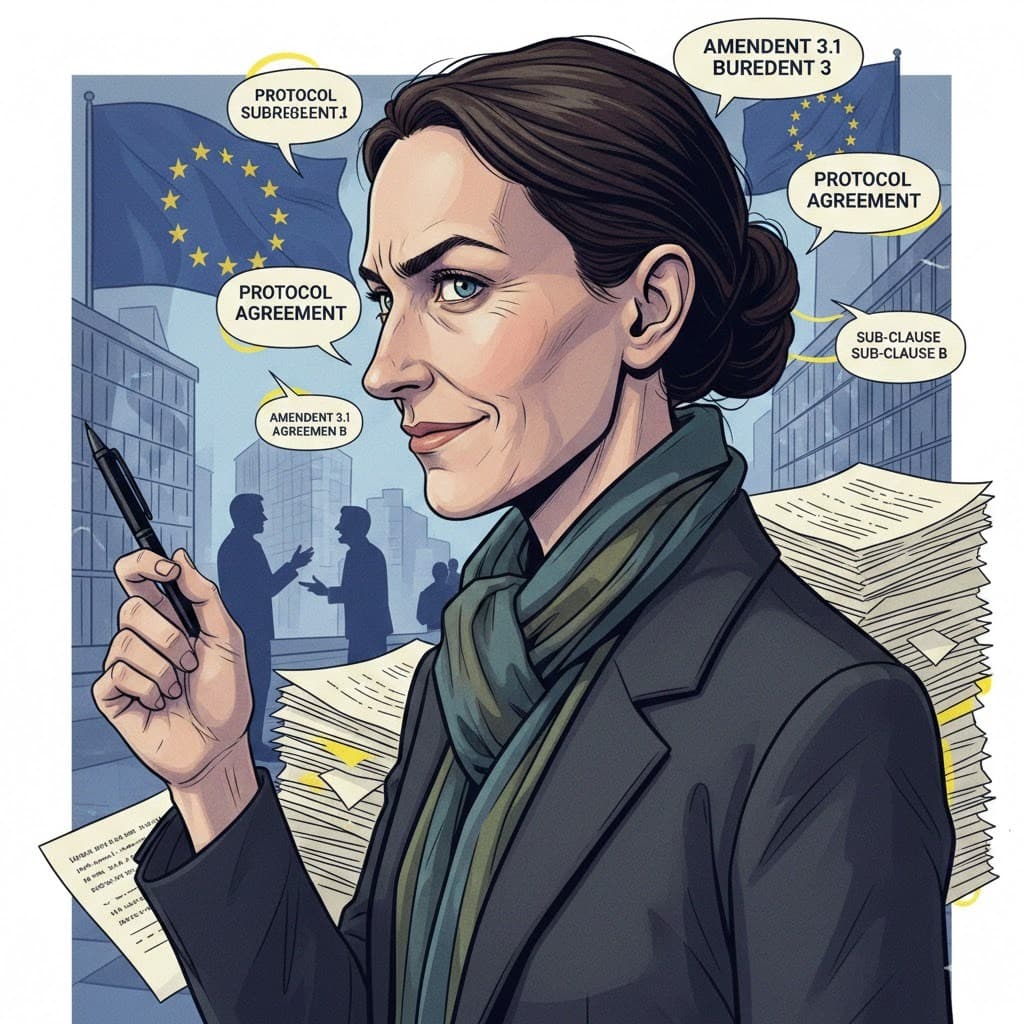

There is something profoundly touching, in a bleak, Beckettian sort of way, about the manner in which Chief Executive John Lee Ka-chiu handles the English language. He uses it not to communicate, but to perform a kind of linguistic taxidermy, stuffing hollow concepts with the straw of officialdom until they stand upright, glassy-eyed and terrifyingly still. His recent praise for the Hong Kong delegates to the Chinese People’s Political Consultative Conference (CPPCC) as a “steadfast patriotic force” is a masterpiece of the genre. It is the sort of phrase that sounds impressive until you realize it possesses the structural integrity of a soap bubble.
To the uninitiated, the CPPCC is China’s top political advisory body. To those of us who have spent more than a weekend observing the slow-motion collision of authoritarianism and bureaucracy, it is a grand theater of the redundant. Lee’s assertion that these delegates make an “important contribution” to the city’s prosperity and stability is technically true, provided your definition of “contribution” is the act of nodding in perfect, metronomic unison. This is the new Hong Kong: a city where “advisory” means listening to the echo of your own instructions and “patriotic” means having the survival instinct of a careerist with a mortgage.
Watching Lee host Jiang Zuojun, vice-chairman of the CPPCC’s 14th National Committee, at Government House was a study in administrative eroticism. There is a specific kind of thrill that bureaucrats get when they meet to discuss the success of their own committees. It is the ultimate closed loop. One can almost see the satisfaction in the room—a group of men in sharp suits celebrating the fact that they have successfully consulted themselves and found their own performance to be beyond reproach. The irony, of course, is that Government House was once the seat of a different kind of colonial administrator, one who at least had the decency to be transparently aloof. Lee, however, represents the modern variant: the manager who insists he is a servant of the people while ensuring the people are never actually bothered with the burden of choice.
Let us deconstruct the term “steadfast patriotic force.” In the lexicon of the new era, “steadfast” implies a total lack of movement, a moral and intellectual paralysis that prevents any sudden gestures of independent thought. To be “patriotic” in this context is not to love one’s country, but to love the current management of one’s country with the terrifying intensity of a hostage. When combined, these words form a “force” that does not act, but merely exists as a human bulwark against the inconvenient winds of dissent. It is a fascinating sociological experiment: how many people can you fit into a room before the collective weight of their unshakeable loyalty causes the floor to give way?
Lee’s obsession with “long-term prosperity and stability” is equally revealing. In the cynical halls of power, “stability” is the silence that follows a total clearance. It is the peace of the graveyard, or at least the peace of a shopping mall where everyone is too tired to argue. Prosperity, meanwhile, is measured in the successful alignment of political interests with the bottom line of the elite. The delegates are essential to this because they provide the necessary optics of consensus. They are the decorative lace on the iron fist. By praising them, Lee is essentially thanking them for being such convincing extras in the movie of his own administration.
There is an inherent tragedy in this spectacle, one that escapes Lee because he is the lead actor. He speaks of these delegates as if they were a vanguard of progress, rather than a collection of individuals whose primary talent is staying within the lines of a pre-drawn coloring book. The meeting, occurring just months before another major political milestone, serves as a reminder that the machinery of state is working perfectly: it is producing endless quantities of paperwork, several polite smiles, and exactly zero surprises. For an intellectual of my disposition, it is hard not to admire the sheer, unmitigated boredom of it all. It takes a monumental effort to make the dismantling of a city’s political soul look this much like a middle-management seminar.
Ultimately, Lee’s “steadfast patriotic force” is the ultimate achievement of a system that prizes obedience over vitality. As the city prepares for its next series of bureaucratic rituals, we can rest easy knowing that the delegates will continue to advise, the committees will continue to sit, and John Lee will continue to find new and creative ways to say absolutely nothing with the utmost sincerity. It is a collapsing theater of the absurd, and the actors have forgotten that they are supposed to be performing for an audience. They are now simply performing for each other, in a room with no windows, applauding the fact that they are still there.
This story is an interpreted work of social commentary based on real events. Source: SCMP