The Congolese Carousel of Despair: Where 'Peace' is Just a Brief Intermission for Rebranding

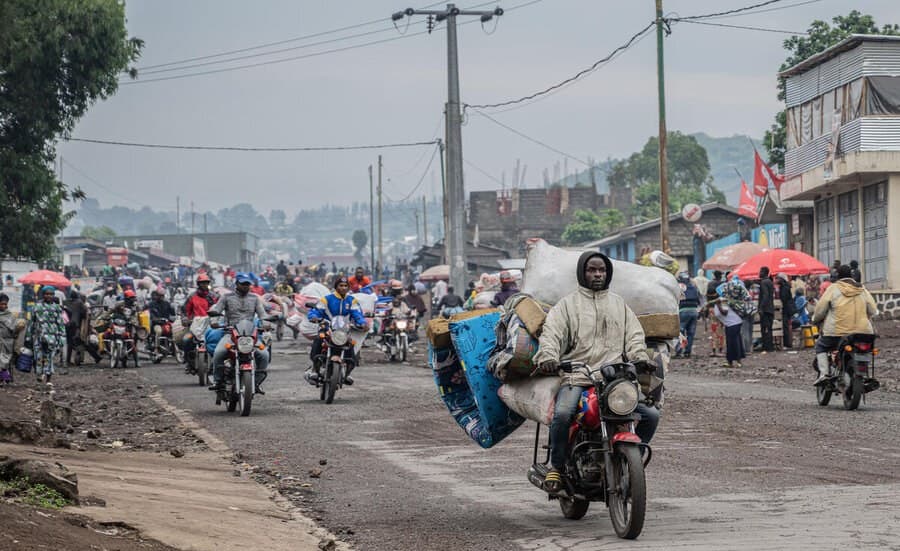
Welcome back to the world's most predictable tragedy, a performance art piece so repetitive and agonizing that even the vultures in South Kivu are beginning to look bored. Our latest dispatch from the abyss involves the Democratic Republic of Congo, specifically the city of Uvira, where Human Rights Watch (HRW) is currently engaged in its favorite pastime: shouting into a void constructed of international apathy and bureaucratic rot. The M23 rebels have reportedly withdrawn, which in this part of the world is less an act of surrender and more of a tactical exhale before the next inhalation of civilian blood. Naturally, the usual suspects—the Congolese government in Kinshasa and the decorative fixtures known as the UN Mission (MONUSCO)—have been asked to 'act.' It is a request so adorable in its naivety that it almost makes one miss the innocence of childhood, before we realized that 'acting' in a geopolitical context usually involves a series of strongly worded emails and an increase in the per diem for peacekeepers who wouldn't recognize a human right if it bit them on their taxpayer-funded ankles.
Let us deconstruct the players in this theater of the absurd. First, we have the Congolese authorities. Calling the administration in Kinshasa an 'authority' is a generous use of the English language, akin to calling a cardboard box a fortress. For years, the central government has treated the eastern provinces like a distant, annoying cousin who only calls when they’ve set the house on fire. They are ostensibly responsible for protecting the civilians in South Kivu, yet their primary contribution to the region’s stability has been a consistent, breathtaking display of incompetence. When the M23 retreats, it leaves a vacuum. In the physical world, a vacuum is a space devoid of matter; in the DRC, a vacuum is a space immediately filled by the next gang of opportunistic thugs with a penchant for Kalashnikovs and a total lack of moral fiber. The government’s plan, if one can call it that, appears to be a strategy of 'strategic hoping'—hoping the rebels go away, hoping the UN does their job, and hoping the world keeps buying the cobalt required to power the very smartphones people use to ignore news about the Congo.
Then there is MONUSCO. Ah, the United Nations. The world’s most expensive audience members. They have been in the DRC for decades, perfecting the art of the 'concerned observation.' Their blue helmets serve as excellent targets for snipers and even better symbols of international impotence. HRW is practically begging them to do something about the 'abuses' following the M23 withdrawal. What does that look like in practice? Perhaps a white SUV patrol that arrives just in time to count the bodies and fill out a spreadsheet? The UN’s presence in the DRC is the geopolitical equivalent of a screen door on a submarine. It provides the illusion of a barrier while ensuring everyone inside still drowns. The mission has spent billions of dollars to achieve a stalemate that looks suspiciously like a slow-motion massacre. But don't worry, I'm sure this time, with another report from HRW safely filed in a mahogany cabinet in New York, the peacekeepers will suddenly find the will to actually keep the peace.
And let’s not forget the rebels themselves. The M23 withdrawal from Uvira is being treated as a moment of 'risk,' which is like saying there is a 'risk' of getting wet if you jump into the Atlantic. The risk isn't new; it's the permanent state of existence. These rebel groups are not political movements; they are decentralized franchises of chaos, fueled by mineral wealth and the knowledge that no one is coming to stop them. They move, they loot, they rape, and then they 'withdraw' to wait for the next shipment of ammunition or the next shift in the political wind. To suggest that their departure creates a new danger is to ignore the fact that the danger never left. It just changed its uniform.
Finally, we have the 'humanitarian-industrial complex.' Human Rights Watch is doing what it does best: documenting the inevitable. Their report details the threats to civilians with the clinical detachment of a coroner performing an autopsy on a patient who isn't even dead yet. They call for 'accountability' and 'protection,' terms that have become so hollowed out by overuse that they’ve lost all semantic value. In the DRC, accountability is a myth told to frighten corrupt officials who know perfectly well they will never face a courtroom. The global community views the Congo not as a nation of humans, but as a geological site with a pest problem. We want the minerals; we just find the screaming of the inhabitants to be a bit distracting. The cycle in South Kivu will continue, not because it can't be stopped, but because stopping it would require an investment of effort and integrity that the modern world simply cannot afford. So, raise a glass to the people of Uvira. They are currently being 'protected' by a government that doesn't care and a UN that doesn't act, while being watched by a world that has already scrolled past this headline to look at a video of a cat playing a piano. Truly, progress is a marvel.
This story is an interpreted work of social commentary based on real events. Source: AllAfrica