The 2026 Holyrood Purgatory: A Masterclass in Devolved Futility

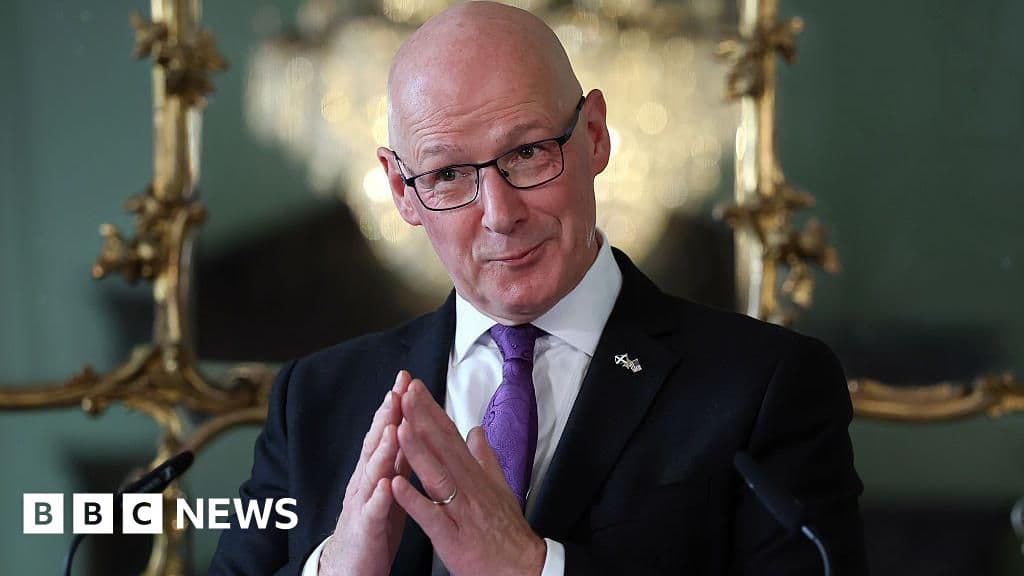
There is a specific kind of exhaustion that only the Scottish political cycle can induce, a grey, drizzling boredom that mirrors the climate of the land it purports to govern. As the BBC’s Glenn Campbell has so dutifully informed us, the race for the 2026 Holyrood election is 'stepping up.' If the phrase 'stepping up' conjures images of dynamic movement or progress, allow me to disabuse you of such delusions. In the context of Scottish politics, 'stepping up' is merely the sound of several dozen careerists shuffling their feet in a drafty building, desperately trying to remember which platitudes they haven't exhausted yet.
We are now entering a two-year preamble to an election that promises to change absolutely nothing while costing everyone a great deal of sanity. The SNP, a party currently resembling a once-grand estate that has been converted into a series of increasingly desperate Airbnb rentals, is attempting to pivot. After the collapse of the Sturgeon personality cult and the subsequent realization that their primary policy—independence—is less a political goal and more a comfort blanket they stroke when the reality of their governing record becomes too frightening, they are in a state of existential panic. They will spend the next twenty-four months talking about 'mandates' and 'Tory austerity' with the frantic energy of a man trying to sell a flooded car by pointing out that the radio still works.
On the other side of this intellectual vacuum stands Scottish Labour, a group of individuals who have spent the last decade acting like the bitter ex-spouse of the Scottish electorate. Now, emboldened by the fact that their London-based management managed to win an election by simply not being the other guys, they believe they have a divine right to reclaim the throne. Their strategy is bold: they plan to be exactly like the SNP, but with slightly more sensible haircuts and a direct line to a Prime Minister who views Scotland with the same mild, distracted interest one might afford a distant cousin’s stamp collection. They offer 'change,' which in political parlance means 'the same outcomes, but delivered by people who went to different schools.'
Let us not forget the Scottish Conservatives, a political entity that exists primarily as a cautionary tale. They are the vestigial tail of British politics, flapping uselessly in the wind, occasionally making noise about 'standing up for the Union' to a public that has long since realized that the Union is less a partnership and more a mutual suicide pact. And then there are the Scottish Greens, the performative wing of the Holyrood circus, who believe that if they can just ban enough things, the world will forget that they are essentially a lobby group for the terminally self-righteous. They will spend the race trying to prove they are the 'conscience' of Scotland, which is a bit like being the most ethical shark in the tank.
What Campbell’s analysis fails to explicitly state—because he is a polite man and I am not—is that this entire 'race' is a performance for an audience that has already left the theater. The Scottish Parliament, that architectural fever dream of upturned boats and expensive wood, has become a playpen for mediocrity. It is a place where billion-pound ferry projects go to die and where the education system is treated as a laboratory for 'progressive' experiments that yield nothing but illiteracy and confusion. To watch these parties gear up for 2026 is to watch a group of toddlers argue over who gets to drive a car that doesn't have an engine.
The tragedy of the situation is the utter lack of intellectual curiosity across the board. No one is discussing how to actually fix the structural decay of the nation. Instead, we are treated to a perpetual grievance machine. If the SNP fails, it’s Westminster’s fault. If Labour eventually fails, it will be the 'SNP legacy.' It is a closed loop of accountability, a Mobius strip of blame that ensures no one ever has to actually take responsibility for the fact that the country is treading water in a very cold pond. The 2026 election will not be a turning point; it will be a confirmation of our collective stagnation. We are being asked to choose which flavor of disappointment we prefer, while the people asking us to choose are already measuring the curtains in their ministerial offices. It is not a race; it is a funeral march in slow motion, and the only thing 'stepping up' is the sheer audacity of the people asking for your vote.
This story is an interpreted work of social commentary based on real events. Source: BBC News