Coinbase CEO Brian Armstrong Reminds the U.S. Senate Who Actually Owns the Deed to the Capitol

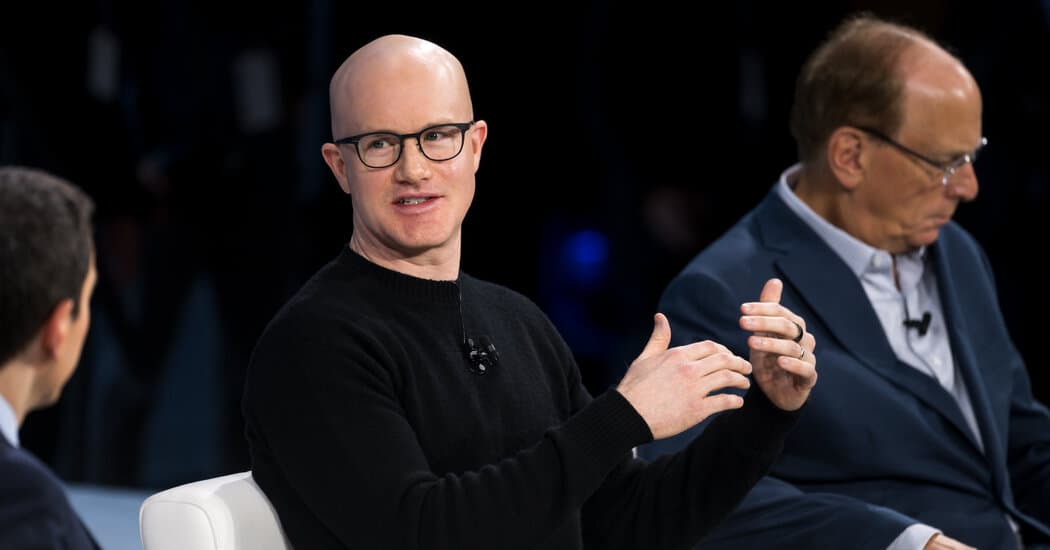
The American experiment has finally reached its logical, pathetic conclusion: a sovereign nation-state with a nuclear arsenal and a penchant for lecturing the world on "democracy" has been effectively told to sit in its designated corner by a man who sells digital receipts for invisible coins. Brian Armstrong, the high priest of Coinbase, recently glided into the hallowed, musty halls of the U.S. Senate and, with the casual indifference of a landlord swatting a fly, scuttled a major cryptocurrency bill. It wasn’t a debate; it was a reminder of the current pecking order. The Senate committee vote didn't just fail; it vanished into the ether, proving once and for all that in the halls of power, "decentralization" is just a fun word you use to trick idiots into buying Dogecoin while you consolidate the most centralized lobbying apparatus in Washington.
For years, the crypto-evangelists—those glassy-eyed acolytes of the Church of the Blockchain—have preached the gospel of "democratized finance." They promised us a glorious, peer-to-peer utopia where the grubby hands of "centralized authorities" could no longer touch our wealth or dictate our lives. And yet, here we are, watching the most centralized authority in the domestic crypto-sphere exercise more raw, unfiltered political power than a mid-sized labor union or a small European country. The irony is so thick you could choke on it, though most of the inhabitants of Capitol Hill are already too busy gasping for the oxygen of campaign contributions to notice they've been effectively replaced by a bald man with a digital ledger.
The bill in question was supposed to be a "landmark" piece of legislation, the kind of paper-shuffling exercise that senators use to justify their six-figure salaries and premium healthcare. It was meant to bring "order" to the digital Wild West, a concept that is inherently funny given that the original West was won by people who would have found the concept of "stablecoins" even more fraudulent than a snake-oil salesman’s tonic. But Armstrong voiced his "concerns," and like a group of Victorian orphans being told there would be no gruel today, the Senate committee scurried away to rethink their lives. It is a masterclass in the theater of the absurd. On one side, you have the political Right, whose members view any regulation as a personal affront to their god-given right to be swindled by a pyramid scheme. On the other, the performative Left, whose outrage about "consumer protection" is always conveniently silenced the moment a Super PAC check with enough zeros clears the bank. They are two sides of the same counterfeit coin, both eager to kneel before the new digital masters.
Let’s be brutally honest about what Coinbase is: it is a toll booth. It is a centralized exchange that facilitates the trading of assets that possess no intrinsic value, backed by nothing but the collective delusion of people who think they’re "early" to a revolution that actually started fifteen years ago. Armstrong doesn’t want "innovation" in the sense of making the world better; he wants a moat. He wants the kind of regulatory "clarity" that ensures no one else can build a bigger toll booth than his. And the Senate, that calcified collection of geriatric egoists and aspiring TikTok influencers, is all too happy to oblige. They aren't legislators in any meaningful sense; they are glorified valets for the billionaire class, waiting at the curb to park the Ferraris of whichever tech mogul happens to be in town this week.
The spectacle of a Senate committee vote being aborted because a CEO felt "uncomfortable" is the ultimate indictment of our political reality. It reveals the Washington "process" for what it truly is: a scripted drama where the ending is already written by the sponsors before the cameras even start rolling. The "concerns" Armstrong voiced weren't about the stability of the American economy or the protection of the average retail investor—the "little guy" that both parties claim to champion while simultaneously picking his pockets for spare change. No, his concerns were about the bottom line of a company whose primary product is the facilitation of high-stakes digital gambling for a generation that has given up on the idea of actually owning a house.
This is the world we’ve built—a world where "decentralization" is just a marketing buzzword used to mask the consolidation of power into even fewer, even less accountable hands. We are told that crypto is the future of freedom, yet its primary champion uses the most archaic, centralized levers of power—lobbying, campaign finance, and backroom deals—to ensure that the future looks exactly like the past, only with more laser eyes on social media. The hopeless reality is that we aren't moving toward a new financial system; we’re just watching the old one get a rebranding. The blockchain is supposed to be immutable, but the only thing truly immutable in this country is the subservience of the political class to the highest bidder.
The Senate will eventually pass some version of a bill, of course. But you can be certain it will be the version that Coinbase permits to exist. It will be a bill written by the regulated, for the regulated, ensuring that the revolving door between the SEC, the Senate, and the boardrooms of Silicon Valley continues to spin with frictionless efficiency. Meanwhile, the rest of us are left to watch this slow-motion car crash of a civilization, where the only thing being "disrupted" is our collective intelligence. We are all NPCs in Brian Armstrong's world now, and the only "sovereignty" we have left is the choice of which billionaire's platform we'd like to use to lose our life savings. It’s not a revolution; it’s a hostile takeover by the most boring people alive.
This story is an interpreted work of social commentary based on real events. Source: NY Times