The IMF Discovers Water is Wet and the Global Economy is a Fragile House of Cards

The International Monetary Fund, an organization that exists primarily to provide comfortable chairs and tax-free stipends to the world’s most polished technocrats, has finally emerged from its mahogany-lined echo chamber to grace us with a revelation so profound it could have been authored by a moderately intelligent golden retriever: trade tensions and the potential collapse of the artificial intelligence bubble might—just might—be bad for global growth. It is a masterclass in the obvious, delivered with the gravity of a funeral oration. While the rest of the species is busy hurtling toward an inevitable cliff of its own making, these high-priests of the spreadsheet are concerned that the trajectory might be slightly less profitable than their quarterly projections suggested.
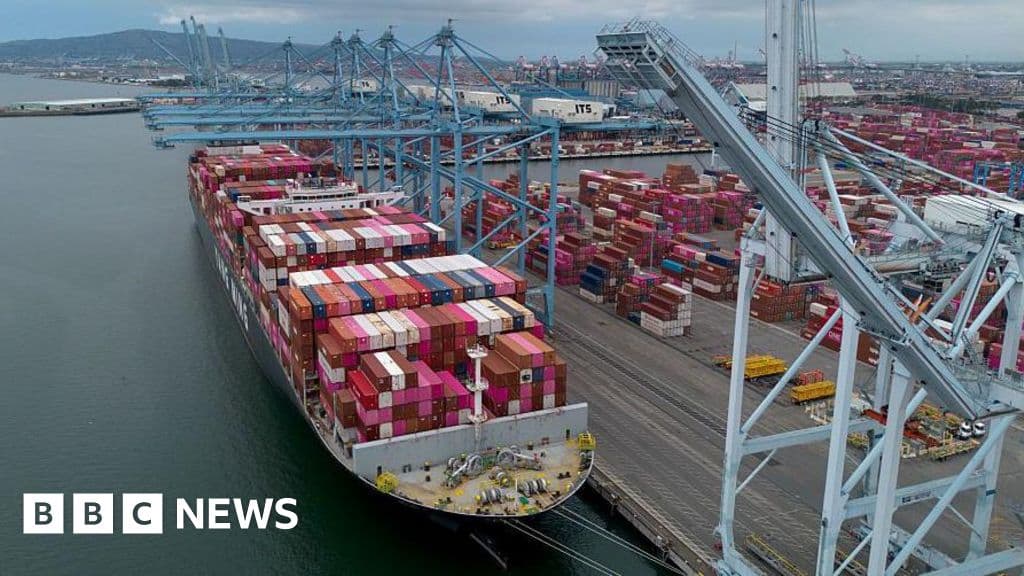
Let’s talk about these 'trade tensions,' a polite, bureaucratic euphemism for the fact that the world’s leading nations have collectively decided to revert to the intellectual maturity of a playground dispute. On one side, we have the aging hegemony of the West, desperate to cling to a status quo that hasn't functioned for anyone below the level of a billionaire since the 1990s. On the other, we have the rising autocracies of the East, who have realized that if you own the factory, you can eventually own the owner. Both sides are currently engaged in a race to see who can build the highest wall of tariffs, apparently under the delusion that making everything more expensive for their own citizens is a strategic masterstroke of geopolitical genius. It is a performance of profound stupidity where the actors are convinced they are playing 4D chess, when in reality, they are simply eating the pieces.
The IMF’s concern regarding a 'reversal in the AI boom' is perhaps the most delicious irony in their latest report. For the last two years, the global economy has been kept afloat by nothing more than the breathless, sweaty promise that if we feed enough stolen data into a giant, electricity-guzzling math machine, it will eventually figure out how to solve the problems we are too lazy and incompetent to address. We have bet the proverbial farm on a digital fever dream. Silicon Valley—a place where the ratio of ego to actual utility is approximately a billion to one—has convinced the world that we are on the verge of a technological utopia. The IMF, being the risk-averse ghouls they are, is starting to notice that the math doesn't quite add up. They’ve realized that a 'boom' built on generative chatbots writing mediocre poetry and generating images of cats in space might not be the sturdiest foundation for the future of human civilization. If the AI bubble pops, it won't just be the tech bros losing their Patagonia vests; it will be the final realization that there is no magical algorithm coming to save us from ourselves.
The problem, as the IMF is too polite to say but I am perfectly happy to scream into the void, is that 'global growth' itself is a farce. We are obsessed with the expansion of a system that is fundamentally cannibalistic. To achieve the growth these bureaucrats crave, we must consume more, exploit faster, and ignore the crumbling foundations of our social and ecological reality. The IMF warns of 'risks,' but the real risk is the continuation of the status quo. They fear a slowdown, yet a slowdown is the only thing that might force a moment of actual reflection. But reflection doesn't pay for the private jets that ferry these delegates to Davos or the World Bank summits, and it certainly doesn't help the 'Americas' or 'Asia' blocks feel superior to one another.
In their infinite wisdom, the IMF suggests 'multilateral cooperation' as the antidote. This is the intellectual equivalent of telling two starving wolves to share a single rabbit. Cooperation requires a level of shared reality and mutual respect that exited the global stage sometime during the late Bronze Age. Instead, we are left with a world of petty protectionism, where 'national security' is the catch-all excuse for every failed economic policy and every cynical grab for power. The Left will cry about the erosion of international norms while doing absolutely nothing to change the underlying greed, and the Right will thump their chests about sovereignty while selling off the last of their country’s assets to the highest bidder.
The IMF’s report is not a warning; it is a post-mortem delivered while the patient is still twitching on the table. They see the trade wars and the AI mirage not as symptoms of a terminal disease, but as unfortunate hiccups in an otherwise perfect system. They are wrong. We are witnessing the slow-motion collision of human arrogance and finite reality. The tensions they fear are the natural byproduct of a world where everyone wants everything and no one wants to pay the bill. So, let us raise a glass of overpriced, tariff-inflated champagne to the IMF. Thank you for telling us that the ship is sinking while you’re busy measuring the depth of the water in the ballroom. We’d be lost without you.
This story is an interpreted work of social commentary based on real events. Source: BBC News