The British Squeeze: A Slow-Motion Autopsy of a Dying Economy

Welcome to the United Kingdom, a damp, grey archipelago that has transitioned from being the workshop of the world to a high-priced museum of its own inevitable decline. The latest ‘news’—if one can call the rhythmic gasping of a terminal patient news—is that inflation has ‘dropped’ from its record highs. The headlines are vibrating with a desperate, pathetic optimism because the rate is inching closer to the Bank of England’s holy 2% target. Let us be clear: this is not a recovery. This is simply the arsonist slowing down his use of the flamethrower. The house is still on fire, but we are being asked to applaud because the flames are now a manageable shade of orange.
In the grand, miserable theater of British economics, the ‘cost of living crisis’ has become a permanent residency. The term itself is a masterstroke of linguistic sanitization. It frames the basic requirement of human survival as a ‘crisis,’ as if it were a freak storm or an act of God, rather than the calculated outcome of decades of systemic incompetence and corporate gluttony. Prices are still rising; they are just rising slightly slower than they were when everyone was panicking about whether to heat their homes or eat their pets. The Bank of England ghouls, sitting in their ivory towers with their spreadsheets and their six-figure salaries, talk about ‘inflation targets’ as if they are guiding a ship through a fog. In reality, they are throwing the crew overboard to lighten the load while the officers enjoy a catered lunch.
The Right, of course, is predictably moronic. Their solution to the slow-motion collapse of the British pound is to mutter darkly about ‘supply chains’ and ‘global factors,’ as if the utter gutting of the domestic economy was an unforeseen side effect of a rainy Tuesday. They cling to the necrotic remains of free-market dogma, insisting that if we just let the corporations squeeze the public for a few more pennies, eventually the ‘invisible hand’ will reach down and pat us on the head. It won’t. That hand is currently busy reaching into your pocket to make sure the shareholders don’t see a dip in their quarterly dividends. They’ve spent years deregulating everything that isn't nailed down, and now they act surprised that the edifice is leaning like a drunk in a gale.
Then we have the Left, whose performative outrage is as useful as a chocolate teapot. They bleat about ‘fairness’ and ‘windfall taxes’ while offering no actual alternative to the neoliberal rot that they themselves helped facilitate during their brief, beige periods of power. Their solution is always a slightly more polite version of the status quo—a kinder, gentler way to be priced out of your own life. They treat the electorate like children, promising that ‘growth’—that magical, mythical beast—will return if we just believe hard enough and wear the right colored ties. It’s a pathetic display of cowardice from a group of people who are more interested in their own moral superiority than in actually dismantling the mechanisms of the squeeze.
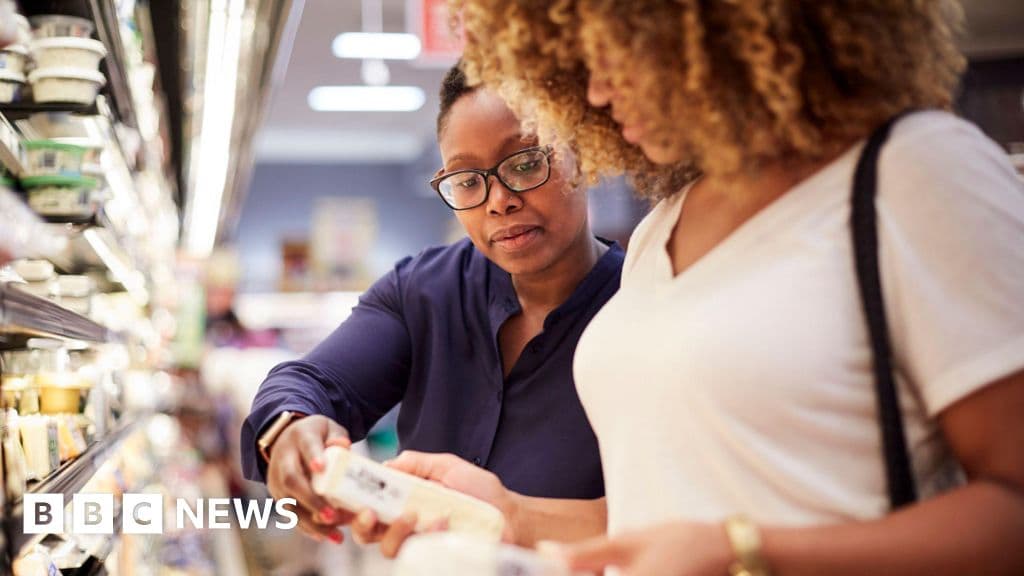
And let us not forget the public—the Great British Public—whose capacity for stoicism is indistinguishable from a total lack of imagination. They shuffle through the aisles of supermarkets, staring in slack-jawed horror at the price of a block of cheddar, yet they continue to buy into the narrative that this is all somehow necessary or unavoidable. They complain about the £6 sandwich while voting for the very people who made the £6 sandwich an economic inevitability. It is a cycle of masochism that would be impressive if it weren't so profoundly depressing. They are the ultimate consumers, consuming their own futures to pay for a present that is increasingly unaffordable.
The 2% inflation target is a mirage, a ghost story told to keep the markets from leaping off a ledge. Even if the Bank of England hits its precious number, it doesn't mean prices go down. It just means the theft becomes predictable again. The reality is that the UK is a post-imperial carcass being picked over by vultures in suits. Whether it’s the price of energy, the cost of a mortgage, or the absurdity of a pint of milk, the message is the same: you are being fleeced, and you are expected to be grateful for the privilege. There is no light at the end of the tunnel, only the headlights of an oncoming train that you’ll have to pay a 10% surcharge just to stand in front of.
This story is an interpreted work of social commentary based on real events. Source: BBC News