The 'Board of Peace': A Gold-Plated Lifeboat for the Diplomatically Bankrupt

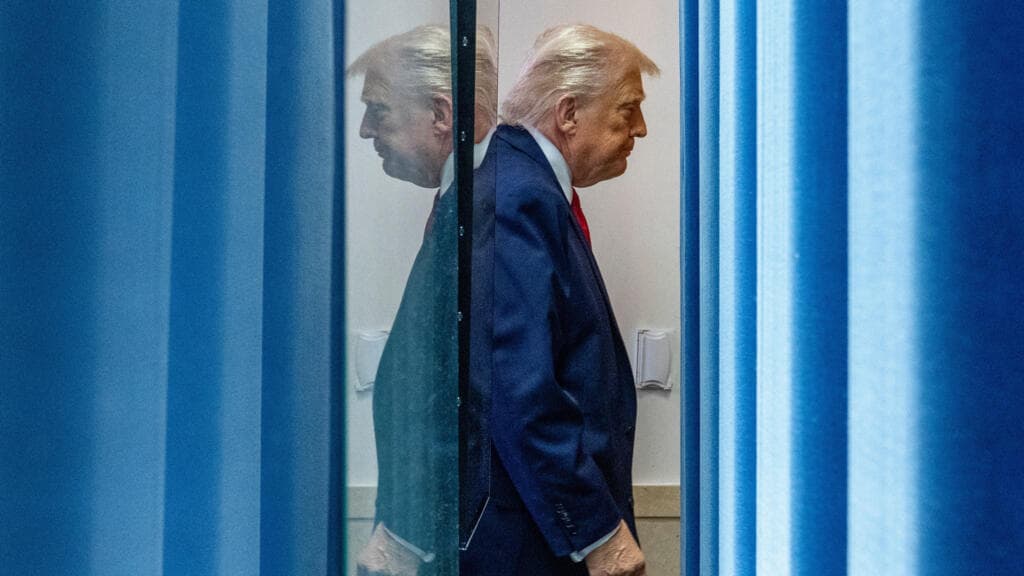
Humanity has always possessed a tragic, almost endearing fetish for committees. From the League of Nations—a collective of men in top hats who watched the world burn with impeccable manners—to the United Nations, a Manhattan skyscraper where the primary export is the 'non-binding resolution,' we have long believed that if you put enough self-interested actors in a room with a mahogany table, the laws of human nature will somehow be suspended. Enter the 'Board of Peace,' the latest iteration of this grand delusion, brought to you by a man who treats international treaties with the same reverence he treats a nondisclosure agreement with a failing casino. Donald Trump has decided to formalize the art of the deal into a new international body, and the world is reacting with the predictable mix of hysterical horror and moronic adulation.
Nine countries have already signed up for this 'Board,' because in a world where relevance is the only currency worth more than Bitcoin, who wouldn't want a seat at a table where 'peace' is the product and the customers are too exhausted to check the warranty? Leading the charge is Hungary, governed by Viktor Orbán, a man who treats democracy like an optional software update he has been 'remind me later'-ing for over a decade. The inclusion of Hungary tells you everything you need to know about the Board’s structural integrity. This isn't a diplomatic assembly; it’s a support group for illiberal sensibilities. It is an invitation-only VIP lounge for those who find the traditional rules of engagement too restrictive for their personal branding needs.
The irony, of course, is that the Board was initially pitched as a solution for Gaza. Gaza, a tragedy so profound and complex that it has broken every international institution for seventy years, is now being treated as a starter project for a new 'forum.' It is the diplomatic equivalent of trying to perform open-heart surgery because you once successfully applied a Band-Aid to a paper cut. The sheer audacity of the maneuver is almost impressive, if one ignores the mountains of historical evidence suggesting that 'boards' do nothing but generate billable hours for consultants and photo opportunities for despots.
The American Left is, predictably, in a state of performative cardiac arrest. They view this as an affront to the hallowed halls of the United Nations—an organization that has spent the last half-century perfecting the art of the strongly worded letter while millions perish in various shades of administrative indifference. To the liberal elite, the Board of Peace is a threat to the 'rules-based order,' a set of rules that seems to apply only when they aren't the ones breaking them. They hate the Board not because it won't work, but because it doesn't use the correct fonts or follow the proper subcommittee protocols. They are terrified that the monopoly on useless global posturing is being disrupted by a competitor with better social media engagement.
On the other side, we have the 'Right,' a collective of individuals who believe that putting a man who views alliances as protection rackets in charge of global harmony is a stroke of visionary genius. They see the Board of Peace as a middle finger to the 'globalists,' failing to realize that a 'Board of Peace' is, by definition, a globalist entity—just one that prefers the aesthetic of a boardroom to that of a lecture hall. They cheer for the 'Board' like it’s a sports team, oblivious to the fact that they aren't on the roster and never will be. For them, 'peace' is just another way to say 'my guy is winning,' even if the winning involves little more than a press release and a fresh coat of paint on the status quo.
Let’s examine the nine countries themselves. They represent a fascinating cross-section of the world’s most optimistic opportunists. These are nations that recognize the shifting winds of power and have decided that if the Titanic is going down, they might as well get a seat in the first-class lounge where the band is still playing. They aren't joining for peace; they are joining for proximity. The Board offers a direct line to the American presidency, bypassing the tiresome layers of State Department professionals who might actually ask annoying questions about human rights or fiscal transparency. It is a VIP list for the 21st century, where the entry fee is a willingness to nod while a billionaire explains that history started yesterday and will end whenever the ratings dip.
The Board of Peace is the inevitable conclusion of a world that has replaced substance with branding. We no longer want solutions; we want slogans. We want the comfort of knowing that someone, somewhere, is 'boarding' the peace. It doesn't matter that the Middle East remains a tinderbox, or that Eastern Europe is a graveyard, or that the global economy is a series of leveraged delusions. What matters is the Forum. What matters is the Membership. We are witnessing the birth of a new era of diplomacy: The Age of the Empty Gesture. And as the Board grows, adding more countries to its roster of the willing and the weary, the actual prospects for peace remain exactly where they have always been—somewhere deep in the dirt, buried under the weight of human stupidity and the insatiable need for a better headline. The Board will meet, the hors d'oeuvres will be served, and the world will continue its slow, agonizing spin into the sun, comforted by the knowledge that at least the table was mahogany.
This story is an interpreted work of social commentary based on real events. Source: RFI