The Universal Board of Peace: Branding the Silence Between the Sirens
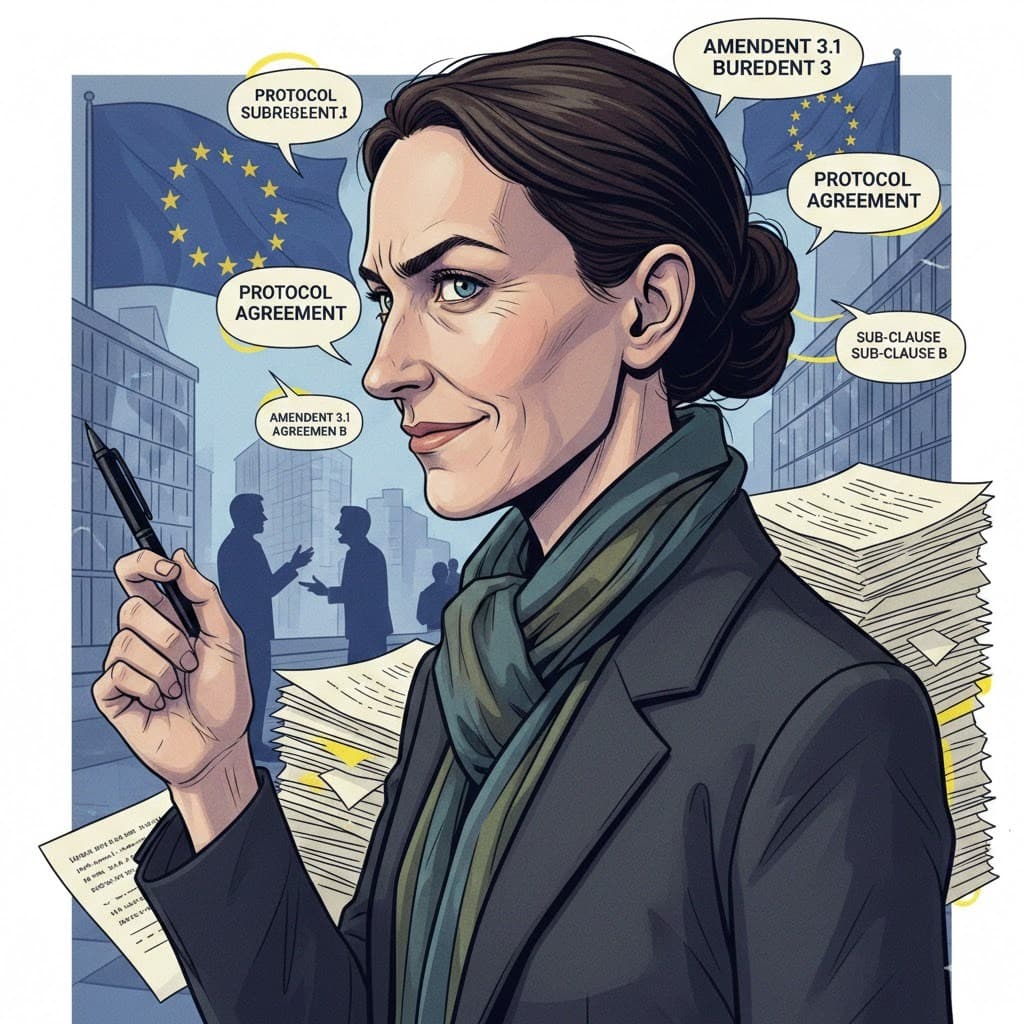
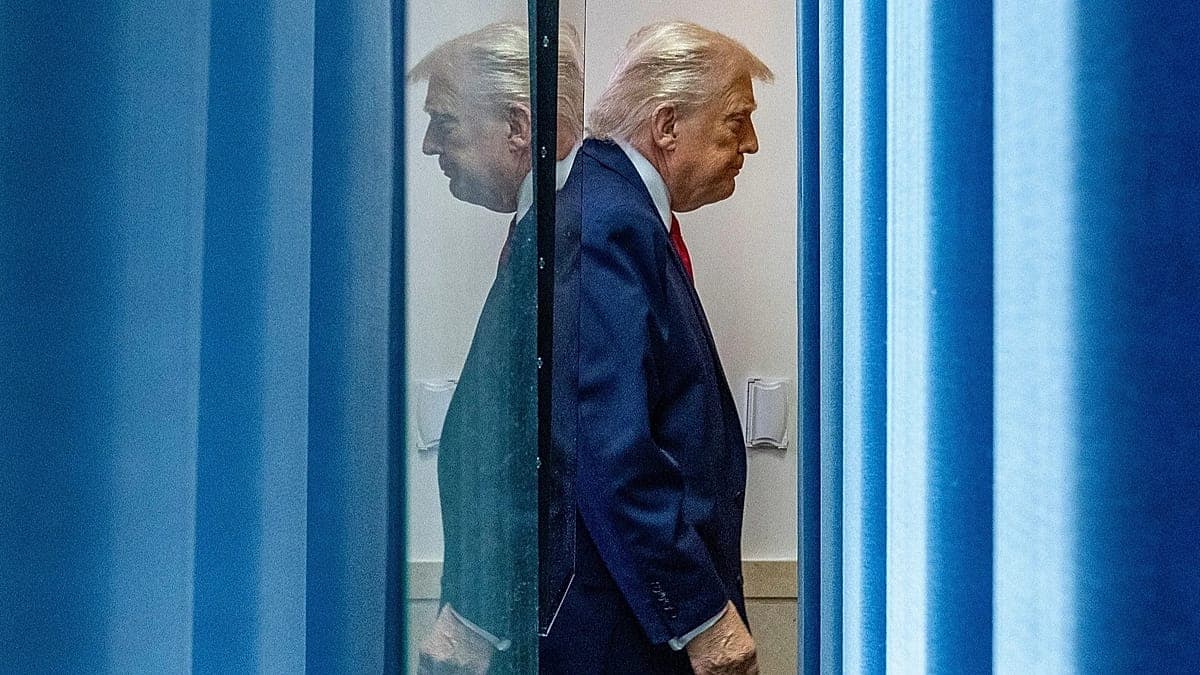
One must admire the sheer, unadulterated gall of the American political machine. It is a beast that survives solely on its ability to rename its failures, and its latest iteration—the proposed 'Board of Peace'—is a masterclass in the theater of the absurd. According to a recently leaked charter, Donald Trump envisions a body with a 'worldwide mandate' to oversee the absence of conflict, or at least the absence of conflict that hasn't been properly licensed. It is the ultimate vanity project: a bureaucratic monument to the idea that peace is not the result of arduous diplomacy or historical reconciliation, but rather something that can be managed by a committee of loyalists in a gold-leafed boardroom.
As a European, one grows accustomed to the stench of decaying institutions, but there is something uniquely refreshing about the American approach to international relations. It is less about the nuanced balance of power and more about the aggressive branding of tranquility. The 'Board of Peace' sounds like something dreamt up by a mid-century dystopian novelist who found the Ministry of Truth too subtle. It suggests that peace is a commodity, a franchise to be exported like chlorinated chicken or cinematic reboots. The leaked charter hints at a global reach, an ecclesiastical ambition that would make the medieval Papacy blush. It is the geopolitical equivalent of a 'Live, Laugh, Love' sign hung over a smoking crater.
Naturally, the international law experts have emerged from their ivory towers, blinking in the harsh light of reality, to inform us that such a board would have 'limited power.' This is the kind of profound insight for which one pays six-figure university tuitions. Of course it has limited power. Since when has international law been anything more than a polite suggestion written on expensive stationery? These experts worry about the 'legality' of a worldwide mandate, as if the history of the last century hasn't been a rolling sequence of superpowers ignoring mandates whenever they become inconvenient. The tragedy isn't that the board would be powerless; the tragedy is the assumption that power is the only thing missing from our current global chaos.
We live in an era where the performative has entirely superseded the functional. The Board of Peace is not intended to stop bullets; it is intended to provide a backdrop for the next press conference. It is the institutionalization of the 'peace through strength' trope, but with more subcommittees. It is an acknowledgment that the traditional avenues of diplomacy—those dusty, labyrinthine corridors in Geneva or New York—are considered too slow, too boring, and far too inclusive of people who don't appreciate the aesthetic of a well-tailored power suit. The charter suggests a desire to bypass the messy business of collective security in favor of a centralized, proprietary peace.
There is a certain 'I told you so' quality to this development. For years, we have watched the slow-motion collapse of the post-war order, a system that, for all its faults, at least pretended to care about consensus. Now, we are entering the age of the bespoke bureaucracy. Why bother with the United Nations when you can have a Board of Peace that answers to a single vision? It is the ultimate expression of the exasperated intellectual’s nightmare: a world where the complexities of history are reduced to a series of bullet points on a leaked document. The experts’ frantic analysis of the board’s 'power' misses the point entirely. The power isn't in the enforcement; the power is in the rebranding of reality.
In this collapsing theater, the Board of Peace is the final act of a tragicomedy. It is the moment where the actors, having forgotten their lines and lost their props, decide to simply rename the play 'The Triumph of Order' and hope the audience doesn't notice the set is on fire. It is a testament to the enduring belief that if you create a title grand enough, the reality will eventually fall into line. We are being asked to believe that peace can be decreed by a charter, managed by a board, and enforced by the sheer gravity of a worldwide mandate. It is a delusion so grand it borders on the sublime.
Ultimately, the Board of Peace is the perfect artifact for our times. It is ambitious, legally dubious, and entirely divorced from the grimy realities of global friction. It is a monument to the idea that the world’s problems are simply a matter of poor management. As we watch the experts debate the limits of its authority, we should perhaps take a moment to appreciate the irony: in a world teetering on the edge of multiple precipices, we are being offered a seat at a table that doesn't yet exist, to discuss a peace that no one knows how to define, governed by a board that has no way to enforce it. It is, quite frankly, the most honest piece of political theater we’ve seen in decades.
This story is an interpreted work of social commentary based on real events. Source: EuroNews