The Supply Chain of Despair: BBC’s Latest Poverty Procedural and the Myth of Rescue

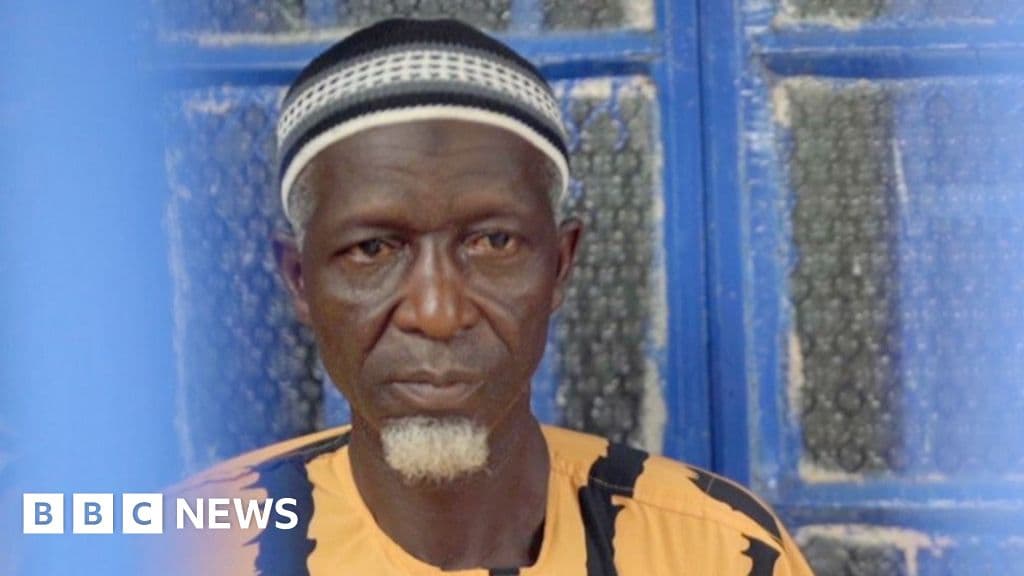
In the latest installment of ‘Look How Sad This Is’—brought to you by the BBC Africa Eye—we are treated to the spectacle of a man chasing the ghosts of his own offspring through the dust of Sierra Leone. It is a police hunt, we are told. How cinematic. How utterly, predictably human. The story follows a father whose children were 'recruited' into a trafficking scam—a delightful neoliberal euphemism for the fact that in the global south, if you aren't a consumer, you are simply unrefined inventory. The father, caught in the grip of that most debilitating of human illnesses—hope—joins a ragtag band of underfunded police officers to see if he can reclaim his property from the jaws of a more efficient capitalist machine.
Let’s be clear: this isn’t a story about crime. Crime implies a breach of a functioning social contract. This is a story about the market working exactly as intended. In a world where the West demands cheap labor and even cheaper consciences, the trafficking of children isn't an anomaly; it’s a logistics solution. The ‘scam’ in question promised education and a future, the same two lies every politician on the planet uses to get elected, only these traffickers didn't bother with the ballot boxes. They went straight to the source. They promised schoolbooks and delivered servitude. It’s a rebranding of the human condition that would make a Madison Avenue executive weep with envy.
The BBC’s involvement adds that necessary layer of performative concern. One must wonder if the Sierra Leonean police would have been quite so diligent in their ‘hunt’ if there wasn’t a camera crew with high-end lenses filming their every heroic grimace. It’s the ‘Observer Effect’ of modern tragedy: the misery doesn’t truly exist until it’s been color-graded for a British audience sitting in their living rooms, clutching their organic tea and wondering why the world is so cruel. The police unit, portrayed as the thin line between order and chaos, is actually just a frantic cleanup crew trying to mop up a monsoon with a sponge. They are fighting a multi-billion dollar industry with the budget of a high school bake sale.
And what of the father? We are expected to feel a surge of empathy, that cheapest of all emotions. But look closer. He is the victim of a global system that has rendered his existence, and the existence of his children, mathematically irrelevant. He is searching for children who were ‘recruited’ under the guise of opportunity. This is the ultimate irony: in a world where we are told that 'education is the key,' it is the very promise of that key that is used to lock the door behind the victims. The traffickers aren't monsters from a fairytale; they are the logical conclusion of a world that prizes profit over pulse rates. They are merely cutting out the middleman of the minimum wage.
The search itself is a masterpiece of futility. Even if these specific children are found—and let’s assume for a moment the universe decides to be uncharacteristically kind—what then? They return to a country stripped of its resources by the same colonial powers that now fund the documentaries about their suffering. They go back to the same poverty that made the ‘scam’ look like a lifeline in the first place. It’s a revolving door of misery, grease-painted with the illusion of justice. The traffickers will be replaced by other traffickers, the police will run out of petrol the moment the BBC cameras stop rolling, and the cycle will continue until there’s nothing left to harvest.
This isn't journalism; it’s a safari where the big game is human desperation. We watch the father’s face, etched with a pain that is being commodified in real-time for our digital consumption. We loathe the traffickers because it’s easier than loathing the economic structures that make them inevitable. We cheer for the police because we need to believe that a badge and a gun can solve a problem created by a spreadsheet. But in the end, the children are just data points in a ledger of human failure. Whether they are found or remain lost, the system that traded them remains perfectly intact, waiting for the next recruitment drive. It’s a tragedy, certainly, but only because we’re all too stupid to see that the scam isn’t just in Sierra Leone—it’s the entire world.
This story is an interpreted work of social commentary based on real events. Source: BBC News