The Great American Cliff-Hanger: A Study in Financial Necromancy and Collective Delusion
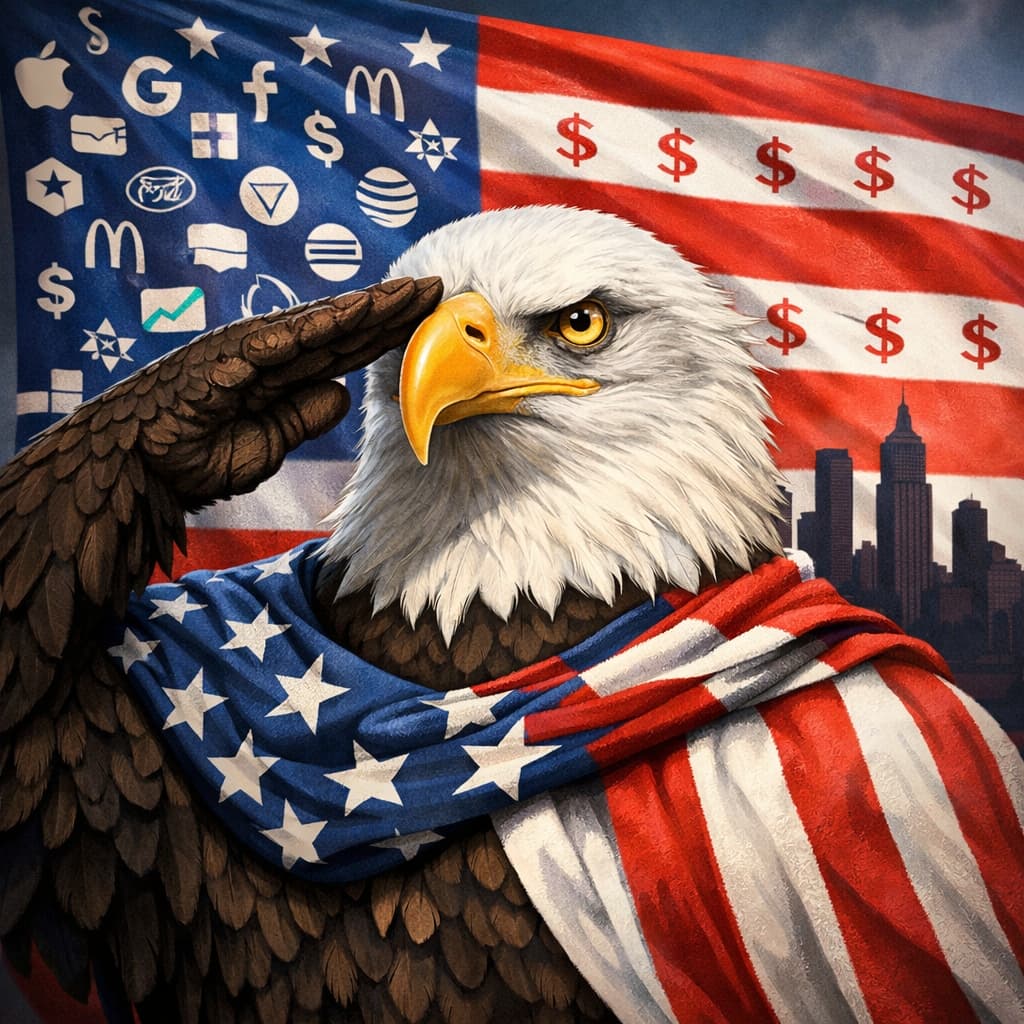
Another day, another brush with the abyss. The American financial system—that bloated, necrotic organism we mistake for a civilization—decided to teeter over the edge again this week, and the world held its breath as if it actually mattered. The news headlines were breathless, screaming about 'chaotic markets' and a 'threatened full-blown crisis,' as if the sheer repetition of these phrases might somehow imbue them with a sense of novelty. It is, frankly, exhausting. I have watched this movie more times than a bored child watches a scratched DVD, and the ending is always the same: the wealthy get a parachute, and the rest of you get a lecture on personal responsibility while plummeting toward the concrete.
What we are witnessing is the rhythmic, spasmic twitching of a corpse that refuses to stay buried. To the uninitiated, the 'brink' sounds like a terrifying destination, a point of no return. But to anyone with a functioning frontal lobe, the brink is simply the natural habitat of modern capitalism. It is where the elite feel most alive, dangling the rest of humanity over a void while they negotiate the terms of their next taxpayer-funded safety net. This wasn't a crisis of mechanics; it was a crisis of realization. For a brief, shining moment, the gambling addicts in zip-up vests who inhabit the lower tip of Manhattan looked up from their Bloomberg terminals and realized that the trillions of dollars they move around are about as tangible as a cloud’s shadow. Then, they remembered they own the government, and they went back to their caviar.
Naturally, the political class responded with their usual choreographed incompetence. The Right immediately began its Pavlovian bark about 'unnecessary intervention' and 'market freedom.' It is a fascinating brand of cognitive dissonance to demand a 'free market' while simultaneously shrieking for the Federal Reserve to print more funny money the second a stock price dips below the cost of a private jet’s fuel. They want the freedom to pillage without the inconvenience of consequence. They view the economy as a sacred, hungry deity that only demands the sacrifice of the middle class’s health insurance to remain appeased.
On the other side of the aisle, the Left engaged in their customary performative hand-wringing. They decry the 'greed of Wall Street' for the cameras while their own pension funds and campaign coffers are bloated with the spoils of the very system they pretend to loathe. Their solution is always more 'regulation'—a word they use to describe the process of writing five-thousand-page documents that provide lucrative loopholes for the lawyers who wrote them. It’s a beautifully cynical cycle: create a crisis, demand a fix, write a fix that ensures the next crisis, and get re-elected on the promise of stopping it. Both sides are merely two heads of the same vulture, fighting over which part of the carcass to eat first.
The historical parallels are so thick they’re suffocating. We are perpetually stuck in a loop between 1929 and 2008, a Groundhog Day of fiscal incompetence. The 'experts'—those high-priests of the spreadsheet who couldn't predict a sunrise if it hit them in their bespoke spectacles—crawl out of the woodwork to explain 'market volatility.' They use words like 'liquidity,' 'contagion,' and 'quantitative easing' to make state-sponsored theft sound like a meteorological event. They speak of 'investor confidence' as if it were a delicate flower rather than the collective delusion of a group of people who think they can beat a house that they happen to own.
Let’s be honest: the system didn't almost collapse because of some unforeseen 'black swan' event. It almost collapsed because it is built on the foundation of air, lies, and the desperate, sweating hope that someone else will be holding the bag when the music finally stops. The 'brink' is not an accident; it is an architectural feature. It is the leverage that allows the few to extract the last drops of value from the many. The tragedy of this latest near-miss isn't that we almost lost everything; it’s that we didn't. Had the system actually disintegrated, we might have been forced to build something—anything—that wasn't predicated on the exploitation of the many for the amusement of the bored.
Instead, we got a 'stabilization.' The markets calmed down, the suits breathed a sigh of relief, and the can was kicked another few yards down a road that is rapidly running out of pavement. We are living in a world where 'success' is defined by how many imaginary digits you can hoard before the inevitable heat death of the universe or the next subprime meltdown, whichever comes first. So, go ahead and check your 401(k) balances, you poor, hopeful souls. Watch the green and red lines flicker on your screens like the heart monitor of a patient in a permanent coma. The brink isn't behind us. We haven't 'avoided' anything. We have simply pitched our tents on the precipice and started arguing about the color of the canvas while the very rocks crumble beneath our feet. America’s financial system didn’t come close to the brink; it finally realized that the brink is the only home it has left.
This story is an interpreted work of social commentary based on real events. Source: The Economist