Interstellar Dumpster Diving: The Final Frontier of Human Desperation

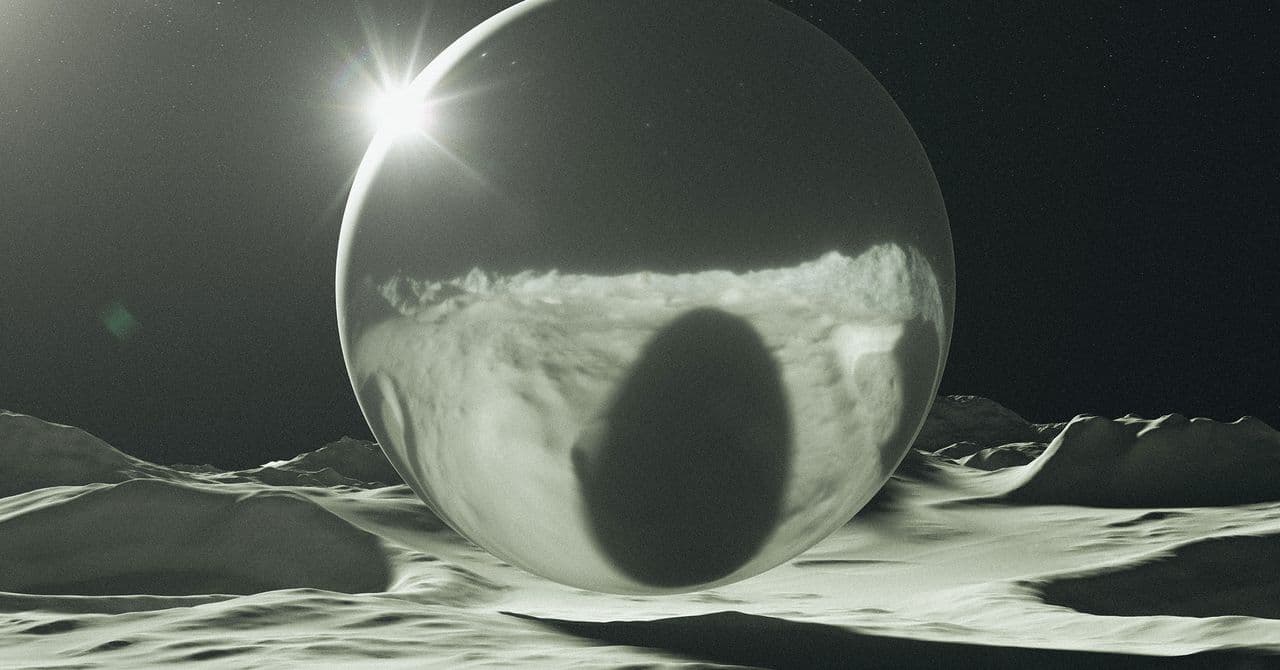
The human species, currently hovering somewhere between a collective nervous breakdown and a slow-motion environmental suicide, has decided that the best use of its remaining cognitive calories is to look for alien garbage. It’s called the search for 'technosignatures,' a term designed to sound rigorous while masking the inherent patheticness of the endeavor. American scientists are now dusting off pre-Sputnik photographic plates and squinting at interstellar rocks like 'Oumuamua, hoping to find a discarded wrapper or a broken sensor that proves we aren't the only cosmic mistakes in the universe. It’s the ultimate act of cosmic voyeurism—hunting for the footprints of a civilization that was smart enough to avoid us entirely.
On the political Left, the search is fueled by a desperate, performative hope that some enlightened galactic neighbor will descend from the heavens to teach us how to share our toys and stop burning fossil fuels. They envision a Vulcan-like intervention, a celestial nanny state to fix the mess they can’t tweet away. On the Right, the interest is predictably moronic and transactional: if there’s a piece of alien metal out there, they want to melt it down to make better missiles or sell the mining rights to the highest bidder before the planet’s crust becomes uninhabitable. Both sides are unified in their refusal to look in the mirror, preferring to look into the void for either a savior or a payday.
The pivot to searching for physical artifacts rather than radio signals is particularly revealing. For decades, we broadcasted our presence into the ether like a drunk at a bar screaming for attention, only to be met with a silence so profound it should have been a hint. Now, the scientific community has realized that nobody wants to talk to us. We’ve moved from SETI to 'Interstellar Archaeology,' which is just a fancy way of saying we’re going through the neighbors' trash because they won’t return our calls. The analysis of pre-1957 sky surveys is the peak of this absurdity. We are scouring grainy, century-old glass plates for 'glints' of technology from an era when we were still debating the merits of indoor plumbing. It is a quest for a ghost in a machine we haven't even finished building yet.
Then there’s 'Oumuamua, the interstellar cigar that sent the non-journalist class into a frenzy of speculation. Was it a light sail? A probe? Or just a rock that had the good sense to keep moving? The scientific establishment’s rethink of these visitors isn’t about discovery; it’s about relevance. In a world where the average person’s attention span is shorter than a gnat’s heartbeat, 'maybe it’s aliens' is the only headline that still moves the needle. It’s a cynical play for funding in an era where genuine human progress has stalled in favor of making apps that deliver burritos more efficiently. We are a civilization that can’t even clean up the plastic in its own oceans, yet we’re obsessed with finding a titanium shard in a solar system the size of a trillion football fields.
The search is a testament to the terminal boredom of the modern mind. We have mapped the globe, exploited every resource, and cataloged every possible way to be offended by one another, so now we must project our anxieties onto the stars. We treat the universe like a giant escape room, convinced there must be a hidden key or a secret door that leads to a reality where we aren't the villains. But the hard truth—the one no grant-seeking astronomer or performative politician wants to admit—is that any civilization advanced enough to leave artifacts is likely advanced enough to have seen us and decided to keep driving. We aren't looking for aliens; we’re looking for a distraction from the fact that we are the most disappointing thing in the Milky Way.
Ultimately, the hunt for interstellar artifacts is the perfect metaphor for the human condition in the twenty-first century: an expensive, high-tech search for meaning in a pile of rocks. Whether it’s scouring the pre-Sputnik skies or chasing 'interstellar visitors' with billion-dollar telescopes, the goal remains the same: to avoid the crushing reality of our own mediocrity. We are looking for proof that someone else made it, perhaps because we know deep down that we won’t. It’s not science; it’s a eulogy written in advance, a desperate attempt to find a trace of life before we finish the job of turning our own world into a lifeless artifact for someone else to find.
This story is an interpreted work of social commentary based on real events. Source: Wired