The Great Tractor Tantrum: Strasbourg’s Annual Festival of Bureaucratic Cowardice and Subsidized Spite

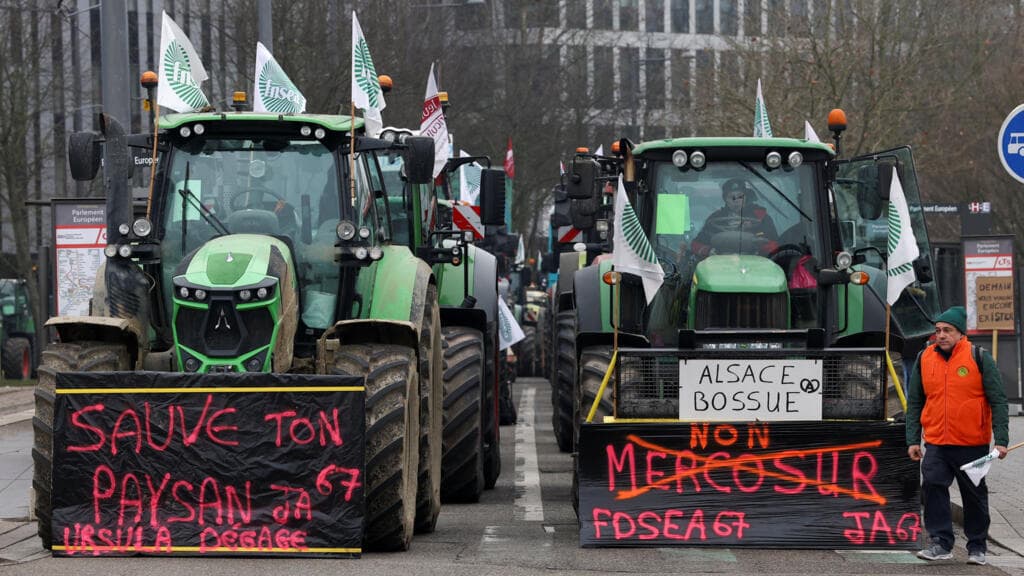
The city of Strasbourg, that biennial playground for the Continent’s most overpaid vacationing administrators, has once again been transformed into a high-priced parking lot for John Deeres. It is the recurring theater of the absurd that characterizes the European Union’s terminal decline. On one side, we have the MEPs—men and women whose primary contribution to human history is the mastery of the 'procedural delay.' On the other, we have the farmers, a demographic that has managed to convince the world they are humble stewards of the soil while operating heavy machinery that costs more than a suburban villa, much of it purchased with the very subsidies they claim are insufficient. The air in the Alsatian capital is currently a delightful cocktail of diesel exhaust, manure, and the palpable desperation of a political class that has forgotten how to lead.
The catalyst for this latest tantrum is the Mercosur trade deal, a document so long in development that several of its original signatories have likely passed into the great beyond. The European Parliament is currently engaging in its favorite pastime: cowardice masquerading as legal diligence. They are voting on whether to refer the deal to the European Court of Justice (ECJ) for a 'review.' This isn't an act of judicial prudence; it is the political equivalent of a child hiding a bad report card under the sofa and hoping their parents perish before they find it. By referring the deal to the ECJ, the MEPs are effectively punting the decision into a bureaucratic black hole, ensuring that no actual progress is made while they collect their per diems and pretend to be shocked by the 'complexity' of international law.
Let us examine the farmers first. Behold the majestic modern tractor: the official chariot of the European victim complex. To the casual observer, these protesters are the salt of the earth, the rugged individualists who feed the nation. In reality, they are the most successful lobbying bloc in human history, having successfully rebranded 'corporate welfare' as 'rural heritage.' They descend upon Strasbourg not on mules or with pitchforks, but in climate-controlled cabins equipped with GPS and satellite radio, all to complain that they cannot compete with a gaucho in Argentina. The irony is thick enough to clog a combine harvester. They demand the 'freedom' of the market until a steak from across the Atlantic dares to be cheaper than a steak from the Auvergne. Suddenly, they are the last line of defense for 'food sovereignty,' a buzzword used to justify why a European citizen should pay three times the market rate for a potato just to keep a specific village’s aesthetic intact.
Then we have the MEPs, those glorious specimens of human inertia. Their decision to involve the ECJ is a masterstroke of the 'delay and pray' strategy. If they vote for the deal, the farmers spray manure on their offices. If they vote against it, they look like protectionist Neanderthals to their globalist donors. The solution? Refer it to the judges. The ECJ is the legislative equivalent of a black hole where difficult decisions go to be crushed by gravity and ignored for a decade. It allows the Parliament to pretend they care about 'standards' and 'legal compatibility' while they wait for the next election cycle to wash away the current stench of accountability.
The Mercosur deal itself—comprising Brazil, Argentina, Uruguay, and Paraguay—is the ultimate Rorschach test for modern political idiocy. To the performative Left, it is an environmental catastrophe, a 'forest-killing' document that will turn the Amazon into a giant steakhouse. Their concern is, of course, entirely aesthetic; they will tweet their outrage from smartphones containing minerals mined by children in the Congo, while wearing fast-fashion rags produced in Southeast Asian sweatshops. To the moronic Right, the deal is a betrayal of the 'national soul,' which apparently resides in the price of domestic poultry. Both sides are united in a singular, pathetic goal: to prevent anything from actually changing.
What we are witnessing in Strasbourg is the final form of the European project: a stagnant pool of competing interests where the loudest shouters get the most gold. The farmers want the subsidies AND the monopoly. The MEPs want the status AND the lack of responsibility. The Mercosur nations want to join the 21st century, unaware that Europe is busy trying to retreat into the 19th. The tragedy isn't that the trade deal might be delayed; the tragedy is that anyone still believes these institutions are capable of doing anything else. The tractors will eventually rumble back to their subsidized barns, the MEPs will congratulate themselves on their 'diligent oversight,' and the European consumer will continue to foot the bill for this expensive, slow-motion car crash. It is a perfect microcosm of our age: a cacophony of entitlement, a vacuum of leadership, and a thick, lingering smell of manure that no amount of parliamentary perfume can mask.
This story is an interpreted work of social commentary based on real events. Source: RFI