High-Definition Futility: Why a Slow-Motion Celestial Explosion is the Only Honest Metaphor for Our Times

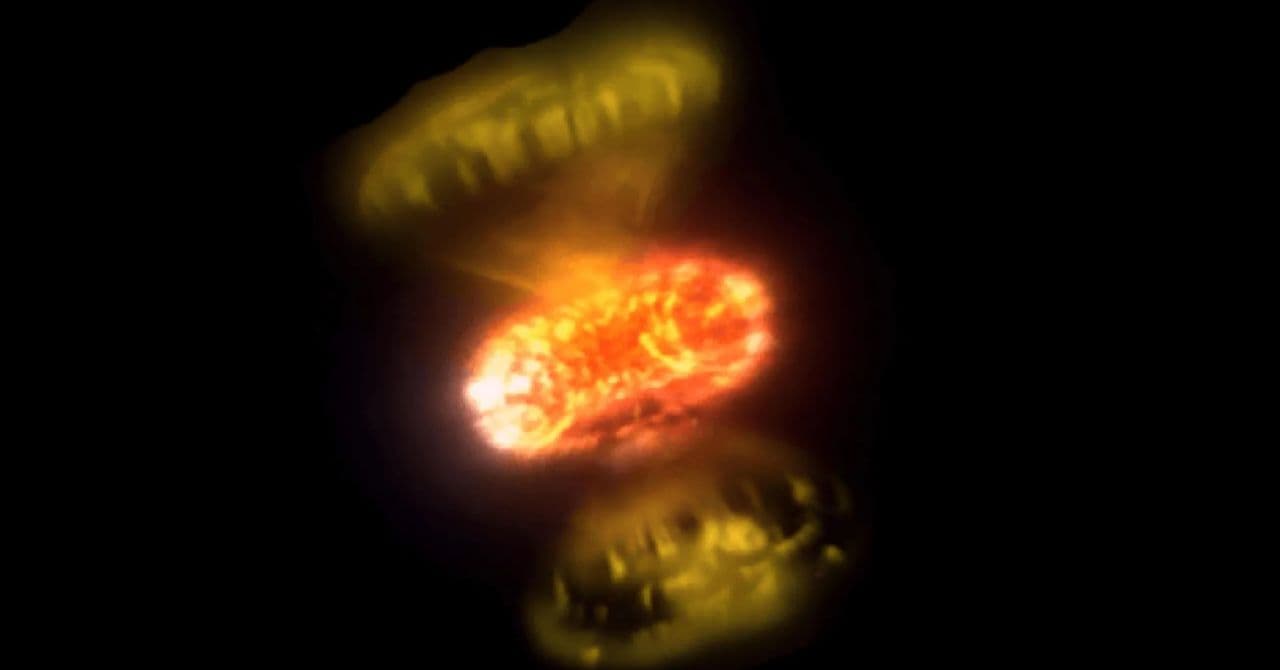
While the rest of the species is busy bifurcating itself into warring camps of performative zealots and lead-brained reactionaries, a group of scientists has managed to waste several million dollars’ worth of time imaging a white dwarf having a prolonged, messy public breakdown. They’ve captured a 'nova' in high resolution, and the big, earth-shattering revelation—the thing that’s supposed to make us all feel a sense of cosmic wonder while our own civilizational plumbing backs up—is that the explosion wasn't a single, clean 'boom.' Instead, it was a series of 'impulses.' Apparently, even the universe is incapable of a decisive action anymore. Everything, from the collapse of a star to the collapse of a healthcare system, is now a stuttering, multi-stage disaster of incompetence.
Let’s look at the actual science, if we can call this expensive voyeurism science. A white dwarf—a dense, cooling husk of a star that has long since given up on its dreams of being a main-sequence heavy-hitter—vampirically sucks hydrogen off a companion star until it can’t handle its own internal pressure and barfs its guts into the vacuum. We used to think this was a quick, impulsive event. We were wrong. It turns out the 'nova' is more like a corporate reorganization or a political campaign: a series of stuttering, repetitive shocks that promise a grand conclusion but mostly just create a lot of hot gas and noise over an extended period of time. It is the ultimate metaphor for the modern age—a slow-motion train wreck that insists on dragging itself out to satisfy the morbid curiosity of the observers.
The research team, likely hoping for a Nobel Prize or at least a tenure track that doesn’t involve teaching remedial physics to TikTok influencers, is celebrating these images as a triumph of resolution. They’ve managed to see the gore of a dying star in exquisite detail. We live in an era where we can see the individual gas filaments of an explosion three thousand light-years away, yet we can’t seem to discern the blatant corruption of a politician standing five feet in front of a podium. It’s the perfect distillation of human priority: we spend billions to look at things that happened thousands of years ago in a galaxy that doesn't care we exist, while the planet we actually inhabit is being treated like a communal ashtray. The Left will herald this as a 'triumph of human curiosity,' a way to pretend that our species is still capable of something other than arguing about pronouns and carbon credits. The Right will probably try to figure out how to mine the white dwarf for lithium or use the telescope to spy on their neighbors’ lawn signs. Both sides miss the point entirely. The white dwarf isn't a miracle; it's a warning.
A white dwarf is a dead thing pretending to be alive. It’s a stellar corpse that only glows because it’s stealing energy from something else. Does that sound familiar? It should. It’s the exact model of every Western institution currently circling the drain. Our political parties are white dwarfs—exhausted, burnt-out husks of ideologies that have no new fuel of their own, surviving only by siphoning the outrage and fear of a gullible public to produce a few more 'impulses' of relevance before the inevitable cold dark sets in. They don’t explode with the dignity of a supernova; they just puff out these pathetic, multi-stage novas, desperately trying to convince us that they’re still important, still bright, still the center of the universe.
And let’s talk about that 'high resolution.' Why do we need to see a celestial explosion in 4K? Is it so we can feel more connected to the entropy? Or is it because, in our utter lack of internal meaning, we’ve become obsessed with the aesthetics of destruction? We watch a star blow up in multiple impulses and call it 'fascinating.' We watch a city burn or a market crash and we call it 'news.' It’s the same impulse—the desire to watch something fall apart from a safe distance while pretending that the resolution of our cameras makes us smarter than the debris. The researchers say the images suggest the nova was not a single, impulsive explosion. Of course it wasn’t. Nothing is ever that simple or that mercifully quick. We are doomed to watch the slow, agonizing dissipation of everything we value, one 'impulse' at a time, recorded in the highest possible definition so that future generations—assuming they can read something other than emojis—can see exactly how we spent our final days: staring at the stars while we tripped over our own shoelaces. It is the ultimate cosmic joke, and as usual, the audience is too stupid to get the punchline.
This story is an interpreted work of social commentary based on real events. Source: Wired