The 'Board of Peace': A Corporate Rebranding of Geopolitical Collapse at the Magic Mountain
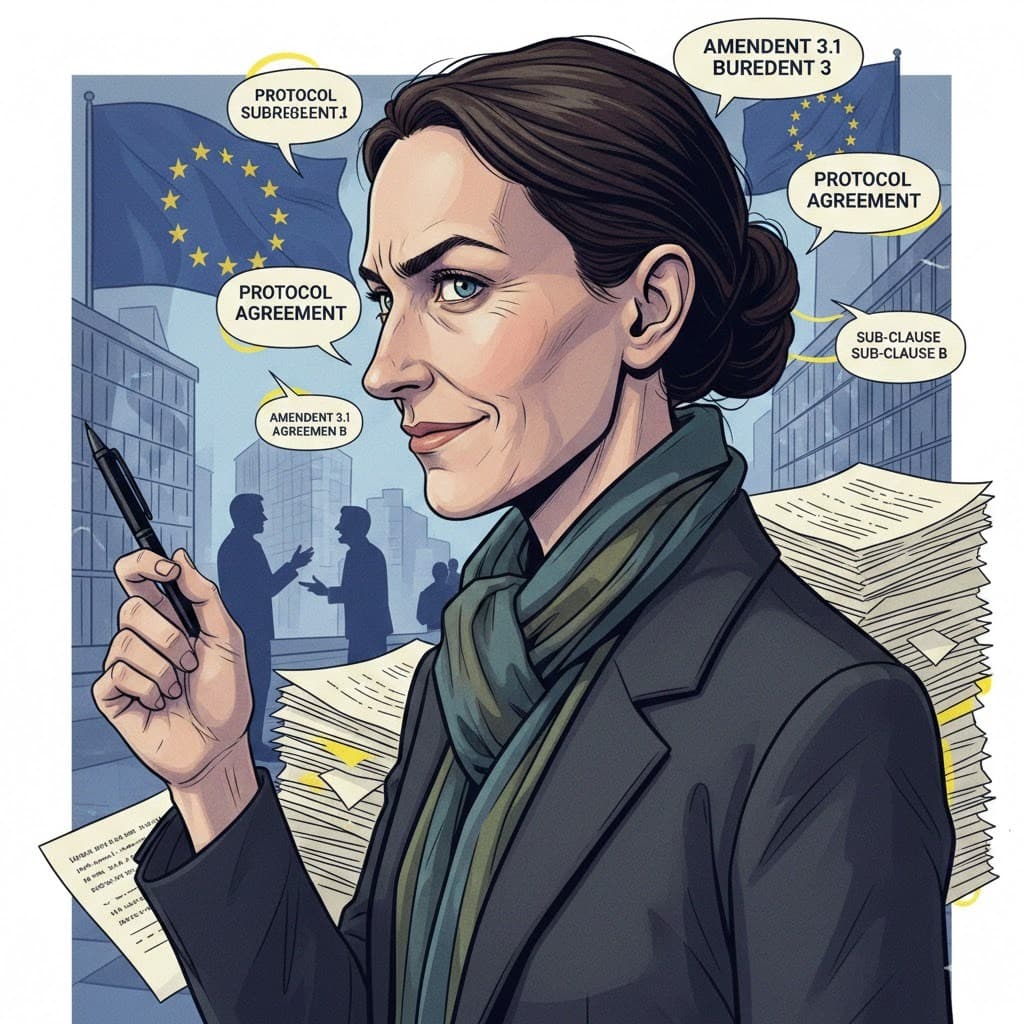

There is a specific, suffocating ennui that descends upon one when observing the World Economic Forum in Davos. It is the spiritual exhaustion of watching the arsonists of the global order gather in a Swiss resort town to lecture the burning peasantry on fire safety, all while sipping vintage Krug and adjusting their cashmere scarves. Into this annual festival of self-congratulatory delusion steps President Donald Trump, a man whose understanding of diplomacy is usually limited to the dynamic range of a reality television dispute, ready to unveil his latest product line: The Board of Peace.
One must pause to admire the sheer, brutalist poetry of the name. 'The Board of Peace.' It does not sound like a diplomatic initiative or a treaty framework. It sounds like a mid-level management committee created to oversee the acquisition of a failing subsidiary. It suggests that the cessation of global conflict is merely a matter of better corporate governance, a quarterly deliverable that can be achieved if we simply get the right stakeholders around a mahogany table to synergize their deliverables. It strips the concept of peace of its moral weight and reduces it to a bureaucratic fixture, something to be managed, audited, and eventually downsized when the fiscal year looks grim.
That this rollout occurs at Davos is, of course, entirely appropriate. The World Economic Forum is the natural habitat for such performative vacuity. This is, after all, where the architects of global inequality meet to wring their hands about populism, blissfully unaware that they are the very engine of the rage they fear. Trump, in his own tragicomic way, understands the theater of Davos better than the technocrats he derides. He knows that in this rarefied air, nothing matters quite as much as the *announcement*. The substance is irrelevant; the branding is everything. By launching a 'Board of Peace,' he is effectively franchising the concept of non-violence, slapping a gold-plated logo on the absence of war and selling it back to the global elite as a luxury good.
The timing, we are told by breathless commentators, comes as 'US leadership is being questioned.' Questioned? That is a charming euphemism. US leadership is not being questioned; it is being subjected to a post-mortem examination while the patient is still loudly insisting on ordering fast food. The very idea that the United States, in its current state of polarized psychosis and institutional decay, is in a position to assemble a board of directors for global tranquility is a joke that would be too heavy-handed for a Brecht play. It assumes a moral authority that evaporated somewhere between the invasion of Iraq and the invention of the Tweet.
Yet, there is a dark genius in formalizing this absurdity into a 'Board.' A board implies exclusivity. It implies that peace is not a universal right, but a gated community. Who sits on this board? One imagines it will not be the displaced, the bombed, or the starving. It will be the titans of industry, the political operatives, and the donors—the very people for whom war is often just another asset class. By corporatizing peace, Trump creates a structure where tranquility is transactional. If you want peace, you must have a seat on the board; otherwise, you are merely part of the hostility market.
We are witnessing the final merger of statecraft and marketing. The 'Board of Peace' is the ultimate admission that political solutions have failed, so we are pivoting to business solutions for existential threats. It treats the geopolitical landscape like a distressing balance sheet that just needs a little creative accounting. It is a move born of a profound cynicism, treating the global populace as consumers who just need to be sold a new narrative.
So, as the private jets idle on the tarmac in Zurich and the fondue bubbles in Davos, we wait for the unveiling. We wait to see this bureaucratic monstrosity presented as the salvation of the West. It is a spectacle of decline, a flashy distraction from the crumbling infrastructure of international relations. The 'Board of Peace' will likely produce as much peace as a 'Board of Innovation' produces innovation—which is to say, it will produce PowerPoint presentations, consulting fees, and a profound sense of despair for anyone paying attention. But then again, in the theater of the absurd, one should never expect the plot to make sense; one simply applauds the costumes and hopes the stage doesn't collapse before the curtain falls.
This story is an interpreted work of social commentary based on real events. Source: ABC News