Australia Discovers the Ocean Contains Predators, Promptly Closes the Windows

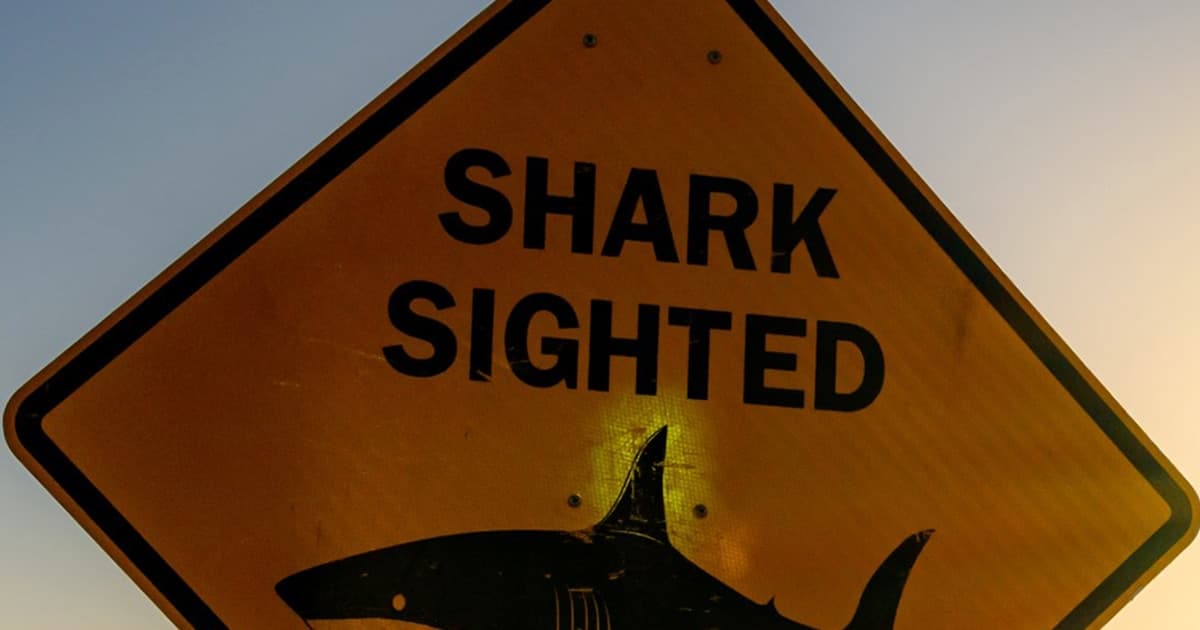
Australia, that sun-scorched penal colony masquerading as a surf-and-turf paradise, has finally hit the panic button. In a move that illustrates the profound fragility of the human ego, authorities have shuttered dozens of beaches following a series of shark encounters. It is the ultimate display of modern administrative paralysis: when the natural world reminds us that we are made of meat, our first instinct is to put up a yellow sign and wait for the universe to apologize. The audacity of the human species never ceases to amaze. We have spent centuries polluting the brine, overfishing the ecosystems into collapse, and treating the world’s oceans as a private swimming pool, only to act with wounded indignation when an apex predator—an animal that has remained evolutionarily perfect for 400 million years—decides to sample the local buffet of pasty, sunscreen-slathered tourists.
The closures, stretching across significant swathes of the coastline, are a masterclass in performative safety. The logic is as impeccable as it is moronic: if we cannot see the water, the water cannot hurt us. It is the ostrich strategy applied to marine biology. The government, in its infinite wisdom, seems to believe that by depriving the populace of their right to engage in performative athleticism on a fiberglass board, they are somehow 'managing' a crisis. But the only crisis here is the realization that we do not own the planet. We are merely uninvited guests in a biological slaughterhouse, and the sharks are the only residents who haven't forgotten the rules of the house.
Consider the absurdity of the typical Australian response. On one side, you have the 'Cull the Monsters' crowd—a collection of mouth-breathing reactionaries who believe the solution to any biological inconvenience is a high-speed projectile. They view the shark not as a vital component of a collapsing ecosystem, but as a personal affront to their God-given right to jet-ski. On the other side, you have the 'Save the Fins' activists, who would likely offer themselves as a snack if it meant the shark didn't feel judged for its lifestyle choices. Both sides are equally insufferable, locked in a dialectic of stupidity while the actual problem remains ignored: humans are simply too arrogant to accept that some places are not meant for us.
We now live in an era where we monitor the movements of sharks with drones, acoustic tags, and satellite imagery, as if turning the ocean into a panopticon will somehow make the Great White less hungry. We have replaced instinct with data, and yet, when the data shows that a four-meter fish is patrolling its own territory, we react with the hysterical shock of a Victorian lady seeing an exposed ankle. The closure of these beaches is not an act of protection; it is an admission of defeat. It is the realization that despite all our technology, all our hubris, and all our 'No Lifeguard on Duty' signs, nature remains fundamentally indifferent to our desire for a pleasant Saturday morning.
The modern Australian identity is built on a myth of ruggedness, a narrative of 'man against the elements' that is increasingly hard to maintain when the government shuts down the beach because a fish was spotted within three miles of a pier. We are witnessing the suburbanization of the wild. We want the aesthetics of the ocean—the crashing waves, the golden sand, the Instagrammable sunsets—without the inherent lethality of the deep. We want a wilderness that has been declawed, defanged, and sanitarily packaged for our convenience. When the ocean refuses to comply with our terms and conditions, we file a grievance and close the gates.
There is a certain dark irony in the fact that we are terrified of a few sharks while the very oceans they inhabit are warming at a rate that will eventually render the 'closed' signs redundant by swallowing the beaches whole. We focus on the immediate, visceral fear of the tooth while ignoring the slow-motion suicide of the habitat. But that would require a level of cognitive complexity that the average vacationer—or politician—simply cannot muster. It is much easier to point at a fin and scream 'danger' than it is to reckon with the fact that our entire relationship with the natural world is a toxic mix of exploitation and cowardice.
In the end, the beaches will reopen. The sharks will remain. And the humans will return, convinced once again that they are the masters of the domain, right up until the next time a shadow moves beneath the surface. It is a cycle of repetitive idiocy that perfectly encapsulates the human condition: we forget everything, learn nothing, and expect the world to be safer than it has any right to be. Until then, the yellow signs will stand as monuments to our collective insecurity, fluttering in the wind while the sharks wait, patiently, for the next idiot to jump back in.
This story is an interpreted work of social commentary based on real events. Source: NBC News