The Continental Cowardice: Europe Fiddles with Mercosur While the World Prepares to Burn

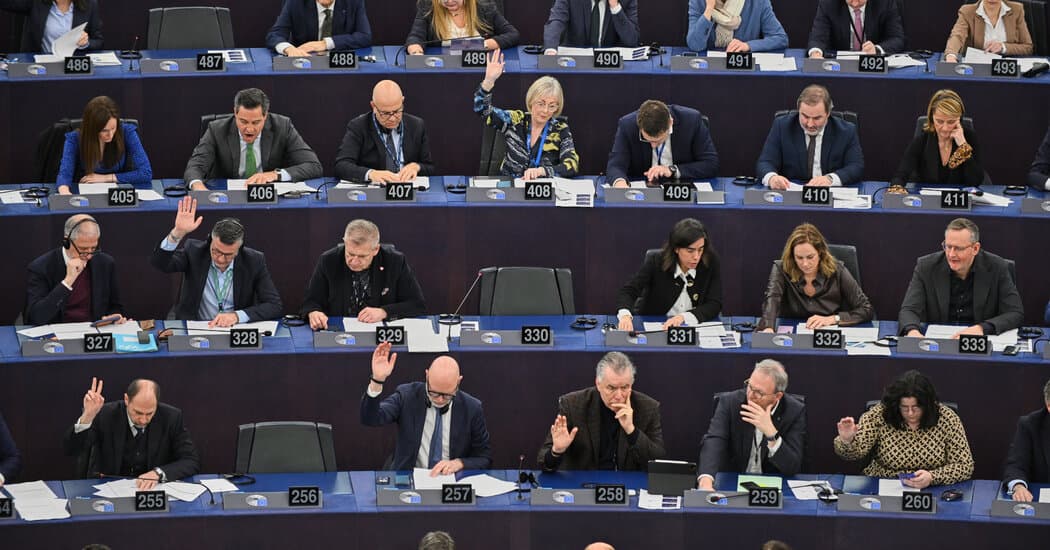
The European Union, that magnificent monument to the art of the expensive lunch and the even more expensive delay, has once again proven that its primary export is not luxury cars or fermented grape juice, but sheer, unadulterated hesitation. After twenty-five years of what the terminally optimistic call 'negotiations' and what the rest of us call 'bureaucratic necrophilia,' the EU has hit the pause button on the Mercosur trade deal with South America. The official reason is a cocktail of environmental concerns and agricultural sensitivities. The real reason, of course, is that the collective leadership in Brussels has the spine of a damp crepe and the foresight of a goldfish in a blender. It is a masterclass in how to achieve nothing while pretending the fate of the planet rests on your indecision.
On one side of this tragicomedy, we have the Mercosur bloc—Brazil, Argentina, Paraguay, Uruguay, and the newly inducted Bolivia—standing at the altar like a jilted bride who has been wearing the same wedding dress since 1999. They have been promised access to the European market for a quarter of a century, only to be told repeatedly that their cows are too flatulent or their forests too flammable for the delicate sensibilities of the European palate. It is a charming irony that the very nations that spent centuries strip-mining the global south for every ounce of silver and rubber are now lecturing those same regions on the sanctity of the ecosystem. It is the kind of moral high ground that can only be reached by standing on a pile of colonial corpses.
But the real puppet master in this theater of the absurd is not the environmental lobby; it is the French farmer. If there is one thing that can strike terror into the heart of a European bureaucrat, it is the prospect of a tractor blockade in the middle of Paris. France has effectively held the continent’s trade policy hostage because their state-subsidized agrarian class cannot fathom competing with Argentinian beef. This is protectionism dressed up as 'strategic autonomy'—a phrase used by European leaders whenever they want to sound like they have a plan for a world that has clearly moved on without them. They would rather let the continent stagnate in a pool of its own protectionist bile than explain to a man in a beret why his steak costs three euros more.
Adding a layer of frantic urgency to this lethargy is the looming shadow of the American orange specter. With Donald Trump threatening a tariff wall that would make the Great Wall of China look like a garden fence, one might think the EU would be scrambling to secure friends elsewhere. Instead, they have chosen to dither. The logic is truly breathtaking: in the face of an existential trade war with their largest partner, the EU has decided to alienate their second-best options. It is the geopolitical equivalent of burning your bridges because you’re afraid the water underneath might be too cold. They are paralyzed by a fear of the future, yet unwilling to do anything to prepare for it.
Brussels justifies this delay by citing 'sustainability chapters' and 'enforceable commitments,' phrases that exist solely to give mid-level functionaries a reason to wake up in the morning. They demand that South American nations adhere to standards that Europe itself only adopted after it had already finished polluting its own backyard. It is performative virtue signaling at an industrial scale. Meanwhile, China—a nation not particularly known for its habit of consulting Greenpeace before building a coal plant—is more than happy to step into the void. While Europe spends three years debating the font size on a carbon-tax memo, Beijing is busy buying up the lithium mines and the loyalty of the Southern Hemisphere.
Ultimately, the delay of the Mercosur deal is a symptom of a much deeper rot. It is the refusal to accept that the world is no longer a European playground. The 'Old World' is increasingly living up to its name, behaving like a wealthy retiree who spends all day complaining about the noise from the neighbors while their own roof is caving in. They are terrified of Trump, terrified of their own voters, and terrified of a world where they are no longer the ones making the rules. So, they delay. They study. They consult. They hold summits that produce nothing but carbon emissions and self-congratulatory press releases.
In the end, everyone loses. The South American economies remain shackled to instability, the European consumer continues to pay a premium for the privilege of protecting inefficient monopolies, and the global trade system continues its slow-motion collapse into tribalism. But at least the French farmers are happy, and the bureaucrats in Brussels can go back to their catered lunches, secure in the knowledge that they have successfully avoided making a decision for another fiscal quarter. It is a triumph of the mundane over the necessary, and a fitting tribute to a continent that has forgotten how to lead, how to trade, and how to survive.
This story is an interpreted work of social commentary based on real events. Source: NY Times