The Sound of Silence: UNRWA’s Filing Cabinets Meet Their Hydraulic Destiny

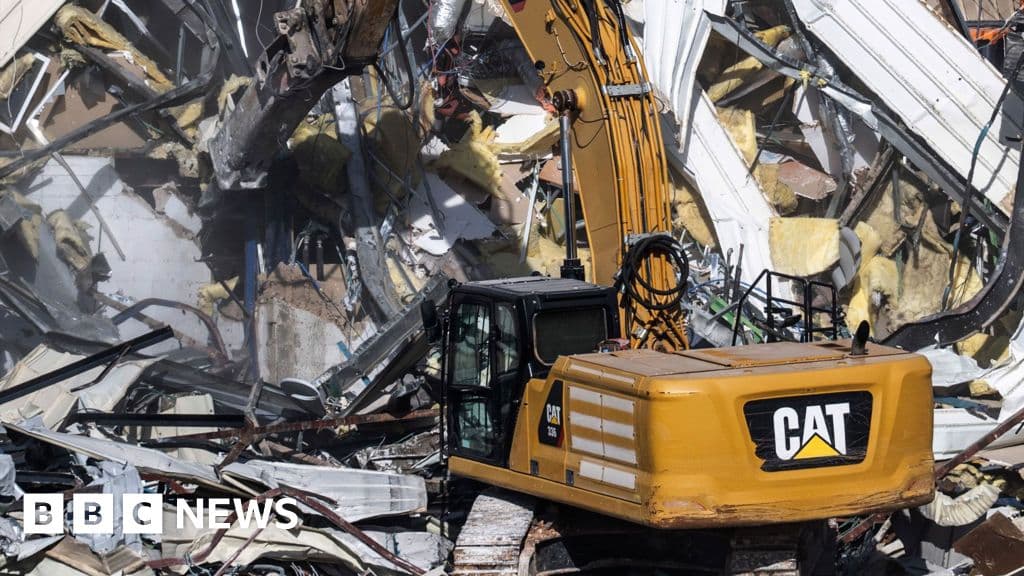
There is something inherently comedic about the sound of a diesel engine drowning out seventy-five years of diplomatic posturing. In East Jerusalem, the air is currently thick with the dust of pulverised concrete and the intoxicating scent of utter futility. The BBC’s John Sudworth, ever the dutiful chronicler of human decline, has ventured to the edge of the UNRWA headquarters to record the 'symphony of destruction' as Israeli heavy machinery begins the tectonic task of turning a United Nations compound into a very expensive pile of gravel. It is a fitting end for an institution that has spent the better part of a century mistaking 'monitoring' for 'action' and 'deep concern' for a defensive shield.
The UN, that bloated, geriatric social club for nations that mostly hate each other, seems genuinely shocked that their blue flags don't function as physical barriers against a bulldozer. For decades, the UNRWA compound in East Jerusalem has served as a monument to the 'status quo'—a phrase used by diplomats to describe a situation that is actively rotting but hasn't yet collapsed into a heap. Now, the heap has arrived. Israel, having decided that international law is more of a suggestion than a rule—and let’s be honest, they’ve had plenty of help coming to that conclusion from their friends in Washington—has moved from the stage of 'complaining about the neighbors' to 'demolishing the neighbors’ garage while they’re still inside it.'
On one side, we have the Israeli government, which has embraced a style of urban planning that can best be described as 'Biblical Revanchism via Caterpillar Inc.' They view the UN presence not as a humanitarian necessity, but as a pesky historical footnote that needs to be erased to make room for more 'civilian infrastructure'—a delightful euphemism that usually involves people who don't like the previous residents very much. It is a masterclass in the diplomacy of the fait accompli. Why negotiate when you can simply rezone the reality out of existence? They aren't just breaking concrete; they are breaking the very idea that a global body can tell a sovereign state where it can and cannot park its tanks.
On the other side, we have the United Nations, a collection of performative bureaucrats who are currently reacting to the demolition of their regional nerve center with the same energy as a librarian trying to shush a riot. They point to treaties, they cite immunity, and they wave pieces of paper that have as much structural integrity as wet tissue paper against a jackhammer. The UNRWA has spent years being a convenient punching bag for the Right and a sacred cow for the Left, failing to realize that in the cold, hard logic of the Middle East, if you don't have a fence that can stop a tractor, you don't actually have a border. Their indignation is as predictable as it is useless. Watching them complain about the noise of the machinery is like watching a man complain about the acoustics of the guillotine that’s currently being assembled for him.
And then there’s the media. The BBC’s Sudworth reports on the 'sounds of heavy machinery echoing around the neighborhood' as if he’s documenting a rare bird call rather than the literal dismantling of the post-WWII international order. This is the zenith of modern journalism: standing in the debris of a geopolitical catastrophe and providing us with a high-fidelity audio experience of the collapse. It’s misery porn for the chattering classes who will listen to the report, tsk-tsk over their organic muesli, and then go back to ignoring the fact that the entire concept of 'international community' is a hallucination we all agreed to share until it became inconvenient.
The reality is that both sides deserve each other. The UNRWA has long been a vessel for institutional inertia, a place where the tragedy of displacement was managed rather than solved, ensuring a perpetual cycle of dependence and grievance that kept the paychecks flowing for generations of 'experts.' Israel, meanwhile, has decided that the only way to deal with a complex historical problem is to bury it under six inches of fresh asphalt. It is the triumph of the physical over the philosophical. The bulldozer doesn’t care about the 1948 borders; it cares about torque and fuel consumption.
As the echoes of the demolition continue to bounce off the stone walls of Jerusalem, we are reminded that in the end, power isn't found in a General Assembly resolution or a BBC field report. Power is found in the person who owns the keys to the excavator. The UN can keep its memos; the Israeli government will keep the land. And the rest of us can sit back and listen to the crunch of the concrete, the sound of a world that has finally given up on the pretense of being civilized. It’s a loud, ugly noise, but at least it’s honest.
This story is an interpreted work of social commentary based on real events. Source: BBC News