The Librarian’s Cannon: Brussels Polishes Its Bazooka for a War It’s Too Polite to Fight
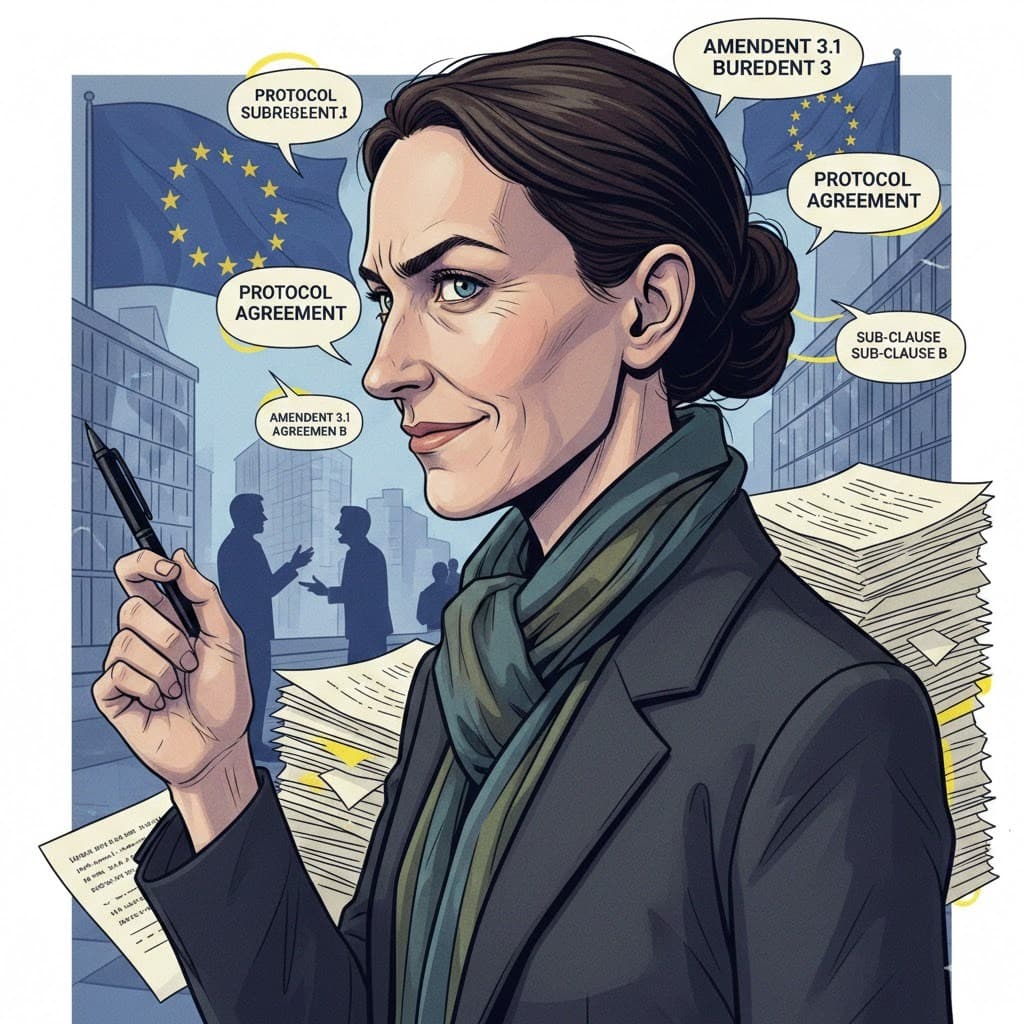

There is something almost pathologically touching about the European Union’s periodic attempts to play at being a global hegemon. It is reminiscent of watching a particularly studious librarian, one who spends their weekends cataloging 14th-century liturgical texts, suddenly deciding to bench-press a mid-sized sedan to prove a point to the neighborhood bully. In this instance, the sedan is the ‘Anti-Coercion Instrument’ (ACI), a policy tool that the Brussels elite have affectionately dubbed their ‘trade bazooka.’ For once, the bureaucrats have been caught in an act of accidental foresight, having forged a weapon of economic retaliation before the actual shooting started. It is a rare moment of lucidity in a theater of the absurd that usually prioritizes the standardization of vegetable curvature over geopolitical survival.
One must admire the linguistic gymnastics required to name such a thing. ‘Anti-Coercion Instrument’ sounds like something one might find in the fine print of a high-end Swiss sanatorium’s intake form. Yet, in the brutalist reality of modern trade, it is meant to be the EU’s shield against the ‘most powerful country in the world’—a polite euphemism for the United States, which currently treats international trade law with the same reverence a toddler shows a delicate heirloom. The premise is simple: if a foreign power tries to bully an EU member state through economic blackmail, Brussels will reach into its cupboard of administrative horrors and pull out the bazooka. They will raise tariffs, restrict services, and generally make life miserable for the aggressor. It is a lovely theory, provided one ignores the fact that the EU is essentially a collection of twenty-seven neighbors who cannot agree on what color to paint the shared fence, let alone when to pull the trigger on a weapon that might blow their own hands off.
We find ourselves in a delicious historical irony. For decades, the European project was built on the naive, almost sweet belief that the world was moving toward a rules-based utopia where disputes were settled by well-dressed men in quiet rooms. Now, as the specter of American protectionism looms like a recurring nightmare that refuses to wake up, the EU is forced to realize that the rules-based order was actually just a temporary ceasefire maintained by an American hegemon that has now decided to flip the table. The ‘bazooka’ is a response to this betrayal, a recognition that ‘strategic autonomy’ is no longer just a catchy slogan for Emmanuel Macron’s late-night fever dreams but a desperate necessity. Yet, the tragedy of the European intellectual is the inability to act without first drafting a five-hundred-page manual on the ethical implications of acting.
The cynical truth is that a bazooka is only useful if the person holding it is willing to sustain the recoil. The EU’s economy is a fragile tapestry of dependencies; threatening a trade war with Washington is less like a duel and more like an attempt to perform self-surgery with a chainsaw. Brussels is terrified. They have built the weapon, they have polished the barrel, and they have placed it prominently on the mantelpiece. But as the coercion arrives—wrapped in the stars and stripes and delivered with a grin—the debate has already shifted from ‘how do we strike back?’ to ‘how do we apologize for having the weapon in the first place?’ It is the quintessential European dilemma: possessing the means of defense but lacking the vulgarity of spirit required to use them.
To give up on the ACI now, simply because the threat comes from across the Atlantic, would be the ultimate admission of vassalage. It would signal that the EU is not a sovereign entity, but a sophisticated shopping mall with a flag and an overly complex legal system. The Brussels apparatus finds itself in a state of l’appel du vide—the call of the void. They are staring at the trigger, paralyzed by the realization that using the bazooka might actually work, thereby shattering the comfortable illusion of their own helplessness. We are witnessing the death rattles of the old neoliberal consensus, where the EU must choose between being a victim with principles or a combatant with scars. Knowing the penchant for compromise that defines the Berlaymont, they will likely choose a third path: a strongly worded press release followed by a dignified surrender, while insisting that the surrender was, in fact, a triumph of multilateral diplomacy. It would be tragic if it weren't so predictable; it is the tragicomedy of a continent that has forgotten that in the theater of power, the only thing worse than not having a gun is having one and being too intellectual to fire it.
This story is an interpreted work of social commentary based on real events. Source: Politico