The Semantics of Silence: When a Ceasefire Sounds Remarkably Like an Airstrike
One must simply marvel at the linguistic elasticity of the modern geopolitical landscape. In a bygone era, perhaps a simpler time before warfare was managed by press release and algorithm, the term "ceasefire" implied a rather specific state of affairs: the ceasing of fire. It suggested a pause, however brief, in the kinetic disassembly of architecture and human bodies. Yet, as we observe the latest developments in Gaza, it becomes painfully clear that in the Middle East, a ceasefire is merely a diplomatic suggestion—a polite fiction maintained by men in air-conditioned rooms while the dusty reality on the ground continues to explode.
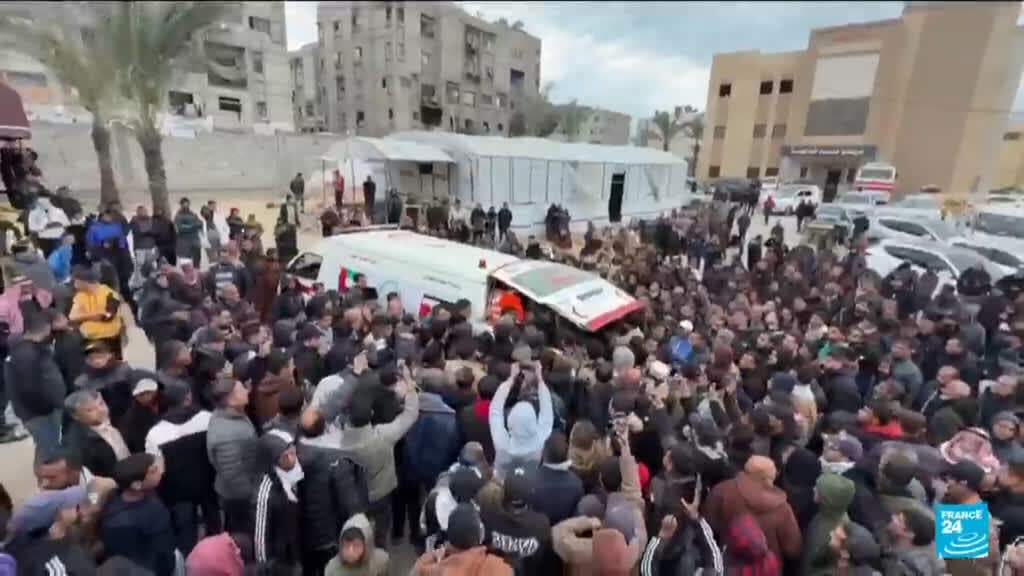
We are told, with straight faces by serious people in suits, that a cessation of hostilities has been in effect since October 10. This is a comforting thought for the bureaucrats in Brussels and the strategists in Washington, allowing them to sleep the sleep of the righteous. However, for the eleven Palestinians obliterated in the latest round of "peace," the terminology is likely academic. Among the dead are three journalists, incinerated in a vehicle while attempting to document a new displacement camp. There is a particularly grim irony in this: observers killed while recording the architecture of misery, witnesses silenced while trying to show the world what a "ceasefire" actually looks like for the displaced.
Let us deconstruct this tableau of the absurd. We have a vehicle carrying journalists—ostensibly the protected class of non-combatants whose sole purpose is to provide the objective truth required for history books. They were en route to a displacement camp—a location that exists solely because the previous locations of human habitation have been rendered uninhabitable. And they were struck by Israeli fire in an environment where an agreement to stop shooting is theoretically the law of the land. If this is peace, one shudders to imagine what war looks like. Perhaps the only difference is the amount of paperwork filed afterwards.
Of course, the immediate aftermath involves the ritualistic dance of accusation. Both sides, locked in their eternal, tragic embrace, point fingers with the fervor of actors who have rehearsed this scene a thousand times. We are told of violations, of provocations, of the "fog of war"—that convenient meteorological phenomenon that only seems to descend when a camera crew or an aid convoy is vaporized. The narrative becomes a blur of justifications, a cynical game of "he started it" played with high-explosive munitions.
But let us pause to consider the specific horror of targeting the press. In the theater of modern conflict, the journalist is the audience's eye. When you strike the vehicle carrying the cameras, you are not merely killing three individuals; you are blinding the world. You are ensuring that the displacement camp remains a rumor, a statistical footnote rather than a visceral reality. It is a form of censorship that is absolute and irreversible. It is the ultimate bureaucratic efficiency: if there is no footage of the suffering, did the suffering truly happen? In the existential philosophy of 21st-century warfare, a tree falling in the forest makes no sound if you blow up the person holding the microphone.
And what of the international community? They watch this tragedy unfold with the weary detachment of patrons at a play that has run too long. There will be statements of concern. There will be calls for "restraint"—a word that has lost all meaning, much like "humanitarian" or "precision." The European Union will issue a sternly worded PDF. The United Nations will hold a meeting where microphones are adjusted and water is poured, but nothing changes. The cycle is as immutable as gravity.
Accusations of violating the agreement fly back and forth like shrapnel. Since October 10, the "ceasefire" has been less of a truce and more of a low-intensity simmering of the same old hatreds. It is a containment strategy, not a solution. It is a way to manage the death rate to a level that is acceptable to the cable news cycle, ensuring it doesn't interrupt the weather forecast or the sports scores. But for the people in that vehicle, and the eight others who perished alongside them, the management strategy failed.
We are left, then, with the bleak reality of the situation. Eleven people are dead in a time of peace. Three storytellers have been removed from the narrative. And the great machinery of war grinds on, oiled by the apathy of the west and the rage of the east. We sit in our cafes, reading the headlines, shaking our heads at the "tragedy," and then turning the page. After all, it is just another Wednesday in the theater of the absurd, where the only thing cheaper than life is the truth.
This story is an interpreted work of social commentary based on real events. Source: France 24