Stitching the Steppe: The Futile Sophistry of Preserving Paper in a Digital Void
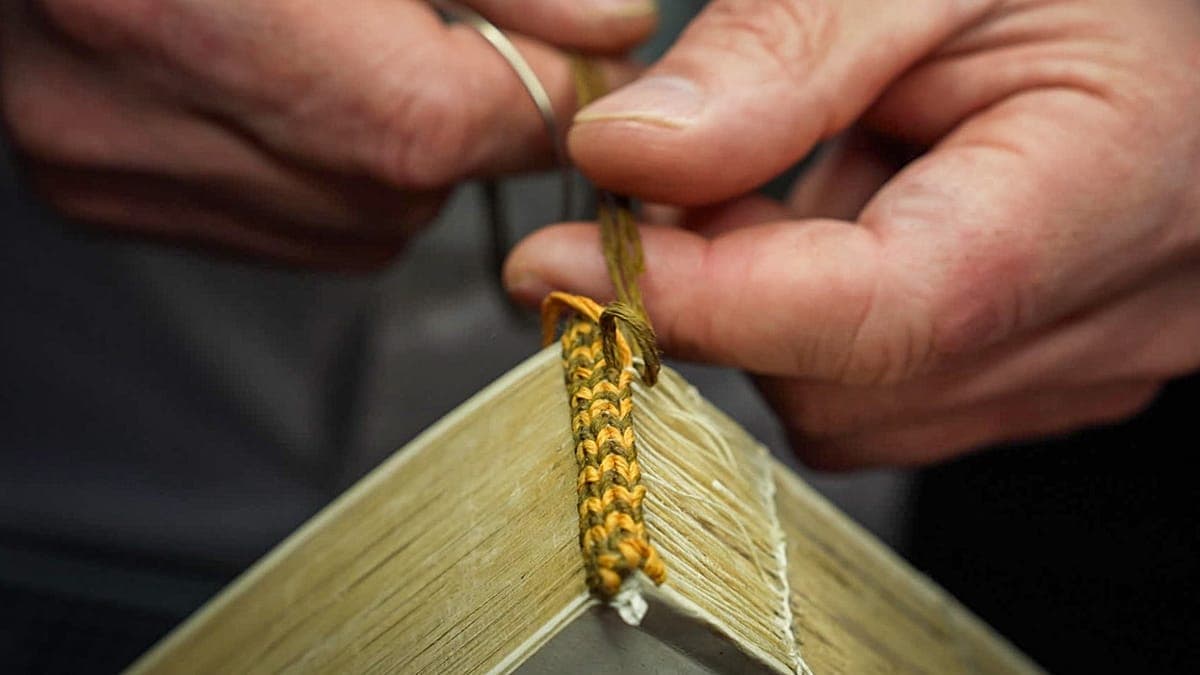
In the vast, windswept expanses of Kazakhstan, where the horizon usually offers nothing but the grim reminder of one’s own insignificance, a group of well-meaning technicians has decided to wage a war against the inevitable. In what can only be described as a masterclass in bureaucratic optimism, the National Centre of Rare Books and Manuscripts is currently engaged in the surgical stabilization of ancient Qurans and archival records. It is a spectacle of high-tech nostalgia: white-coated specialists hunched over parchment, applying Japanese tissue and archival-grade adhesives with the kind of reverence usually reserved for the living. One cannot help but marvel at the irony. We live in a civilization that cannot remember what it tweeted forty-eight hours ago, yet we are obsessively reinforcing the physical integrity of texts that have already survived several empires, several genocides, and the general dampness of the centuries.
The project, billed as 'reinforcing memory,' is a classic example of the human penchant for treating symptoms rather than the disease. The disease, of course, is the total cultural amnesia of the twenty-first century. These manuscripts, some of which represent the intellectual zenith of the Silk Road, are being meticulously cleaned and de-acidified so they can sit in climate-controlled vaults, safely shielded from a public that would largely prefer to watch a thirty-second video of a dancing cat. It is the ultimate 'I told you so' from the ghost of history: the more we preserve the artifact, the more we seem to lose the wisdom it contains. We are, quite literally, iron-patching the past while the present dissolves into a slurry of digital noise.
From a purely intellectual standpoint, there is something deeply tragicomic about the restoration lab. It is a theater of the absurd where the sacred is reduced to a chemistry experiment. Here is a Quran that once guided the spiritual lives of thousands, now being subjected to a rigorous analysis of its pH levels. The eternal word of the divine is, it turns out, surprisingly susceptible to silverfish and fluctuating humidity. We are telling the heavens that their message is eternal, provided we can keep the air conditioning running at exactly eighteen degrees Celsius. It is the Enlightenment’s final revenge on faith: everything, no matter how holy, eventually becomes a maintenance liability for the state.
Kazakhstan’s effort to 'save' these records also highlights the curious vanity of the modern nation-state. By preserving these ancient fragments, the state is essentially trying to buy a lineage, to glue itself to a history that is far more complex and chaotic than any modern ministry would care to admit. They are using specialized glues to create a narrative of continuity where there is only the jagged reality of historical rupture. It is a sophisticated form of scrapbooking, performed with the clinical detachment of a forensic laboratory. They are not so much preserving memory as they are embalming it. And like all embalming, it is done for the benefit of the survivors, not the deceased.
I find a particular, acidic joy in imagining the future these preservationists envision. They speak of 'future generations' with a breathless piety, as if the children of 2124 will emerge from their VR-pods, wipe the digital soot from their eyes, and demand immediate access to an eighth-century treatise on Arabic grammar. In reality, we are fortifying these manuscripts for a world that will likely have forgotten how to read them, or worse, a world that will view them as nothing more than high-value assets in a post-apocalyptic barter economy. We are reinforcing the margins of a book whose story we have already finished reading and promptly forgotten.
Ultimately, the restoration labs in Astana and Almaty are monuments to the human refusal to let go. We treat paper as if it were a Horcrux, containing a piece of our collective soul that must be defended against the ravages of oxygen and light. But history is not a physical object; it is a living, breathing, and frequently terrifying process. You cannot trap it in a humidity-controlled box. You can stabilize the ink, you can patch the tears, and you can neutralize the acid, but you cannot force a disinterested world to remember. So, let the bureaucrats continue their quiet work with their spatulas and their specialized brushes. It provides a lovely sense of purpose in a collapsing theater. Just don't expect the paper to save us when the lights finally go out.
This story is an interpreted work of social commentary based on real events. Source: EuroNews