The United States Plays a High-Stakes Game of ‘Pass the Terrorist’ in the Middle East

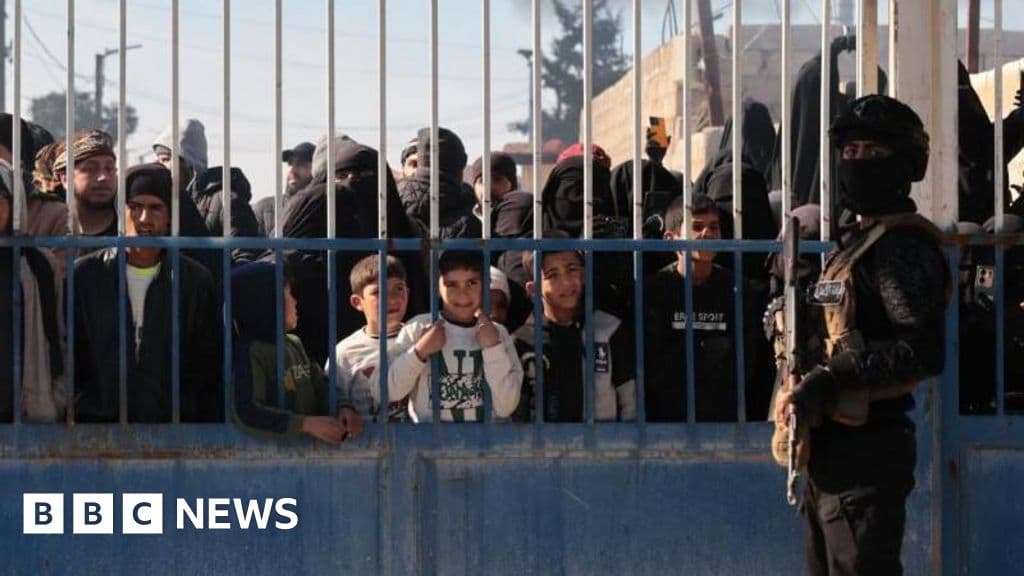
It is truly touching to witness the efficiency of the American military-industrial complex when it finally decides to engage in something resembling logistics. Usually, the prowess of the United States abroad is defined by dropping high-yield explosives on wedding parties or building schools that dissolve into dust the moment the contractor clears the check. But now, we are treated to a new spectacle: the strategic relocation of the world’s most unwanted houseguests. The United States is transferring Islamic State prisoners from Syria to Iraq. It is a move that screams of desperation, bureaucratic shuffling, and the kind of cynical pragmatism that makes one want to drink rubbing alcohol.
Let us appreciate the context, shall we? The Syrian government forces—led by Bashar al-Assad, a man who has clung to power with the tenacity of a barnacle on a sinking ship—are finally rolling into the north-eastern areas of the country. This is the territory that has been held for years by the Kurdish-led forces, otherwise known as the only people in the region who actually did the heavy lifting against ISIS while the Western world tweeted about it. The Kurds, having served their purpose as the disposable infantry of the West, are now watching their autonomy evaporate as Damascus reasserts control. And because the United States has the attention span of a goldfish and the loyalty of a alley cat, the primary concern in Washington isn't the fate of the Kurds or the stability of the region. No, the primary concern is: 'Where do we put the bad guys so they don't look like our fault when they escape?'
The solution, naturally, is Iraq. Because if there is one place on this godforsaken planet that needs more instability, more sectarian tension, and more imported jihadists, it is Iraq. We are treating a sovereign nation like a geopolitical storage unit for defective human beings. The logic is astounding. We broke Iraq two decades ago, spent years trying to glue it back together with money and blood, failed, and now we are using it as the overflow parking lot for the refuse of the Syrian civil war. It is the foreign policy equivalent of sweeping dirt under the rug, except the dirt is armed with an ideology of apocalyptic violence and the rug is already on fire.
Consider the absurdity of the transfer itself. These prisoners are not petty thieves or tax evaders. These are the die-hards of the Caliphate, the true believers who stuck around until the bitter end. They are the concentrated distillate of extremism. And the plan is to load them onto transport vehicles and shuttle them across a border that is little more than a line drawn in the sand by drunk European colonialists a century ago. We are moving them from a zone of chaos that is collapsing into a zone of chaos that has already collapsed, hoping that the change of scenery will somehow make the problem of their existence manageable. It is a shell game played with human grenades.
The optics of this maneuver are particularly delicious for anyone with a taste for dark irony. The US is scrambling to move these prisoners because the Syrian government is advancing. This implies a terrifying admission: the United States trusts the broken, Iranian-influenced, militia-riddled security apparatus of Iraq more than it trusts the incoming Syrian regime or the ability of the abandoned Kurds to hold the line. It is a tacit acknowledgement that the American project in Syria is over, finished, kaput. We are packing up the toys and leaving, but we have to make sure we don't leave the radioactive waste behind for the Russians or Assad to use in their next propaganda reel.
Furthermore, one must ask: what happens when they get to Iraq? Does anyone honestly believe the Iraqi judicial system, a beacon of integrity and efficiency, is ready to process and hold these individuals indefinitely? Or will we be reading headlines six months from now about a 'daring prison break' that releases a few hundred hardened fighters back into the ecosystem to start the cycle all over again? Of course we will. It is the circle of life in the Middle East, fueled by Western incompetence and local corruption. The Right will blame the weakness of the administration; the Left will lament the humanitarian crisis; and I will be here, staring into the void, noting that we simply moved the cancer from the left lung to the right lung and called it surgery.
This is not strategy. This is not 'peacekeeping.' This is the frantic cleanup of a party that got out of hand ten years ago. The US is washing its hands of the Syrian mess, but the soap is running out and the water is bloody. Transferring ISIS prisoners to Iraq doesn't solve the problem of ISIS, nor does it fix the tragedy of Syria. It merely shifts the liability to a different ledger, ensuring that when the next explosion happens, it happens in a zip code we’ve already stopped caring about. It is the ultimate act of bureaucratic cowardice, performed by a superpower that has run out of ideas, run out of friends, and run out of shame.
This story is an interpreted work of social commentary based on real events. Source: BBC News