Netflix Offers All-Cash to Ingest the Rotting Remains of Warner Bros Discovery

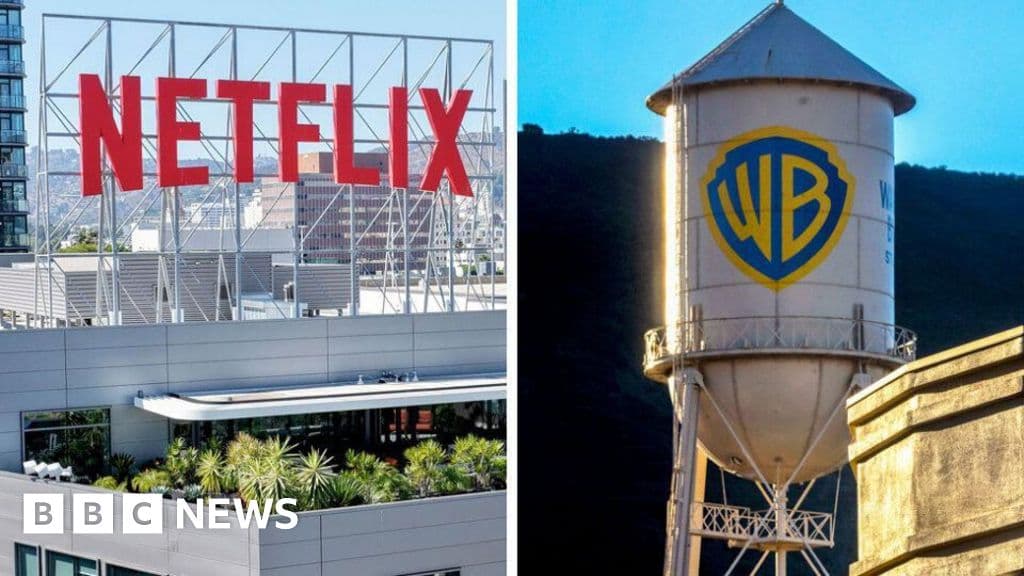
In a display of corporate necrophilia that would make even the most hardened bankruptcy attorney blush, Netflix has reportedly upgraded its bid for Warner Bros Discovery to an all-cash offer. Because in the hollowed-out skull of late-stage capitalism, nothing says ‘we have completely run out of original ideas’ quite like dumping a mountain of liquid currency onto the smoldering remains of a legacy studio. This is the latest skirmish in a bidding war that resembles a group of vultures fighting over a particularly shiny piece of roadkill, with Paramount and the tech-scion-funded Skydance currently twitching in the corner, wondering if their stock-swap promises are worth the digital paper they are printed on.
Let us look at the players in this tragicomedy. On one side, we have Netflix, the algorithm-driven void that successfully replaced the concept of 'culture' with a 'Top 10 in the U.S. Today' list consisting of true-crime documentaries about people you’ve never heard of and baking shows where the contestants are palpably terrified. Netflix’s pivot to an all-cash offer is a power move designed to exploit the utter desperation of the Warner Bros Discovery board. They know that WBD is less of a media company and more of a debt-repayment vehicle that occasionally accidentally releases a movie. By offering cash, Netflix is speaking the only language that the modern executive understands: immediate, unadulterated liquidity to mask the smell of systemic failure.
Then we have the competition. Paramount and Skydance are attempting to engage in a complex dance of mergers and acquisitions that feels like watching two geriatric patients trying to perform a tango while tethered to oxygen tanks. David Ellison’s Skydance represents the ultimate triumph of nepotism, a venture backed by the kind of Larry Ellison money that could buy a small moon but is instead being used to ensure that the Mission Impossible franchise continues until Tom Cruise is literally a skeleton in a flight suit. The fact that Netflix feels the need to outmuscle these relics with a cash-heavy frontal assault tells you everything you need to know about the state of the industry. It’s no longer about who can make the best films; it’s about who can endure the most debt while keeping the shareholders from jumping out of high-rise windows.
Warner Bros Discovery itself is a masterpiece of mismanagement. Under the leadership of David Zaslav—a man who seems to view the storied history of cinema as an annoying obstacle to his true passion: tax write-offs—WBD has become the yard sale of the entertainment world. They have spent the last few years deleting finished films, gutting archives, and rebranding their prestige streaming service with a name that sounds like a generic brand of detergent. Why wouldn't Netflix want to buy them? It’s a chance to own the rights to the DC Universe, a franchise so consistently mishandled it makes the Hindenburg look like a successful test flight. Netflix wants the 'IP'—that soul-crushing acronym used by people who hate art but love spreadsheets. They don't want to make movies; they want to own the ghosts of movies past so they can haunt your subscription fees for another decade.
The irony of an 'all-cash' offer in this economy cannot be overstated. While the average consumer is currently deciding which kidney to sell to afford a carton of eggs and a Netflix subscription that now includes unskippable ads for life insurance, Netflix is sitting on enough cash to bail out a mid-sized nation. They are using that hoard to ensure that the consolidation of media remains absolute. In the near future, there will be only one 'Subscribe' button on your television, and it will lead directly to a grey screen that plays a loop of a fire-log while charging you forty dollars a month.
This bidding war isn't about growth or innovation; it’s about the final enclosure of the creative commons. Whether it’s Netflix’s cash or Skydance’s legacy-adjacent meddling, the result for the audience is the same: higher prices for lower-quality garbage, served via an interface that knows you’re depressed and suggests 'The Office' for the 10,000th time. We are witnessing the cannibalization of the dream factory, where the dreams have been replaced by quarterly earnings reports and the factory is being sold for parts. It is a race to the bottom, and Netflix has just decided to pay for the express elevator.
This story is an interpreted work of social commentary based on real events. Source: BBC News