The 90-Day Ceasefire of the Blind Leading the Braindead
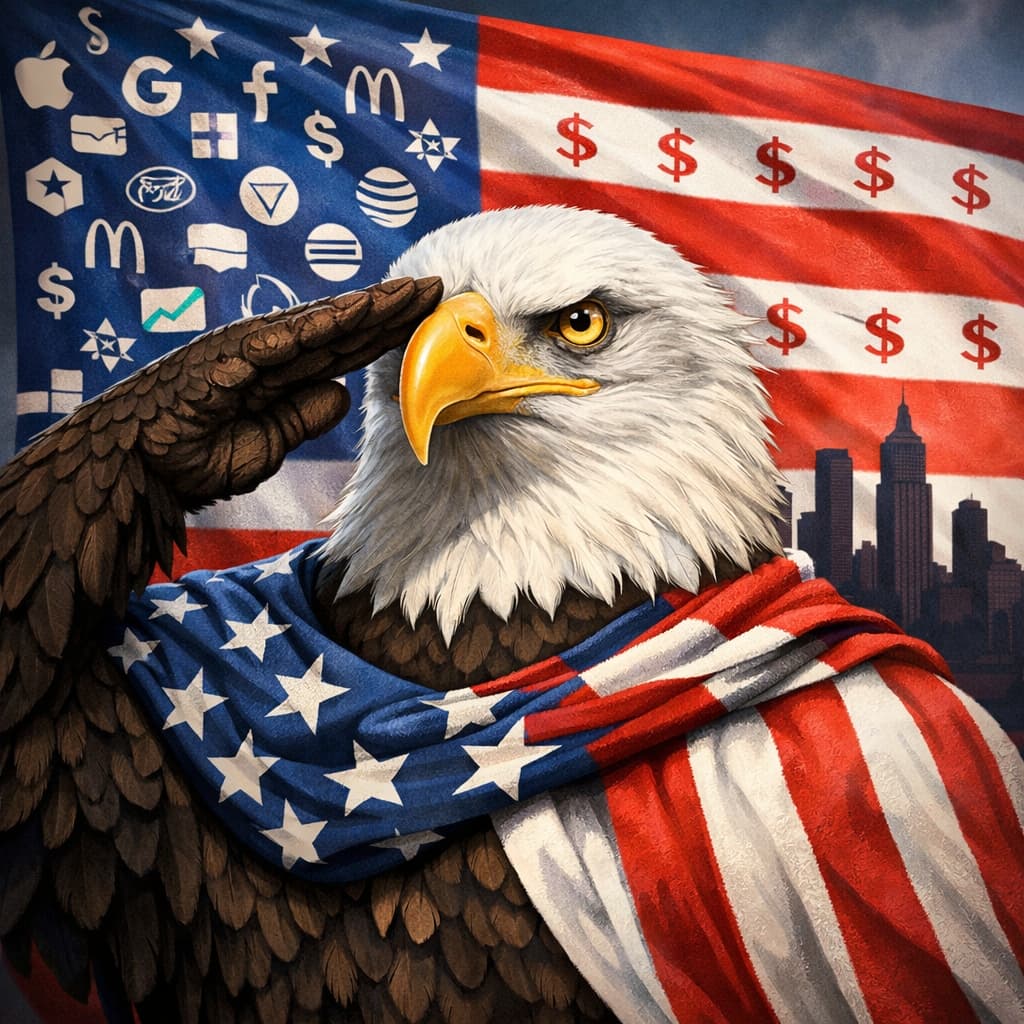

Behold the latest miracle of modern statecraft: a ninety-day reprieve in the trade war that everyone claims to want but no one actually has the stomach to finish. It’s the geopolitical equivalent of a toxic couple deciding to stop screaming at each other just long enough to finish their dinner at a mid-tier steakhouse before returning to the inevitable business of smashing the porcelain. Washington has somehow, in a fit of accidental lucidity or perhaps sheer exhaustion, granted Beijing a "strangely good" tariff deal. And if you believe this is the result of a coherent long-term strategy, I have a bridge in Brooklyn and several thousand shares of a failing social media platform to sell you.
Let’s look at the American side of this equation first, if only because their brand of incompetence is more loudly broadcast. For years, the rhetoric from the Potomac has been a cacophony of "decoupling," "reshoring," and various other buzzwords designed to make the average voter feel like the nation is reclaiming its industrial soul. In reality, the American economy is a terminal patient hooked up to a life-support machine manufactured in Shenzhen. The politicians know this. They scream about the "China threat" by day, and by night, they beg their lobbyists to ensure that the flow of cheap plastic junk and essential components doesn't stop, lest the peasants realize they can no longer afford their dopamine-dispensing devices. This ninety-day window isn't a gesture of goodwill; it’s a desperate gasp for air by a political class that realizes their "toughness" is about as structural as a cardboard umbrella in a monsoon.
Across the Pacific, Beijing watches this circus with the cold, patient amusement of a spider watching a particularly clumsy fly entangle itself in its own web. They aren't "winning" in the traditional sense; they are simply the beneficiaries of Western schizophrenia. To China, ninety days is the blink of an eye in a century-long plan to wait for the American experiment to finally succumb to its own internal contradictions. They accept these "good" deals not because they trust the partner, but because they understand the partner is currently suffering from a severe case of cognitive dissonance. They know that in three months, the American political cycle will rotate, a new set of grievances will be manufactured, and the cycle of performative hostility will resume.
The sheer brevity of this arrangement—this three-month "sabbatical" from stupidity—is the most telling part. In the world of high finance and global trade, ninety days is a rounding error. It’s barely enough time for a cargo ship to cross the ocean and clear customs. Yet, this is what passes for a "breakthrough." It is a stay of execution for the global consumer, a temporary subsidy for the very systems our leaders claim to be dismantling. The Left will decry the deal as a capitulation to an authoritarian regime, ignoring that their own "green" fantasies are built entirely on Chinese rare-earth minerals. The Right will howl about weakness, ignoring that their corporate donors would jump off a cliff before seeing their profit margins thinned by actual, non-subsidized domestic manufacturing costs. This is the beauty of the system: both sides get to be wrong simultaneously while the underlying problem remains untouched.
What we are witnessing is the management of decline. Neither side is interested in a resolution because a resolution would require addressing the foundational rot. Instead, we get these ninety-day bursts of "sensibility"—brief moments where the mask of ideological purity slips to reveal the sweating, terrified face of a bureaucrat who realizes the shelves might actually go empty. It is a cynical, pathetic dance performed by two aging empires who are too interconnected to truly fight and too mutually disgusted to ever truly cooperate. It is the diplomacy of the desperate, a temporary truce in a war that both sides have already lost, though neither has the courage to admit it to their respective captives.
So, enjoy your ninety days of "strangely good" trade conditions. Buy your electronics, refresh your wardrobe with fast-fashion rags that will outlive the truce, and pretend for a moment that the people in charge have any idea what they are doing. They don't. They are just kicking the can down a road that is rapidly running out of pavement. In ninety days, the rhetoric will sharpen, the tariffs will be brandished like rusty swords, and the public will once again be told that their economic suffering is a patriotic duty. Until then, we sit in this uneasy, manufactured quiet, waiting for the next inevitable tantrum from the world’s two most powerful, and most infantile, toddlers. It’s not peace; it’s just the sound of two giants catching their breath before the next round of mutual destruction.
This story is an interpreted work of social commentary based on real events. Source: The Economist