The Brussels Purgatory: How to Kill a Trade Deal with Twenty Years of Paperwork

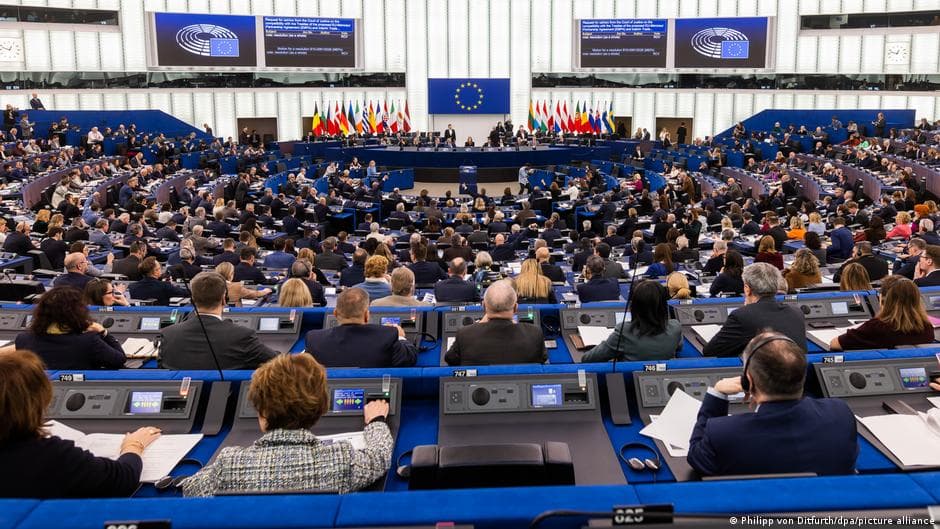
The European Parliament, that glittering mausoleum of bureaucratic ambition nestled in the heart of Brussels, has once again proven that its primary export is not policy, but paralysis. In a move that surprised absolutely no one with a functioning frontal lobe, lawmakers have narrowly voted to drag the long-suffering Mercosur trade deal before the European Court of Justice. It is the political equivalent of a spouse asking for a "break" after twenty years of engagement—a transparent, cowardly tactic designed to ensure that nothing actually changes while everyone continues to draw their tax-funded salaries. The deal, which aims to link the EU with the South American powerhouses of Argentina, Brazil, Paraguay, and Uruguay, has officially entered its third decade of existence as a theoretical concept rather than a functional reality.
The Mercosur deal—a sprawling, exhausted agreement that has been in the works since the late nineties—has been hit by a judicial asteroid. To put that timeline in perspective, when these negotiations began, we were still worried about the Y2K bug and the Macarena was considered a cultural milestone. Now, twenty-five years later, the EU has decided that the best way to handle the culmination of a quarter-century of labor is to toss it into the judicial abyss of the bloc’s top court. It is a masterclass in the art of the stall, a way for politicians to signal virtue to their domestic agricultural lobbies while pretending to the rest of the world that they are still a relevant trading power. The European Court of Justice is where trade deals go to be slowly dissolved in an acid bath of Latin-dense legalese and procedural technicalities.
The "narrowness" of the vote is perhaps the most pathetic aspect of this entire charade. It reveals a continent so deeply divided between its desire for cheap South American commodities and its terrified protectionism that it cannot even agree on how to commit suicide. The opposition, draped in the fashionable cloak of environmentalism, claims the deal doesn't do enough to protect the rainforest. In reality, they are terrified of Brazilian beef undercutting the prices of European farmers who have spent decades being subsidized into a state of competitive coma. It is a clash of hypocrisies: the "Green" warriors of the Left using the Amazon as a shield for protectionist trade policies, and the "Free Market" zealots of the Right who would pave over the entire continent if it meant a three percent increase in quarterly exports. Neither side cares about the planet or the consumer; they care about the next election cycle and the angry tractors blocking the streets of Paris.
Enter Friedrich Merz, the leader of Germany’s Christian Democrats and a man whose facial expressions suggest he is perpetually smelling something slightly off. Merz, seeing the writing on the wall for German industry, has suggested that the deal should be "provisionally enacted" regardless of the legal challenges. It is a fascinating glimpse into the mindset of the European center-right: "The rules are sacred, unless they get in the way of selling more Volkswagens." Merz’s desperation is palpable. Germany, once the undisputed engine of Europe, is now sputtering, and the prospect of losing access to a market of 260 million people because of a judicial technicality is enough to make even the most stoic Teuton sweat through his tailored suit. He wants to bypass the very democratic and legal guardrails his party usually claims are the bedrock of civilization, all because the spreadsheet says Germany is losing its edge.
The tragedy—or the comedy, depending on how much wine you’ve had—is that this legal challenge will likely take years to resolve. The European Court of Justice is not known for its blistering pace; it operates on a temporal plane where a decade is considered a brief lunch break. By the time a ruling is handed down, the global economic landscape will have shifted so fundamentally that the deal will be as relevant as a trade agreement for whale oil. While Brussels spends its time debating the finer points of "non-binding sustainability chapters," the rest of the world is moving on. China isn't waiting for a court ruling to secure its interests in South America; it’s just writing checks and building ports.
This is the BUCK VALOR guarantee: we are watching the slow-motion collapse of an empire built on paperwork. The EU’s inability to finalize a trade deal after a quarter-century of effort is not a failure of diplomacy; it is a failure of will. It is the result of a system that has prioritized process over outcomes to such an extent that the process has become the only outcome. We are governed by people who believe that if they can just find the right legal loophole, they can stop time itself. They can protect their pampered farmers, appease their performative activists, and maintain their global influence all at once. They are wrong. The Mercosur deal isn't just a trade agreement; it's a mirror. And in that mirror, the European Union sees exactly what it has become: a calcified, indecisive collection of nation-states more interested in winning a legal argument than participating in the future. Friedrich Merz can shout into the void about provisional enactment all he wants, but the machinery of Brussels is designed to grind everything into a fine, grey dust. We aren't watching a trade deal die; we are watching the final, twitching nerves of a continent that has forgotten how to say "yes" to anything other than another committee meeting.
This story is an interpreted work of social commentary based on real events. Source: DW