Germany’s Stockholm Syndrome: Longing for the High Priestess of Stasis

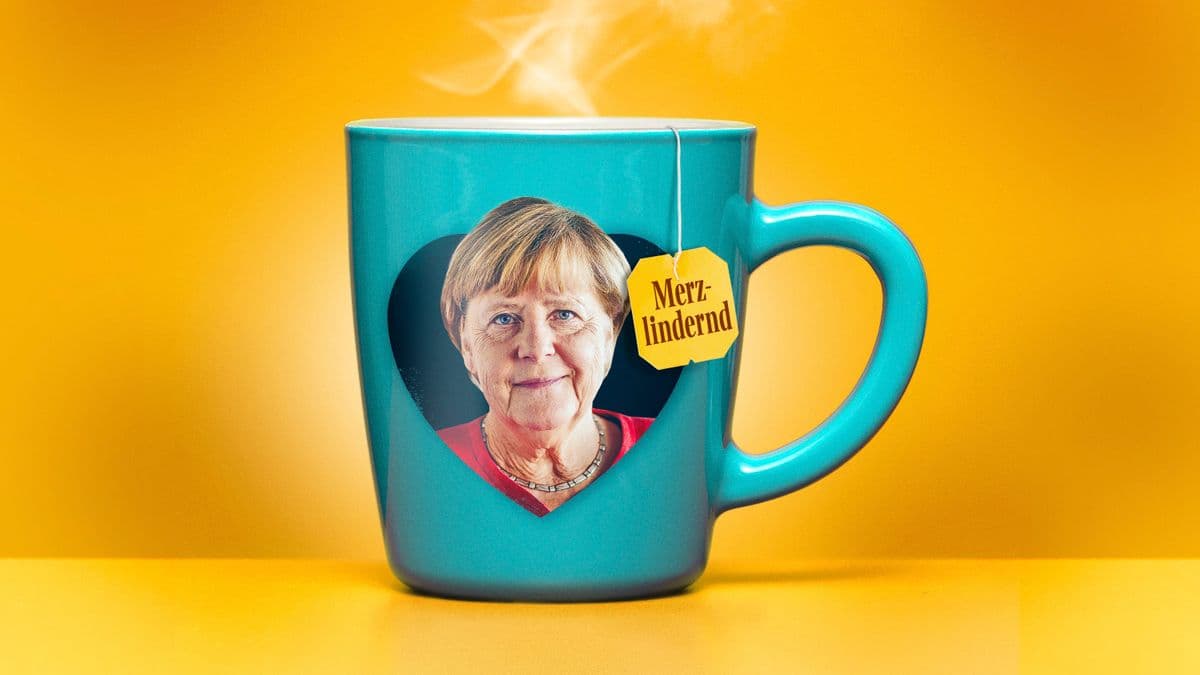
There is a particular brand of desperation that only the German psyche can truly inhabit—a mixture of bureaucratic anxiety and a primal need to be told exactly what time the recycling must be deposited. Having spent the better part of two decades under the sedative-heavy reign of Angela Merkel, the German electorate is now experiencing the political equivalent of opioid withdrawal. As Friedrich Merz stumbles through the current landscape with all the grace of a corporate liquidator at a funeral, the masses are looking back at the Merkel era not with critical clarity, but with the misty-eyed delusion of a captive missing their favorite warden. They call her the 'Queen Mum' now, a title that manages to be simultaneously sycophantic and terrifyingly accurate in its admission of national infantilism.
Let us be clear: the 'good old days' of Angela Merkel were a masterclass in the art of managed decline. For sixteen years, the woman occupied the Chancellery like a sentient piece of beige furniture, mastering the 'Merkel-Rhombus'—that diamond-shaped hand gesture that signaled to the world that absolutely nothing was happening, and that was exactly how she liked it. She didn't lead; she managed the status quo until it became a structural hazard. Now, as the infrastructure crumbles and the energy prices soar, the German public has decided to blame the current occupants of the house for the dry rot that Merkel spent a decade painting over with neutral tones. It is a spectacular display of historical amnesia. They miss her 'tone,' they say. Apparently, the tone of a librarian shushing a burning building is preferable to the cacophony of the current 'Traffic Light' coalition or the sharp, grating ambition of Friedrich Merz.
Merz, the man who currently leads the CDU and aspires to the throne, is the perfect catalyst for this collective hallucination. Every time he opens his mouth to offer a solution that sounds like it was drafted in a 1990s boardroom, a thousand more Germans light a votive candle to a portrait of 'Mutti.' Merz is the anti-Merkel in all the wrong ways. Where she was cautious to the point of paralysis, he is arrogant to the point of alienation. He represents the return of the 'old' CDU—a group of men who think leadership is simply a matter of wearing a more expensive suit than your opponent. His blunders are not merely tactical; they are aesthetic. He lacks the grandmotherly camouflage that allowed Merkel to dismantle the country’s nuclear energy grid while everyone was distracted by her choice of blazer.
But let’s not pretend the Left is any better. The current coalition, a bickering trio of ideologues and accountants, has managed to make Merkel’s era of stagnation look like the Italian Renaissance. They are so busy virtue-signaling about their various social experiments that they’ve forgotten how to keep the trains running—though, to be fair, Merkel’s neglect of the Deutsche Bahn was so thorough that even a miracle worker would struggle to find a functional bolt. The result is a nation that has lost its way and is now desperately trying to find its way back to the nursery. They want the 'Queen Mum' to come back and tell them that 'Wir schaffen das' (we can do this), despite the fact that 'this' has now become an unrecognizable heap of geopolitical irrelevance.
Has the 'Queen Mum' herself noticed this longing? If she has, she is likely watching from her retreat with the same detached, slightly annoyed expression she wore during G7 summits. She knows better than anyone that her greatest legacy wasn't policy, but the creation of a vacuum. She hollowed out the political center so effectively that nothing of substance could grow in her wake. The current nostalgia isn't a tribute to her greatness; it’s a symptom of the intellectual malnutrition she inflicted on the country. Germans aren't missing a leader; they are missing the comfort of not having to think. They miss the illusion of stability that she projected while the world outside her window was changing at a speed the German bureaucracy couldn't—and wouldn't—match.
This is the tragicomedy of modern Europe: a choice between the abrasive incompetence of the present and the soothing decay of the past. Merz offers a future that looks like a leveraged buyout, while the current government offers a future that looks like a faculty lounge meeting that never ends. In that context, the 'Queen Mum' looks like a saint. But saints are usually dead, and Merkelism is a ghost that refuses to stop haunting the hallways of Berlin. The German people are standing in the ruins of a house she helped neglect, crying because they miss the way she used to tell them the roof wasn't leaking while she held an umbrella over her own head. It would be pathetic if it weren't so predictably human. We deserve the leaders we miss just as much as we deserve the ones we have.
This story is an interpreted work of social commentary based on real events. Source: Der Spiegel