Greenland and the Art of the Sclerotic Deal: Brussels Prepares to Fight a Bulldozer With a Dictionary

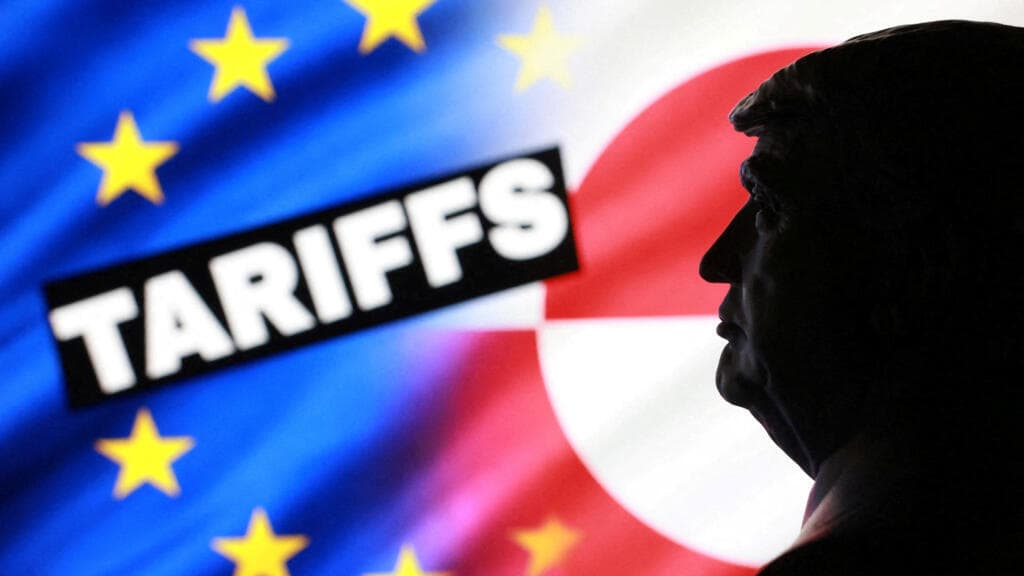
The European Union has unveiled its latest bureaucratic masterpiece, the 'Anti-Coercion Instrument' (ACI). It is a title that sounds like something a Victorian headmaster would use to discipline a particularly rowdy orphan, or perhaps a medical device used to extract a kidney. In reality, it is a desperate, flailing attempt by the gray-suited denizens of Brussels to pretend they have teeth in a world that is increasingly losing its mind over a frozen rock in the North Atlantic. The core of this latest geopolitical tantrum is, predictably, the United States' renewed interest in Greenland—a territory that Washington views not as a sovereign entity under the Danish crown, but as a potential strategic garage for more nuclear hardware and mineral extraction.
To understand the ACI, one must first understand the inherent, deep-seated intellectual cowardice of the European project. It is a system built entirely on the shaky premise that if you write enough rules and sub-clauses, the bullies of the world will eventually get bored and go home. Now, facing the potential return of the orange hurricane from Mar-a-Lago and the general pugnaciousness of the American trade machine, the EU is scrambling to convince itself that it can actually fight back. The ACI allows the EU to impose countermeasures—tariffs, service restrictions, and the usual menu of economic paper-cuts—if another country tries to 'coerce' a member state. But notice the phrasing. 'Coercion' is the word you use when you are far too polite to say 'extortion.' It is the linguistic equivalent of wearing a 'Kick Me' sign and then suing the person who kicks you for footwear damages.
Then there is the Greenland of it all. The fact that we are once again entertaining the idea of a reality-TV real estate mogul-turned-politician trying to buy an island like it is a failing casino in Atlantic City tells you everything you need to know about the current state of Western civilization. It is a farce played out in high-resolution satellite imagery. The Americans want the resources; the Danes want their dignity; and the EU wants to make sure everyone fills out the correct customs declarations before the world ends. The EU’s insistence that it would 'rather talk than trade blows' is the ultimate admission of impotence. It is the plea of a man bringing a meticulously prepared PowerPoint presentation to a knife fight.
Let us deconstruct this obsession with 'dialogue.' In the hallowed, echo-filled halls of Brussels, 'talking' is not a means to an end; it is the end itself. If they can just keep the Americans at the negotiation table long enough, perhaps the tide will go out, the sun will set, and the immediate threat of a trade war will dissolve into a series of vague memoranda of understanding that no one reads. It is a strategy of attrition through sheer, unadulterated boredom. They believe that by being the most tedious people on Earth, they can eventually sap the will of any aggressor. But American politics doesn't do boredom; it does chaos. And you cannot regulate chaos with a three-hundred-page directive on maritime trade tariffs and the ethical sourcing of Arctic gravel.
On the other side of the pond, we have the Americans, whose foreign policy has devolved into a series of impulsive grabs and geriatric tantrums. The idea that Washington would be deterred by the EU’s ACI is laughable. To the current American political class, 'coercion' is just another word for 'Tuesday.' They see the EU not as a partner, but as a retirement home with a decent wine cellar that needs to be reminded periodically who pays for the security guards. The Greenland dispute is merely a symptom of a deeper rot: the realization that the post-war order is not just dead, it is being sold off for parts to the loudest bully in the room.
Ultimately, the 'Anti-Coercion Instrument' will go the way of all European grand designs: it will be debated for decades, watered down by member states afraid of losing their own bilateral trade scraps, and eventually filed away in a basement in Brussels next to the regulations on the curvature of bananas. It is a prop in a play that no one is watching anymore. While the EU prepares its 'toughest trade response,' the world moves on. The ice in Greenland melts regardless of who claims to own it, and the trade wars of the future will be fought over the scraps of a planet that both sides were too busy 'negotiating' to save. It is a pathetic spectacle—a collision of bureaucratic inertia and imperial ego, leaving nothing but a trail of indignant press releases and broken promises in its wake. We are watching the slow-motion collapse of the West, and all we have to show for it is a new trade mechanism that requires a law degree to understand and a lack of self-respect to implement.
This story is an interpreted work of social commentary based on real events. Source: RFI