Old Men in Bathrobes Declare War on Wi-Fi and Reality: The Iranian Cycle of Blood and Boredom

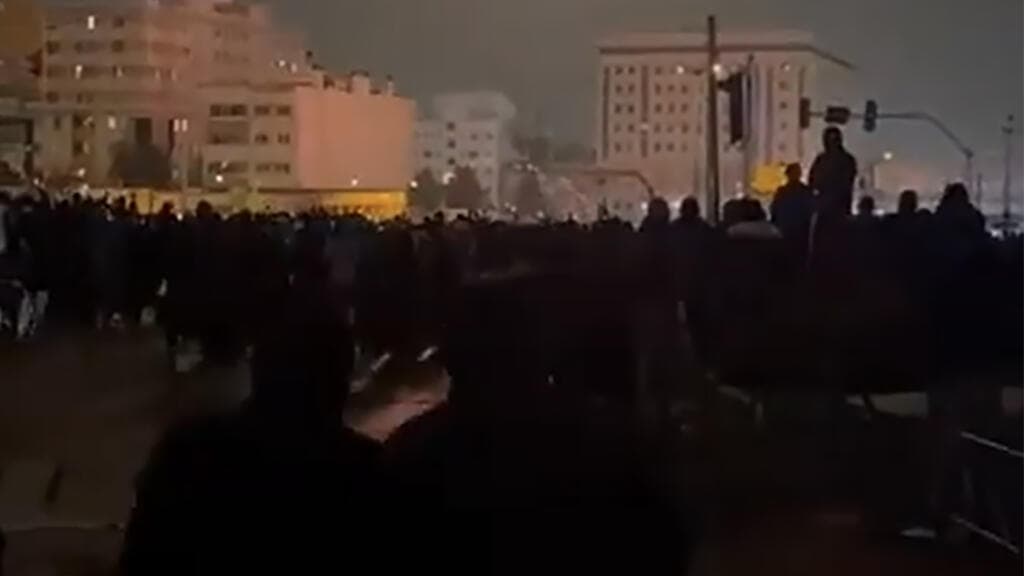
The Islamic Republic of Iran, a state effectively governed by a geriatric committee of men who seem to believe the 7th century was the absolute pinnacle of human achievement, has once again decided that the best way to handle a disgruntled citizenry is to turn off the lights and start the shooting. This is the latest episode of a series we’ve all seen before, a tedious loop of repression and performative international concern that serves no one but the vultures of the global media cycle. The news that Iranians took to the streets overnight, despite an internet shutdown, is being framed by human rights groups as a prelude to a 'massacre.' In the lexicon of international diplomacy, 'massacre' is a word that triggers a lot of concerned frowning but absolutely zero actual intervention, unless, of course, there’s an oil field at stake that hasn’t been sufficiently privatized.
The clerical authorities, in their infinite, divinely-mandated wisdom, have reached for their favorite tool: the internet kill switch. It is the coward's first resort. The digital shutdown is the theological equivalent of putting a pillow over a victim’s face so the neighbors don’t hear the screaming. By severing the data packets, these holy men apparently believe they can sever the truth. They view a Wi-Fi signal as a more significant threat than actual starvation or civil unrest, proving once and for all that their God is apparently easily defeated by a 5G tower. It is a pathetic admission of fragility. If your regime is so morally righteous and eternally sanctioned, why are you so terrified of a teenager with a smartphone? The irony is thick enough to choke on: a government that claims to represent the eternal will of the Creator is terrified of a platform where people mostly post pictures of their dinner and mediocre dances.
Then we have the international reaction, a cacophony of stupidity that makes the bloodshed in Tehran seem almost dignified by comparison. On the Left, we have the 'solidarity' brigade—individuals whose idea of a revolution is changing their profile picture to a stylized illustration of a woman’s silhouette. They tweet from their climate-controlled apartments in London and Brooklyn, demanding 'justice' while ignoring the fact that the very devices they use to signal their virtue were likely manufactured under conditions that would make an 18th-century coal miner weep. Their concern is purely aesthetic. They don’t want a different world; they just want a version of this one that looks better on a curated feed. They treat the slaughter of protesters as a backdrop for their own moral preening, a way to feel connected to a struggle they have no intention of actually participating in.
On the Right, the hawks are salivating. They have suddenly, and quite hilariously, rediscovered their passion for feminist liberation and human rights. These are the same political actors who view domestic women’s rights as a pesky obstacle to their own traditionalist agendas, yet they are more than happy to use the bodies of Iranian women as a convenient battering ram for regime-change fantasies. To the Right, an Iranian protestor is not a human being with agency; they are a prop in a geopolitical chess game intended to secure defense contracts and distract from the rotting infrastructure of their own crumbling democracies. Their concern for 'freedom' in Iran is as sincere as a lobbyist’s smile. They don't want to save the Iranian people; they want to replace a group of bearded clerics with a group of Western-aligned suits who will at least have the decency to sell off the state assets at a discount.
Meanwhile, the 'massacre' proceeds with the bureaucratic efficiency of a state that has nothing left to offer but violence. Rights groups warn of the scale of the crackdown, but what is a warning in a world that has become deaf to everything but its own internal monologue? A 'massacre' is just a headline that will be buried by tomorrow’s celebrity scandal or a slight dip in the S&P 500. The clerical regime knows this. They know that if they can just kill enough people in the dark, the world will eventually get bored and move on to the next tragedy. They rely on the short attention span of a global public that treats human suffering as a form of content to be consumed and discarded.
Ultimately, this is the tragedy of the human condition: a cycle of desperate people fighting for a glimmer of autonomy against a regime of stagnant old men, while the rest of the world watches with the distracted voyeurism of a car crash. The protesters are brave, certainly, but in the eyes of history, they are fuel for a fire that neither the Left nor the Right actually wants to put out. One side wants the fire to look pretty for the cameras; the other wants to use it to burn down a rival's house. No one actually cares about the people in the building. The internet will eventually come back on, the bodies will be buried in silence, and the clerics will return to their prayer rugs, confident that they have successfully deferred the 21st century for another few months. It is a miserable, predictable performance, and we are all complicit in the audience.
This story is an interpreted work of social commentary based on real events. Source: RFI