Japan Jails the Amateur Gunsmith Who Exposed the Divine Grift

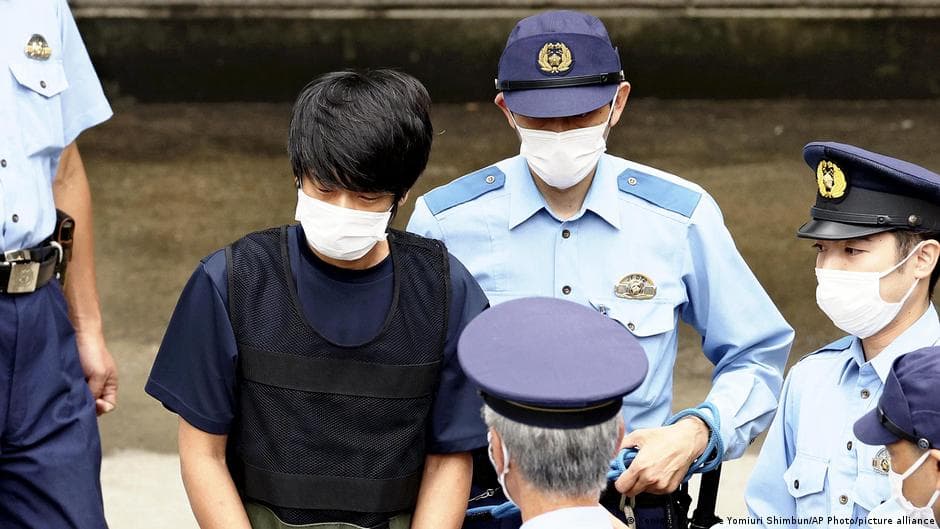
The Japanese judiciary has finally concluded its performance in the case of Tetsuya Yamagami, sentencing the man who liquidated former Prime Minister Shinzo Abe to life in a cage. It is a predictable climax to a story that stripped the gold leaf off the Liberal Democratic Party and revealed the termite-infested wood beneath. Yamagami, a man whose primary contribution to history was proving that a YouTube tutorial and some hardware store plumbing can override decades of dynastic political security, will now spend the rest of his days in the silence of the Japanese penal system. It is a fittingly dull end for a drama that was, at its core, about the intersection of cheap metal and expensive lies.
Let’s be clear: Yamagami isn’t a hero, and Abe wasn’t a saint. They were two ends of a very dirty rope. Abe, the scion of a political lineage that treated the Prime Minister’s office like a hereditary estate, spent his career trying to drag Japan back into a nationalist past that most of the world—and many of his own citizens—viewed with justified trepidation. He was the golden boy of the Right, a man who spoke of 'taking back Japan' while apparently letting a South Korean-founded cult take the steering wheel of his party's policy. The irony is thick enough to choke on. Here was a man who championed Japanese sovereignty while maintaining a cozy, symbiotic relationship with the Unification Church, an organization that specializes in the spiritual and financial evisceration of the very Japanese families Abe claimed to protect.
The Unification Church—colloquially known as the 'Moonies' for those who prefer their cults with a side of 1970s nostalgia—is the true villain in this sordid play, though they will never face a sentencing hearing. Yamagami’s motive was not political in the grand, ideological sense; it was a grudge born of a bank account emptied by divine extortion. His mother, caught in the grip of the Church’s predatory salvation-as-a-service model, funneled the family’s future into the pockets of the 'True Parents.' When Yamagami looked for someone to blame, he didn’t just look at the cult; he looked at the men who gave them legitimacy. And there was Shinzo Abe, appearing in videos for Church affiliates, offering his prestige to a group that treats its followers like ATMs with souls.
The murder itself was a masterclass in the absurdity of modern existence. In a country that prides itself on being the pinnacle of orderly, high-tech safety, the most influential politician of the century was taken down by a device that looked like it was scavenged from a dumpster in a dystopian sci-fi movie. Two pipes, some black tape, and a wooden board. It was a DIY nightmare that humiliated the elite security forces who stood by, blinking in confusion, while a man with a hobbyist’s grudge did the unthinkable. It proved that for all the billions spent on surveillance and statecraft, the entire system is vulnerable to a single, determined individual with a grievance and a trip to the local plumber’s supply shop.
The response from the Japanese establishment has been a frantic exercise in damage control. They have spent the last two years trying to separate the 'act of violence' from the 'reasons for the violence.' They want to punish Yamagami for the crime—as they should—but they also desperately want to bury the conversation about why a former Prime Minister was so deeply entangled with a predatory foreign cult. The sentencing provides the perfect opportunity to close the book. By locking Yamagami away for life, the state can pretend that the 'instability' has been neutralized. They can go back to the comfortable routine of passing power back and forth between the same handful of families, while the Unification Church merely rebrands its grift under a different name.
On the Left, the reaction has been equally pathetic. Activists have tried to turn Yamagami into a symbol of the 'oppressed,' ignoring the fact that he is a murderer who used a pipe bomb’s cousin to settle a personal debt. They want to use his rage to fuel their own stagnant agendas, failing to realize that a man who resorts to assassination is not an ally of progress; he is just another symptom of a society that has forgotten how to function without violence. On the Right, the mourning for Abe has reached a level of hagiography that is frankly nauseating. They speak of him as a fallen titan, carefully omitting the parts of his resume that involved legitimizing a cult that ruined thousands of Japanese lives.
In the end, Japan gets what it always wanted: order. Yamagami goes to a cell, Abe remains in a shrine, and the public is told that justice has been served. But the underlying rot—the incestuous relationship between political power and religious grifting—remains untouched. The system hasn't been fixed; it’s just been scrubbed of the bloodstains. We are left with a world where the powerful remain protected by their lies, and the desperate are punished for their truths, and everyone else is just waiting for the next man with a pipe and a plan to remind us how fragile this whole charade really is.
This story is an interpreted work of social commentary based on real events. Source: DW