The Great Global Sandpit: Why Your Survival is a Derivative for Bored Men in Gingham Shirts
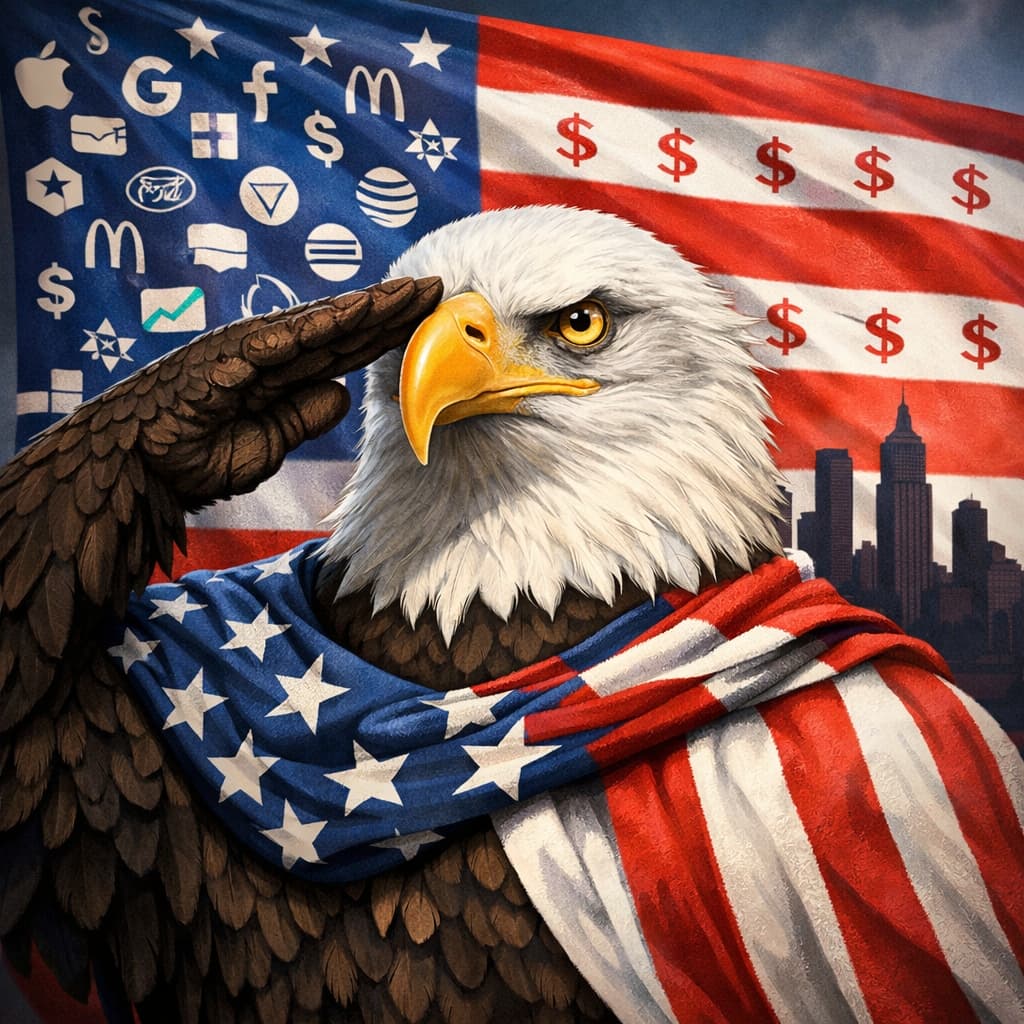
The financial press, in its terminal state of creative bankruptcy, has decided that the current state of the commodities market is a 'rollercoaster.' It’s a quaint, carnival-colored metaphor for a system that is essentially a high-stakes suicide pact. When journalists talk about 'volatility' in oil, wheat, or lithium, they are using a polite term for the fact that the things you actually need to survive—warmth, calories, and the ability to transport your miserable self to a job you hate—have been transformed into casino chips for people who have never seen a grain silo in their lives.
Enter the archetype of the moment: Tommy Norris. Or rather, the 'Tommy Norrises' of the world—those mid-tier hedge fund managers and 'commodity specialists' who spend their days staring at Bloomberg terminals, trying to find a signal in the noise of global collapse. We are told to pity them. Pity the man whose spreadsheet didn’t account for a sudden geopolitical spasm or a weather event that wasn’t supposed to happen until 2045. I don’t pity Tommy. I find him, and the entire architecture of his profession, to be a testament to the staggering idiocy of the human species. We have designed a world where the price of bread in Cairo is determined by a 26-year-old in a glass tower in London who is currently deciding whether to order a matcha latte or a heart attack in a cup.
The commodities market is currently a screaming mess because reality has finally decided to stop behaving for the benefit of the 'efficient market hypothesis.' For decades, we lived in the delusion that supply chains were just lines on a map and that 'just-in-time' delivery was a stroke of genius rather than a fragile house of cards built on the assumption that nothing would ever go wrong. Now, everything is going wrong simultaneously. The Left, in its usual display of performative outrage, screams about 'corporate greed' and 'windfall taxes,' as if a government bureaucracy could somehow legislate the price of copper back down to 2019 levels through the sheer power of inclusive language and paperwork. They want to regulate the tide, oblivious to the fact that the ocean doesn't care about their subcommittees.
On the other side of the aisle, the Right-wing zealots are screeching for 'total deregulation' and more 'freedom molecules'—their pathetic euphemism for natural gas. They believe that if we just let every oil executive drill a hole in their own grandmother’s backyard, the 'invisible hand' of the market will magically stabilize the price of eggs. They are morons who worship a god that died in 2008. They fail to see that the market isn’t some objective arbiter of value; it’s a collective hallucination fueled by cheap credit and the desperate hope that we won't run out of the stuff that keeps the lights on.
The reality of the 'rollercoaster' is far more cynical. Commodities are volatile because they are the only things that are actually real in an economy built on 'fintech,' 'synergy,' and 'AI-driven wellness apps.' You can’t eat a Bitcoin. You can’t build a battery out of a 'disruptive' social media strategy. As the world realizes that we are actually running out of easily accessible rocks and ancient sunlight, the panic sets in. The traders react to this panic by gambling harder, creating a feedback loop of price spikes and crashes that serves no one except the brokers collecting the fees.
Historical parallels are everywhere, though the 'experts' are too busy looking at three-minute candles to notice. We are re-enacting the worst impulses of the 17th-century spice trade, but with better telecommunications. We have turned the basic elements of existence—the very soil and fuel of our planet—into speculative assets. This isn't 'price discovery'; it's a frantic scramble for the last lifeboats on the Titanic, and the passengers are arguing about whether the lifeboats should be carbon-neutral or if the lifeboats are an infringement on their personal liberty.
So, spare me the sob stories about the 'struggling' commodity traders who got caught on the wrong side of a nickel squeeze. Don't ask me to care about the 'uncertainty' facing global markets. The uncertainty is the point. We have built a civilization that treats the physical world as a derivative of the financial world, and now the physical world is demanding its pound of flesh. The rollercoaster isn't going back to the station. It’s off the rails, and frankly, the impact at the bottom is the only thing that’s going to be real about this entire pathetic charade. We are a species that turned survival into a game of craps, and we have the audacity to look surprised when we roll snake eyes.
This story is an interpreted work of social commentary based on real events. Source: The Economist