The Digital Showroom of Broken Dreams: Why Americans Still Prefer Being Robbed in Person

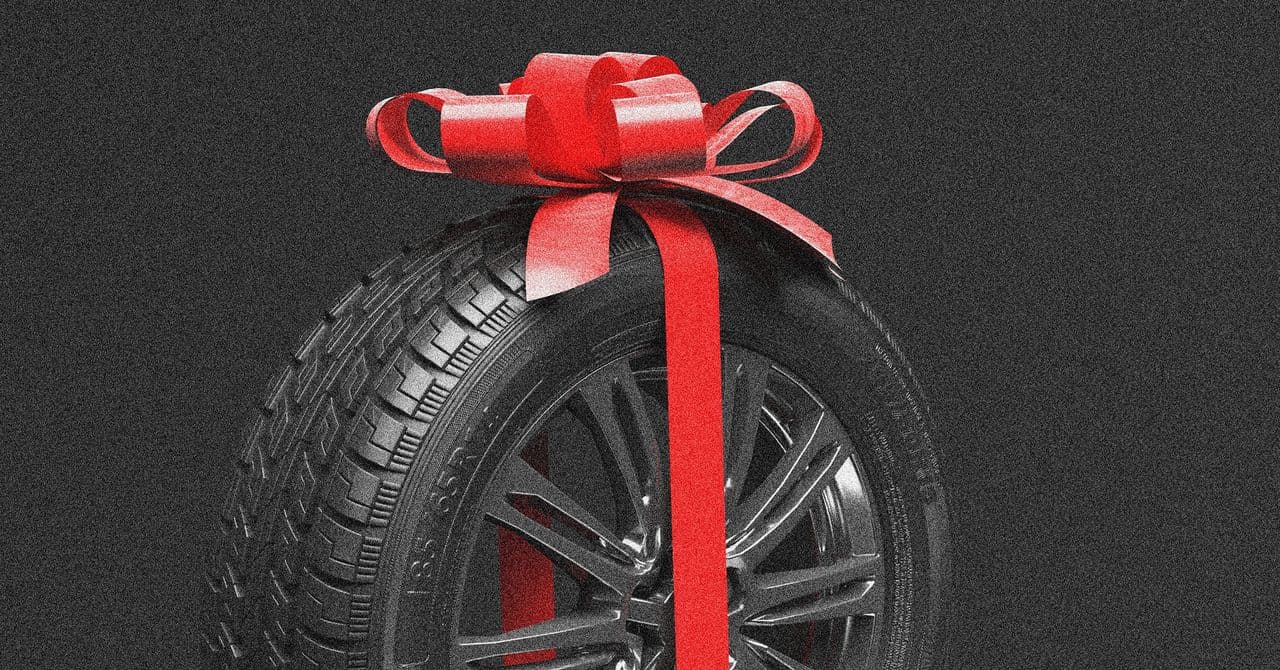
It appears the digital revolution has hit a rather pathetic speed bump in the form of a four-door sedan. A recent report, dripping with the kind of corporate disappointment that warms my cold, cynical heart, reveals that a measly seven percent of new-car buyers in the United States actually followed through with a full online purchase. Despite the frantic, sweat-soaked efforts of automakers, tech giants, and Jeff Bezos’s ever-expanding quest to own every atom of your existence, the American public has looked at the 'Add to Cart' button and decided they would much rather spend six hours breathing in the scent of stale upholstery and desperation at a local dealership.
Let us pause to appreciate the sheer, monolithic failure represented by that seven percent figure. For years, we have been told by the technocratic elite that the 'dealership model' was a relic of a primitive era, a vestigial organ of the economy that would be sliced away by the sharp scalpel of e-commerce. Amazon, the company that successfully convinced the world that buying toilet paper via a subscription was a revolutionary act, partnered with Hyundai to streamline the process. They promised a future where you could summon a crossover SUV with the same mindless thumb-tap you use to order a gluten-free pizza. And yet, the consumer—that fickle, easily led creature—has balked. It seems the 'frictionless' future has a massive friction problem: the deep-seated, perhaps genetic, American need to be ritualistically humiliated by a man named Gary in a short-sleeved dress shirt.
Why does this happen? The analysts, those professional guessers who get paid six figures to state the obvious, suggest that people want to 'touch and feel' the product. How quaint. As if sitting in a stationary vehicle for three minutes gives you any profound insight into its long-term mechanical reliability or the inevitable failure of its proprietary software. No, the truth is far more depressing. The American consumer is suffering from a terminal case of Stockholm Syndrome. They have been conditioned for decades to believe that the only way to truly 'own' something as significant as a vehicle is to survive the gauntlet of the finance office. They need the performative theater of the 'test drive,' the fake consultation with the 'manager' who lives in a glass-walled cage, and the final, agonizing signature on a mountain of paperwork that they haven't read and wouldn't understand if they did.
On the other side of this tragedy, we have the automakers and the Silicon Valley carpetbaggers. They honestly believed that by removing the human element, they could capture more of the margin. They didn't realize that the human element—specifically the predatory nature of the dealership lobby—is a protected species in the American legislative ecosystem. These dealerships have spent a century bribing... excuse me, 'lobbying' state legislatures to ensure their parasitic existence remains legally mandated. You can't just bypass the middleman when the middleman owns the state senate. The tech bros thought they could disrupt an industry, only to find that the industry is built on a foundation of iron-clad protectionism and the average voter’s inability to care about anything more complex than a monthly payment figure.
Even more amusing is the 'hybrid' model—the people who do all their research online only to show up at the lot to 'finalize' the deal. This is the intellectual equivalent of reading a five-star review of a restaurant and then walking into the kitchen to make sure the chef isn't a raccoon. It betrays a fundamental lack of trust in the very digital infrastructure that these same people use to manage their bank accounts, their medical records, and their children's education. We trust the internet with our souls, but not with our Kia Sorentos.
The reality is that the online car-buying 'push' was always a fantasy of efficiency in a world that thrives on inefficiency. The dealership is not just a place of business; it is a monument to the American psyche’s love of the 'grind.' We don’t want a fair price; we want to feel like we 'won' a negotiation, even when we’ve clearly lost. We want the physical key handed to us by a person, as if that makes the twenty-thousand-dollar markup for 'paint protection' any less of a mugging.
So, here we are. Seven percent. A rounding error in the grand ledger of progress. The tech giants will continue to pour billions into interfaces that nobody wants, and the dealerships will continue to inflate prices to cover the cost of their hideous neon signage. Meanwhile, the consumer will continue to complain about the 'horrible dealership experience' while simultaneously sprinting back into its arms the moment they need a new set of wheels. It is a perfect, self-sustaining ecosystem of stupidity. We deserve every minute of the six hours we spend in that waiting room, sipping burnt coffee and contemplating the void. After all, if we didn't want to be treated like cattle, we wouldn't keep wandering back into the slaughterhouse.
This story is an interpreted work of social commentary based on real events. Source: Wired