Europol’s Great Chemistry Fair: A Victory for Boredom and Bureaucracy

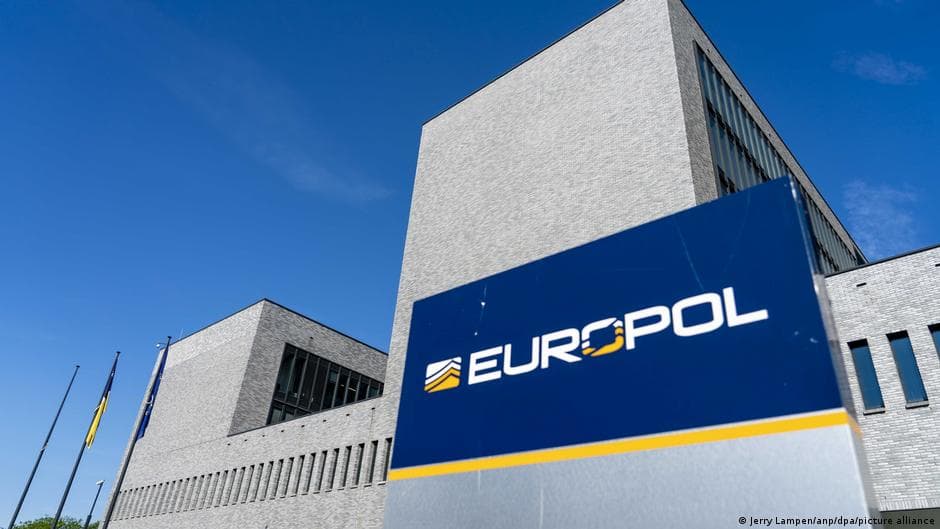
There is a specific, pungent scent to bureaucratic self-satisfaction, and it currently reeks across the European continent. Europol, that glorious collection of high-salaried paper-pushers who occasionally remember they have a mandate for law enforcement, has announced the 'biggest operation ever' against a synthetic drug network. They are calling it a 'major blow' to organized crime, a phrase used so frequently in police press releases that it has lost all meaning, much like the concepts of 'integrity' or 'affordable housing.' To the uninitiated, this looks like a victory. To anyone with a functioning frontal lobe and a basic grasp of the dismal science of economics, it is merely the latest episode of a never-ending sitcom where the plot never moves forward and the laugh track is provided by the cartels themselves.
Let us deconstruct the theater of the 'Major Blow.' Europol and its gaggle of national partners have dismantled a production network of synthetic drugs. They found the labs, they found the precursors, and they found the people who were, quite frankly, just trying to meet the crushing market demand of a continent so profoundly bored and spiritually vacant that the only way to endure a Tuesday is to ingest a chemical compound cooked in a garage in Brabant. The authorities are preening, patting themselves on the back for disrupting a supply chain that will, with the inevitability of a sunrise, be replaced by three more within a fiscal quarter. It is the police equivalent of clearing a single patch of weeds in a rainforest and declaring the jungle conquered.
What is truly fascinating about this 'unprecedented' bust is the sheer scale of the hubris involved. The European Union—a political entity that cannot decide on a unified stance regarding the shape of a banana or the color of a passport—suddenly wants us to believe it has managed to outsmart the only sector of the economy that actually demonstrates genuine innovation: organized crime. While the legitimate tech sector in Europe is strangled by a thousand regulatory threads, the synthetic drug industry remains the last bastion of pure, unadulterated free-market capitalism. These 'criminals' have managed to solve logistics, supply chain management, and research and development problems that would leave a Fortune 500 CEO weeping into their triple-shot espresso. And yet, we are told that a few early-morning raids have crippled this behemoth. It is adorable, in a pathetic, terminal sort of way.
The rhetoric of the 'drug war' is a relic, a dusty antique kept on the mantle by politicians who need to look busy. By framing this as a moral victory, Europol ignores the screaming reality of the demand side. Why is Europe the world’s leading laboratory for synthetic misery? Perhaps because the 'European Dream' has been reduced to a choice between living in a shoebox you can’t afford or moving to a suburb where the most exciting event of the year is the municipal garbage collection schedule. People want to get high because reality, as curated by the suits in Brussels and the morons in various national parliaments, is a beige landscape of soul-crushing mediocrity. When the state fails to provide meaning, the street provides MDMA.
Furthermore, let’s talk about the 'organized' part of organized crime. These networks are not run by cartoon villains twirling their mustaches in volcanic lairs; they are run by pragmatic entrepreneurs who understand that if you remove one link in the chain, the chain simply grows a new one. The 'major blow' Europol is so proud of is, in reality, a market correction. By removing the current dominant players, the authorities have effectively cleared the field for a newer, more efficient, and likely more violent iteration of the same business. It is a government-funded startup incubator for the next generation of narco-lords.
In the end, this bust serves one purpose: the justification of next year’s budget. The flashy photos of seized vats and bagged powders are the currency of the public sector. They need you to believe that the streets are safer so that you won't notice that the fundamental rot of society remains unaddressed. The Left will cry about the need for more social programs that do nothing but create more bureaucracy, and the Right will scream for longer sentences and more boots on the ground, oblivious to the fact that you cannot arrest your way out of a chemical reaction. They are all idiots, dancing on the deck of a sinking ship, celebrating because they managed to bail out a single bucket of water while the hull is split wide open. Europol has won a battle in a war that was lost the moment humanity decided that reality was an optional experience. Congratulations, gentlemen. I’m sure the next 'biggest bust' will be scheduled exactly when your poll numbers or funding requests need a boost. Until then, the rest of us will wait for the inevitable sequel.
This story is an interpreted work of social commentary based on real events. Source: DW