The Last Splinter: Kasali Akangbe Ogun and the Futile Art of Carving Souls in a Plastic World

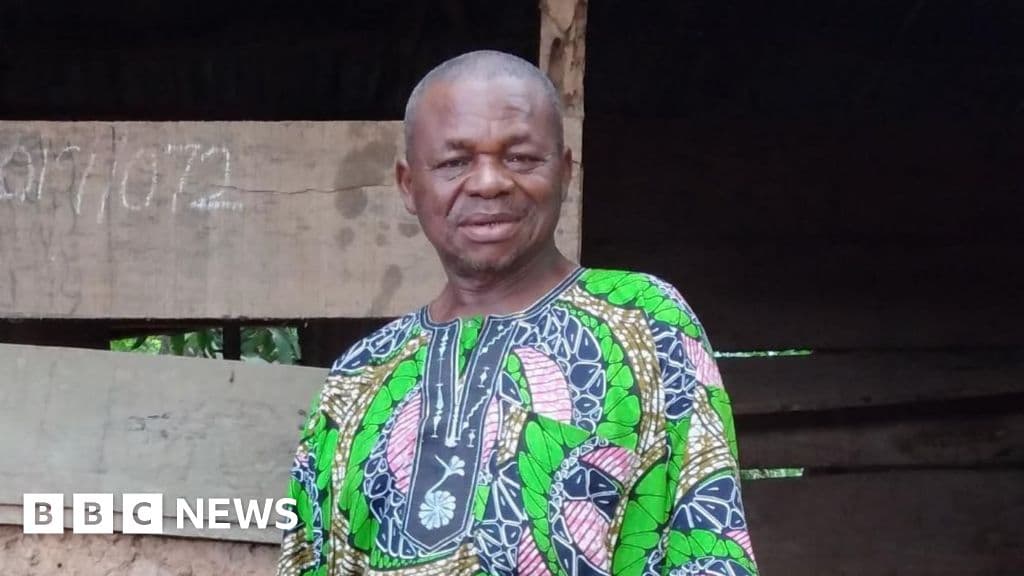
In the grand, rotting theater of human achievement, we have reached the inevitable scene where the last man who knows how to talk to trees finally stops breathing. Kasali Akangbe Ogun, Nigeria’s so-called 'master wood carver,' has shuffled off his mortal coil after a 'brief illness'—that polite, medical shorthand for the body finally realizing it is living in the twenty-first century and deciding to opt out. Ogun did not merely manufacture objects; he was the hereditary custodian of a tradition that dates back to a time before every human desire was satisfied by injection-molded plastic and predatory algorithms.
The news of Ogun’s passing is being treated with the usual performative gravity reserved for the disappearance of something 'authentic' in an age of total artifice. Ogun belonged to a lineage of wood carvers so ancient it makes the concept of a 'legacy brand' look like a toddler’s tantrum. He spent his decades in the service of spirits that do not have social media accounts or venture capital backing. As a primary contributor to the Osun-Osogbo Sacred Grove—a UNESCO World Heritage site that serves as a convenient backdrop for international tourists to feel 'spiritually rejuvenated' before flying back to their carbon-heavy purgatories—Ogun was a man out of time. He spent his life giving shape to the divine, while the rest of the world was busy perfecting the art of the disposable.
There is a profound, almost hilarious irony in Ogun’s specialty: the fertility goddess. To spend a lifetime carving tributes to fecundity and the continuation of the species while the planet screams for mercy under the weight of eight billion primates is the ultimate cosmic joke. One can almost picture the goddess herself, carved from the heartwood of a tree that was likely destined for a logging truck, staring back at Ogun with a look of wooden disbelief. We are a species obsessed with our own reproduction even as we ensure the environment required to sustain that reproduction is systematically dismantled. Ogun was the designated witness to this absurdity, chipping away at the timber to reveal deities that most people only acknowledge when they are trying to look 'cultured' for a National Geographic spread or a university grant application.
Predictably, the global commentary on his death follows a weary script. On the Left, we see the fetishization of 'indigenous craft,' a desperate attempt to cling to a pre-industrial purity that they themselves destroyed with their demands for cheap cobalt and fast fashion. To them, Ogun was a symbol, a noble artifact to be mourned in a newsletter. On the Right, if they notice at all, he is a curiosity—a man who worked with his hands in a way that didn’t involve a fracking drill or a stock ticker, and therefore, someone whose economic utility was tragically under-optimized. Neither side actually cares about the wood, the spirit, or the man. They care about the optics of the object. They mourn the 'loss of culture' as if culture were a physical thing you could lose in a move, rather than a living practice they have spent centuries suffocating.
Ogun’s burial marks the end of a particular kind of stubbornness. It is the death of the artisan who did not need a 'brand strategy' or a 'digital presence.' He was buried after his brief illness—perhaps the sudden, sharp realization that he was the only one left in the room who understood that you cannot download a soul. The Osun-Osogbo Sacred Grove now sits a little quieter, the humidity pressing down on statues that will eventually rot without his restorative touch. It is the natural order of things: replace the divine with the efficient, and then wonder why everything tastes like ash and looks like a strip mall.
We pretend to be saddened by the loss of 'master carvers' because it reminds us that we have forgotten how to make things that last longer than a smartphone’s battery life. We celebrate his 'preservation of tradition' while we actively participate in the global economy that makes such traditions obsolete. Kasali Akangbe Ogun is gone, and with him, a specific frequency of human patience. He returned to the earth from which his materials came, leaving behind a forest of wooden gods who are now tasked with the impossible job of watching over a species that has long since stopped looking up from its screens. It is a fitting end to a career spent in the service of the unseen: being buried by a world that only believes in what it can sell.
This story is an interpreted work of social commentary based on real events. Source: BBC News