The UAE’s Sandbox of Slaughter: A Masterclass in Geopolitical Arson and Explainer-Video Futility

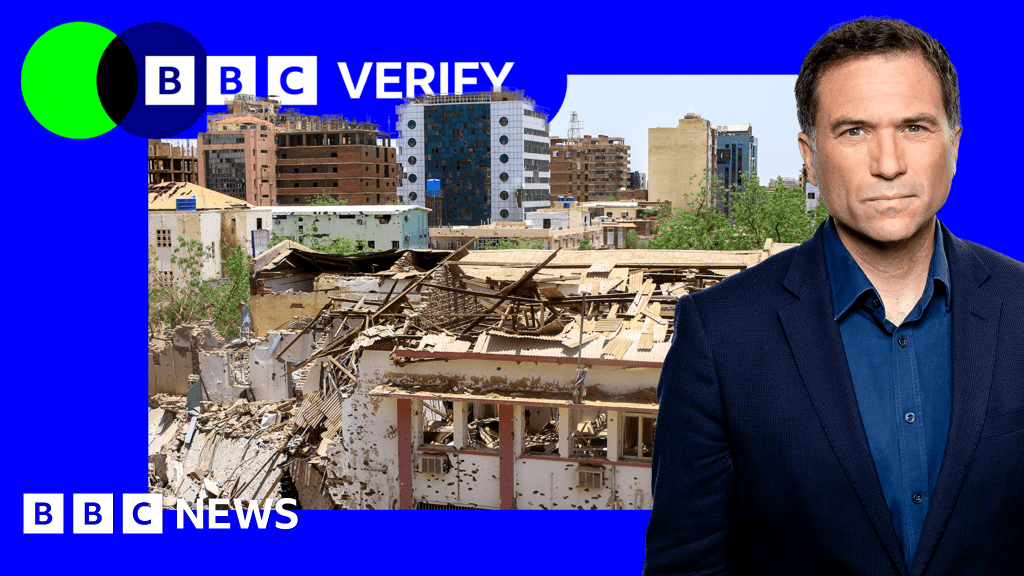
In the latest installment of 'Things Everyone Already Knew But We Need a British Man with a Graphics Tablet to Confirm,' the BBC’s Ros Atkins has turned his analytical gaze toward the charred remains of Sudan. The subject? The alleged—and by 'alleged' we mean 'painfully obvious'—links between the United Arab Emirates and the Rapid Support Forces (RSF), the paramilitary group currently busy turning Sudan into a post-apocalyptic cautionary tale. It is a story of gold, greed, and the utter failure of what the deluded call the 'international community.'
Let’s start with the UAE, a nation that has successfully branded itself as a futuristic oasis of glass towers and influencer brunch spots while playing a high-stakes game of Risk with human lives. The allegations are simple: the UAE is funneling weapons and support to the RSF under the guise of humanitarian aid. It is the ultimate flex of modern hypocrisy—sending bandages to the same people you’re giving the bullets. Abu Dhabi, of course, denies this with the practiced boredom of a billionaire caught parking in a disabled space. They claim their involvement is purely philanthropic. If you believe that, I have a bridge in Dubai to sell you—it’s very shiny, leads nowhere, and was likely built by people who aren't allowed to leave the site.
On the other side of this butcher’s shop, we have the RSF, formerly known as the Janjaweed—a name that carries all the warmth and charm of a plague. They’ve undergone a rebranding, but the core business model remains the same: systematic devastation. They are the muscle for hire, the rabid dog that the UAE supposedly keeps on a leash made of gold bullion. Their opponent? The Sudanese Armed Forces (SAF), a military junta that thinks it’s the 'legitimate' government because it wears slightly more formal hats while it also fails its people. It is a conflict where the only choice is between a military dictatorship and a marauding paramilitary gang. It’s the geopolitical equivalent of choosing whether you’d rather be eaten by a shark or a slightly more organized school of piranhas.
The tragedy of the 'analysis' provided by Atkins and his ilk is not that it’s inaccurate, but that it is fundamentally useless. We live in an era where we document our own demise in high-definition 4K. We have satellite imagery of the cargo planes, we have the flight logs, and we have the mounting piles of corpses. And yet, the world’s response is to hold a series of 'urgent' meetings in neutral European cities where the coffee is expensive and the outcomes are non-binding. These diplomatic 'efforts' are nothing more than a theater of the absurd, designed to make the participants feel like they are doing something while they wait for the next trade cycle.
The UAE’s interest in Sudan isn't a mystery; it’s an audit. Sudan sits on vast reserves of gold and occupies a strategic position that makes it a prime piece of real estate for anyone looking to dominate the Red Sea. In the cynical calculus of regional power, a few hundred thousand dead Sudanese are merely an overhead cost, a line item on a spreadsheet that ends in a dividend for a sovereign wealth fund. The West, meanwhile, tut-tuts from the sidelines, hesitant to offend a major oil producer and a buyer of high-end fighter jets. We are watching a nation be dismantled for parts, and the primary concern of the global elite is whether the supply chain for precious metals will be slightly inconvenienced.
Atkins’ explainer serves as a mirror to our own collective apathy. We enjoy the breakdown; we like the neat lines on the map and the clear delivery of the facts. It gives us the illusion of understanding a situation that is, at its heart, a primal scream of human suffering fueled by petrochemical dollars. We treat the destruction of Sudan as a logic puzzle to be solved rather than a moral catastrophe. The UAE knows this. They know that as long as they keep the oil flowing and the skyscrapers rising, the 'international community' will continue to play its role: the horrified spectator who never actually leaves his seat.
Ultimately, the war in Sudan is not just a civil war; it is a laboratory for the 21st century. It is a place where we can see what happens when the veneer of international law is finally stripped away, leaving only the raw, pulsating greed of middle-tier powers and the desperate, futile resistance of a population that has been abandoned by everyone. The SAF and the RSF will continue to tear the country apart, the UAE will continue to offer its 'humanitarian' denials, and we will continue to watch three-minute videos explaining how it’s all very complicated. It isn’t complicated. It’s just profitable. And in this world, profit always has a higher body count than principle.
This story is an interpreted work of social commentary based on real events. Source: BBC News