The Silence of the Grave: Iran’s Masterclass in Domestic Tranquility

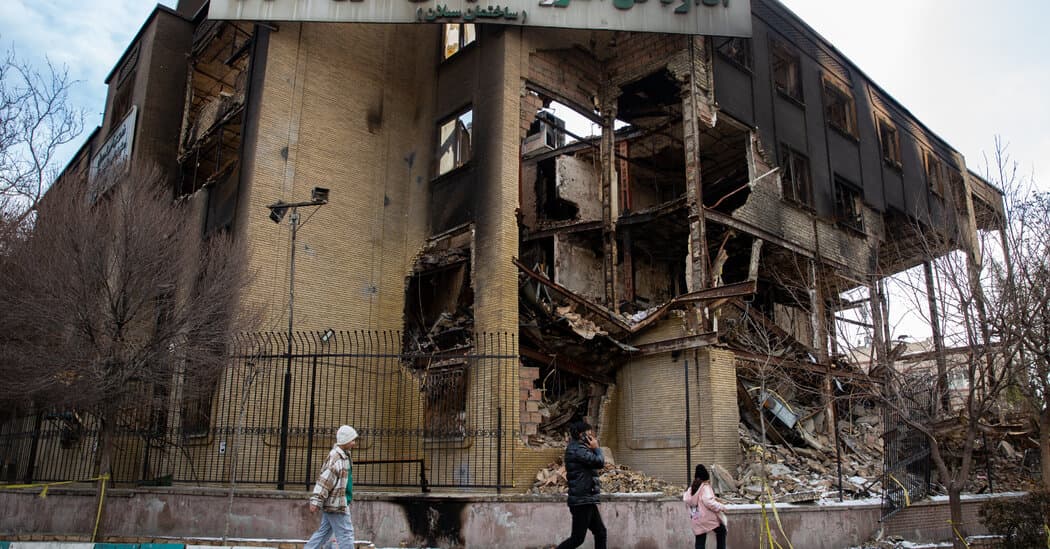
The Iranian Prosecutor General, Mohammad Jafar Montazeri—a man whose job description involves finding creative ways to interpret the word 'justice' as 'death'—has officially declared the end of the "sedition." It’s a lovely word, isn't it? Sedition. It implies that demanding not to be beaten to death for a stray lock of hair is somehow an affront to the cosmic order. According to the state, the streets are now peaceful, which is technically true in the same way that a desert is peaceful once you’ve salted the earth and buried everyone who knew how to plant a seed. The regime has reached the final stage of its argument: the silence of the cemetery is the ultimate proof of consensus.
After months of what the regime calls "unrest" and what anyone with a pulse calls a desperate cry for basic human dignity, the Islamic Republic has successfully re-established the status quo. They did this through the time-honored tradition of shooting people until the survivors stopped shouting. It’s a remarkably efficient governance model, really. Why bother with the messy complexities of social contracts or public discourse when a sufficient quantity of lead and a sturdy length of rope can achieve the same result in half the time? The Prosecutor General’s announcement wasn't a victory lap; it was a clerical update. The ledger of dissent has been balanced, the red ink being provided by the literal blood of several thousand citizens who had the audacity to believe that their lives belonged to them rather than the state's theological hobbyists.
Let’s look at the "Sedition" itself. To the aging clerics who run the show, any hint that the 7th century might not be the ideal template for 21st-century life is viewed as a CIA-backed plot. To them, the youth of Iran are not people, but puppets dancing to the tune of a Western pop song. It’s a convenient delusion. It allows you to kill your own children while convincing yourself you’re merely performing a necessary exorcism of foreign influence. The regime’s logic is a closed loop of divine right and paranoid narcissism, a theological fortress where the only thing more dangerous than a woman’s hair is a man’s conscience. They have spent decades perfecting the art of being offended by reality, and their response to that offense is always, predictably, a gallows.
But let’s not let the West off the hook for their role in this theatrical production of misery. While the Iranian state was busy filling its prisons, the "International Community" was busy filling its social media feeds. We saw the hashtags. We saw the profile picture changes. We saw the politicians in Washington and Brussels offering "unwavering solidarity" from the safety of their mahogany-paneled offices. It’s a special kind of cruelty to offer moral support to people being mowed down by machine guns; it’s like cheering for a man falling off a cliff. Your enthusiasm doesn’t change the impact, it just makes the spectator feel like a participant. The Left utilized the protests as a convenient stick to beat their own domestic strawmen, while the Right salivated at the prospect of a regime change they wouldn’t have to pay for in blood—at least, not American blood. Both sides viewed Iranian corpses as useful data points for their own boring, internal arguments.
The Prosecutor General has vowed to "punish those responsible" for the protests. One wonders if he has a mirror in his office, or if the reflection would simply refuse to show up out of sheer disgust. The responsibility for a nation in flames usually lies with the people holding the matches, but in the upside-down world of theocratic jurisprudence, the fire is the fault of the wood for being flammable. The punishments will be swift, public, and utterly devoid of anything resembling a defense. This is "justice" as a form of performance art—a grisly spectacle designed to ensure that the next generation of Iranians understands the exact cost of a dream. It is the pedagogy of the boot, applied with religious fervor.
The tragedy isn't just that the protests were squashed; it’s the crushing predictability of it all. We live in a world where the brutal always have the upper hand because they are the only ones willing to do what is necessary to keep it. The Iranian regime doesn't care about your Twitter threads. They don't care about UN resolutions written on expensive paper by people who have never skipped a meal. They care about the fact that they have the guns and you have the slogans. And as the Prosecutor General so eloquently put it, the sedition is over. The silence has returned. It’s a heavy, suffocating silence, the kind that only exists when a government has successfully murdered its own future to preserve its dusty past.
In the end, humanity continues its relentless march toward the same old abyss. One group of old men kills a group of young people to preserve a set of ideas that haven’t been relevant since the invention of the steam engine. The rest of the world watches, comments, and moves on to the next distraction. The "sedition" may be over, but the rot remains, festering beneath a veneer of state-enforced piety. Congratulations to the Islamic Republic: you’ve won. You’re the kings of a graveyard. I hope you enjoy the view from the ramparts; it’s very quiet up there.
This story is an interpreted work of social commentary based on real events. Source: NY Times