The 2026 E-Bike Review: A Comprehensive Guide to Your Expensive, Motorized Surrender to Gravity and Sloth

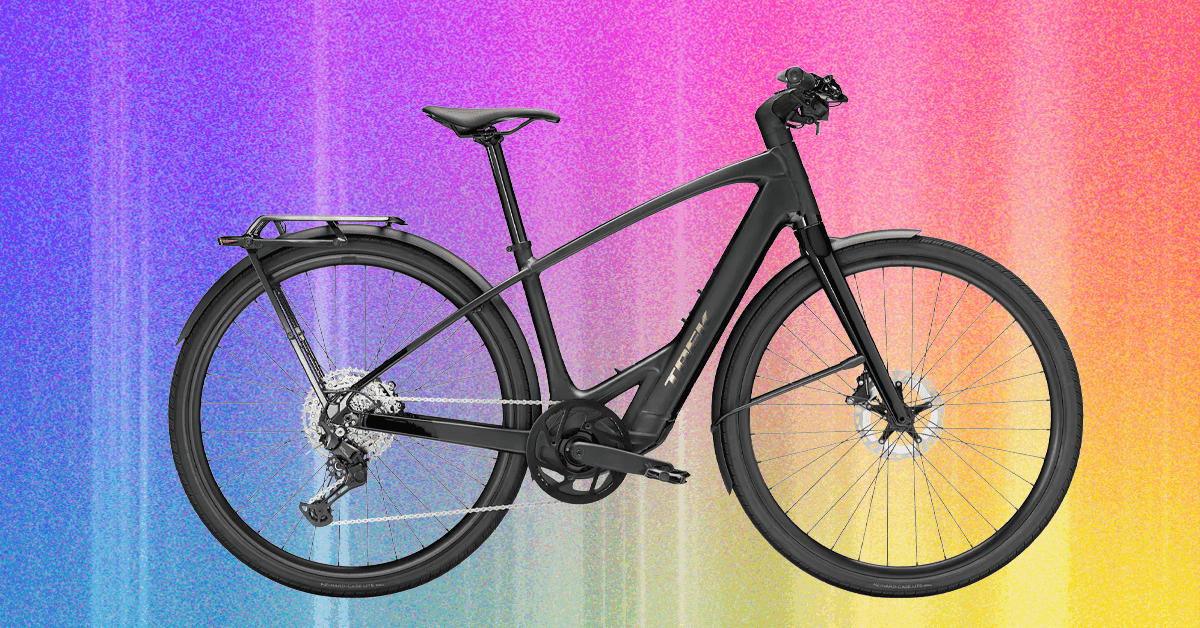
The 2026 e-bike review cycle has arrived, and with it, the definitive proof that humanity has finally, irrevocably, given up on the concept of effort. '15 Best Electric Bikes,' the headlines scream, as if we are discussing a breakthrough in fusion energy rather than a series of glorified mopeds for people who find the act of pedaling a bicycle to be a form of medieval torture. This isn’t a product review; it’s an autopsy of the human spirit. It is a catalog of high-priced crutches for a generation that wants the aesthetic of being 'active' without the physiological inconvenience of actually being fit.
Let’s dissect the 'Commuter' category, a segment of the market designed specifically for the individual who wants to signal their environmental virtue while simultaneously signaling that they are far too important to arrive at work with a single bead of perspiration on their brow. These machines, often priced north of four thousand dollars, represent the ultimate intersection of tech-bro arrogance and late-stage capitalist 'problem-solving.' We have replaced a fifty-dollar used bicycle—a masterpiece of mechanical efficiency—with a high-tech nightmare of proprietary software, rare-earth minerals, and a battery life that will inevitably degrade faster than the rider’s own cardiovascular health. The reviewer’s notes focus on 'smooth power delivery,' which is just code for 'the machine does all the work while you sit there like a sack of damp flour.' It is the Segway’s more socially acceptable cousin, providing the illusion of athleticism to a demographic whose primary physical activity is clicking 'Add to Cart' on a standing desk they will never actually use.
Then we move to the 'Mountain Bike' reviews, where the irony becomes truly suffocating. The entire ethos of mountain biking was once rooted in the struggle against gravity, a masochistic dance with the terrain that required grit and lung capacity. But the 2026 crop of e-MTBs has solved that pesky 'physical exertion' problem. Now, any suburbanite with a mid-life crisis and a bloated credit line can 'conquer' the wilderness without ever exceeding a resting heart rate. These bikes are marketed as 'equalizers,' a term used by people who believe that nature should be as frictionless and accessible as a streaming service interface. We are turning our national parks into motorized playgrounds, ensuring that the last vestiges of silence are replaced by the high-pitched whine of lithium-ion motors. The reviewers laud the 'torque' and the 'climbing capability,' completely ignoring the fact that if you need a motor to get up a hill, you probably shouldn't be on the hill in the first place. You aren't 'exploring'; you are just a passenger on a very expensive, two-wheeled golf cart.
The economic absurdity is perhaps the most offensive part of this charade. The Left frames the e-bike as a revolutionary tool for 'transit equity,' a phrase that sounds lovely until you realize these bikes cost more than the annual income of the people they are supposed to 'empower.' Meanwhile, the Right views them as a symbol of the 'woke' war on the internal combustion engine, clinging to their gas-guzzling trucks with a desperation that would be pathetic if it weren't so destructive. Both sides are trapped in a cycle of consumption that they mistake for progress. One side wants to burn the planet with oil; the other wants to strip-mine it for cobalt and lithium, often under conditions that would make a Victorian factory owner blush. It’s a choice between two different flavors of ecological catastrophe, served on a carbon-fiber platter. It’s the perfect neoliberal solution: buy more stuff to solve the problem of having too much stuff.
The 'Cruisers' and 'Foldables' mentioned in these reviews represent the final death knell of the urban landscape. The foldable bike is the ultimate accessory for the resident of the 'micro-apartment'—a glorified closet that costs half a million dollars. It allows the modern serf to tuck their transportation under their desk, ensuring they are always ready to move to the next gig-economy hustle. The 'Cruiser,' meanwhile, is for the retiree or the beach-dweller who wants to feel the wind in their hair without the indignity of actually exerting the energy required to create that wind. It’s an aesthetic of leisure built on a foundation of profound laziness. The reviewers treat these things with the reverence of a moon landing, obsessing over whether a bike can fit in a suitcase or carry four bags of overpriced kale. No one asks why we have reached a point where we need a $5,000 motorized gadget to perform a task that a ten-year-old on a Huffy could do in 1985.
By the time we reach 2026, the e-bike isn't just a mode of transport; it’s a tombstone for the Enlightenment idea of human progress through discipline. We’ve automated our homes, our jobs, and now our very movements. These '15 Best' lists are simply catalogs of our growing dependency on complex systems we don't understand and can't repair. If the power grid goes down, these $6,000 paperweights become nothing more than heavy, awkward reminders of our own incompetence. But until then, keep reading the reviews. Keep comparing the watt-hours and the mid-drive motors. Just don’t pretend you’re doing anything other than buying your way out of being a functional mammal.
This story is an interpreted work of social commentary based on real events. Source: Wired