A Slight Tremor in the Global Supply Chain: Four Fewer Souls and the Eternal Stench of Progress

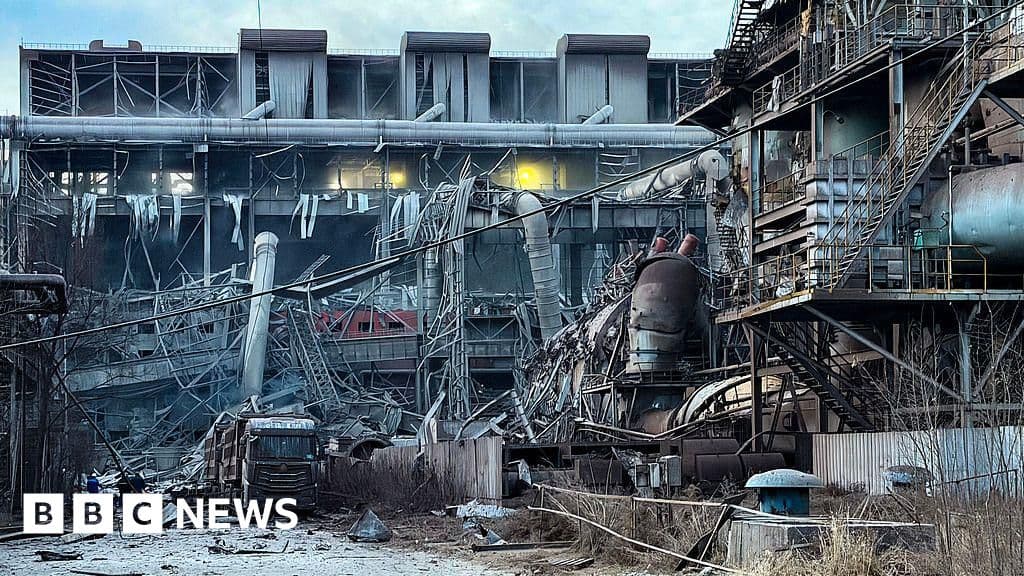
There it is again. That familiar, rhythmic thud of the planet coughing up another piece of its dignity. In China, a factory has recently undergone a process of spontaneous, unprompted deconstruction, more commonly known to the uninitiated as an explosion. The results were predictably messy: four people have been deleted from the census, and another eighty-four are currently discovering the various ways the human body can be perforated by industrial debris. To the local populace, it was a 'noticeable tremor.' To the rest of the world, it is a brief interruption in the white noise of global tragedy, a minor blip that won't even delay the shipping of your next batch of disposable plastic trinkets.
Let us analyze the aesthetic of this catastrophe. Large plumes of smoke were reported, rising into the sky like a dark, middle finger to the very concept of atmospheric preservation. This smoke is perhaps the most honest thing to come out of the region in a decade. It doesn’t issue press releases about 'safety protocols' or 'operational excellence.' It doesn’t lie about quarterly growth. It simply hangs there, a thick, suffocating reminder that our modern existence is built upon a foundation of volatile chemicals and overworked laborers who are treated as interchangeable components in a machine that eventually, inevitably, grinds them into dust.
The four dead are, in the grand calculus of a nation with a population exceeding 1.4 billion, less than a rounding error. They are a statistical whisper, a footnote in a ledger that prefers to track GDP over pulse rates. And yet, the choreography of the aftermath remains the same. The State will descend with its crisp white shirts and its clipboard-wielding bureaucrats, promising an 'investigation' that will undoubtedly conclude that everything is fine, provided everyone stops looking at the crater. It is a masterpiece of political theater where the script is written in soot and the ending is always a commitment to 'rectification'—a word that, in this context, usually means finding a faster way to rebuild the death trap.
Meanwhile, in the West, the reaction is a masterclass in performative apathy. The Left will take a momentary break from their soy-infused doom-scrolling to tweet about 'labor rights' on devices powered by minerals mined in equally horrific conditions, their outrage lasting exactly as long as it takes for the next trend to provide a fresh hit of dopamine. The Right, ever the pragmatists of the abyss, will check their stock portfolios to see if the blast affected the bottom line of any multinational conglomerates. If the explosion didn't touch their dividends, it didn't happen. Both sides are unified in their fundamental hypocrisy: they demand the cheap fruits of this industrial nightmare while clutching their pearls at the sight of the smoke. They want the bargain, but they find the blood on the receipt to be in poor taste.
This explosion is not an anomaly; it is a feature of the system. We have constructed a global civilization that requires a certain amount of spontaneous combustion to keep the gears turning. To expect a factory in a high-output industrial zone to remain intact is to misunderstand the nature of entropy and greed. When you prioritize speed and cost over the structural integrity of reality, reality eventually pushes back. This time, it pushed back with enough force to shake the ground and send eighty-four people to the hospital.
Consider the 'tremor.' It is a poetic touch, really. The Earth itself flinching at the sheer audacity of human incompetence. It is a physical manifestation of the fragility of our supply-chain-obsessed society. We live in a world where a spark in a warehouse halfway across the globe can be felt in the floorboards of a neighboring village, yet we act as though our actions are isolated, as though we are not all complicit in the smoke. The eighty-four injured will likely be replaced by next Tuesday, because the machine does not stop for blood. The smoke will eventually dissipate, the charred concrete will be cleared, and a new factory will rise from the ashes, ready to explode for a new generation of consumers. It is the circle of life, if life were a cynical, profit-driven hallucination. We are all just waiting for the next tremor, hoping it happens to someone else while we wait for our packages to arrive.
This story is an interpreted work of social commentary based on real events. Source: BBC News